
Understanding Waterproof Ratings and UPF Protection in Women's Outerwear
Understanding Waterproof Ratings and UPF Protection in Women's Outerwear
When shopping for protective outerwear, terms like breathability ratings and ultraviolet protection factors frequently appear on spec sheets. Understanding what these numbers mean helps you choose gear that keeps you dry and comfortable under variable weather conditions.
What Does UPF 50+ Really Mean in Outerwear?
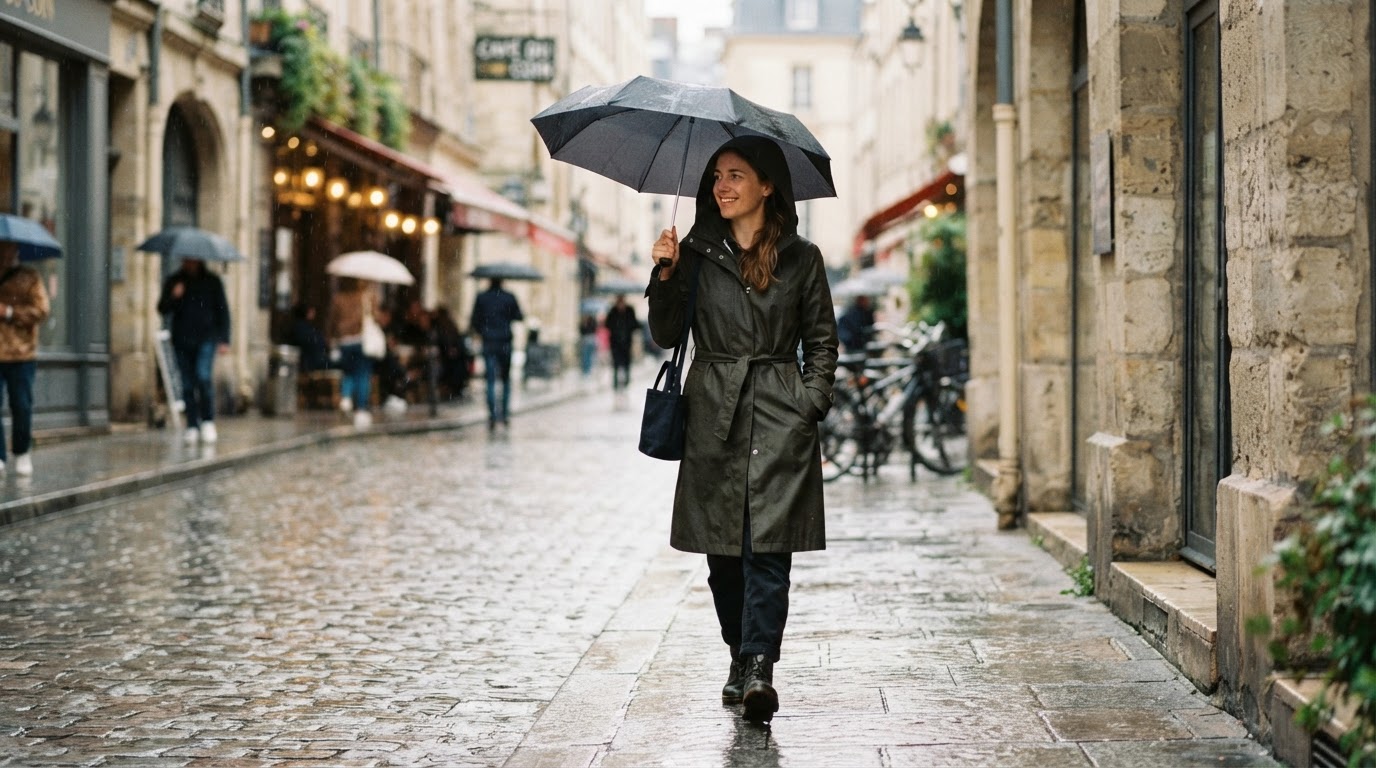
Ultraviolet Protection Factor (UPF) measures how much solar radiation a fabric absorbs rather than allows through to your skin. Outerwear rated with UPF 50+ sun protection blocks 98% of harmful UV rays. Unlike sunscreen, which degrades over hours and requires reapplication, UV-rated clothing maintains continuous defense against sunburn and skin damage during prolonged exposure on trail hikes or city walks. UPF is a straightforward ratio: a fabric rated 50 lets through roughly one fiftieth of the ultraviolet radiation reaching it, blocking about 98 per cent. The rating covers both UVA and UVB, which is one way it differs from the SPF number on sunscreen, which is measured against UVB effects specifically.
The practical point people miss is that ordinary clothing already blocks a great deal. A typical dark, tightly woven garment sits somewhere in the region of UPF 15 to 30 without any treatment at all, and a dense waterproof shell is usually well above that simply by being opaque. The rating derives mostly from weave density, fabric thickness, and colour rather than from anything added.
Two caveats matter in real use. Wet fabric protects less than dry fabric, because water fills the gaps between fibres and lets more light through, and this is exactly the situation on a rainy day. And stretched fabric protects less, since stretching opens the weave, which is why a garment worn tight over the shoulders performs below its label rating.
And the obvious limitation: a coat protects what it covers. Face, neck, and hands still need sunscreen.
Decoding Breathability and Rain Durability
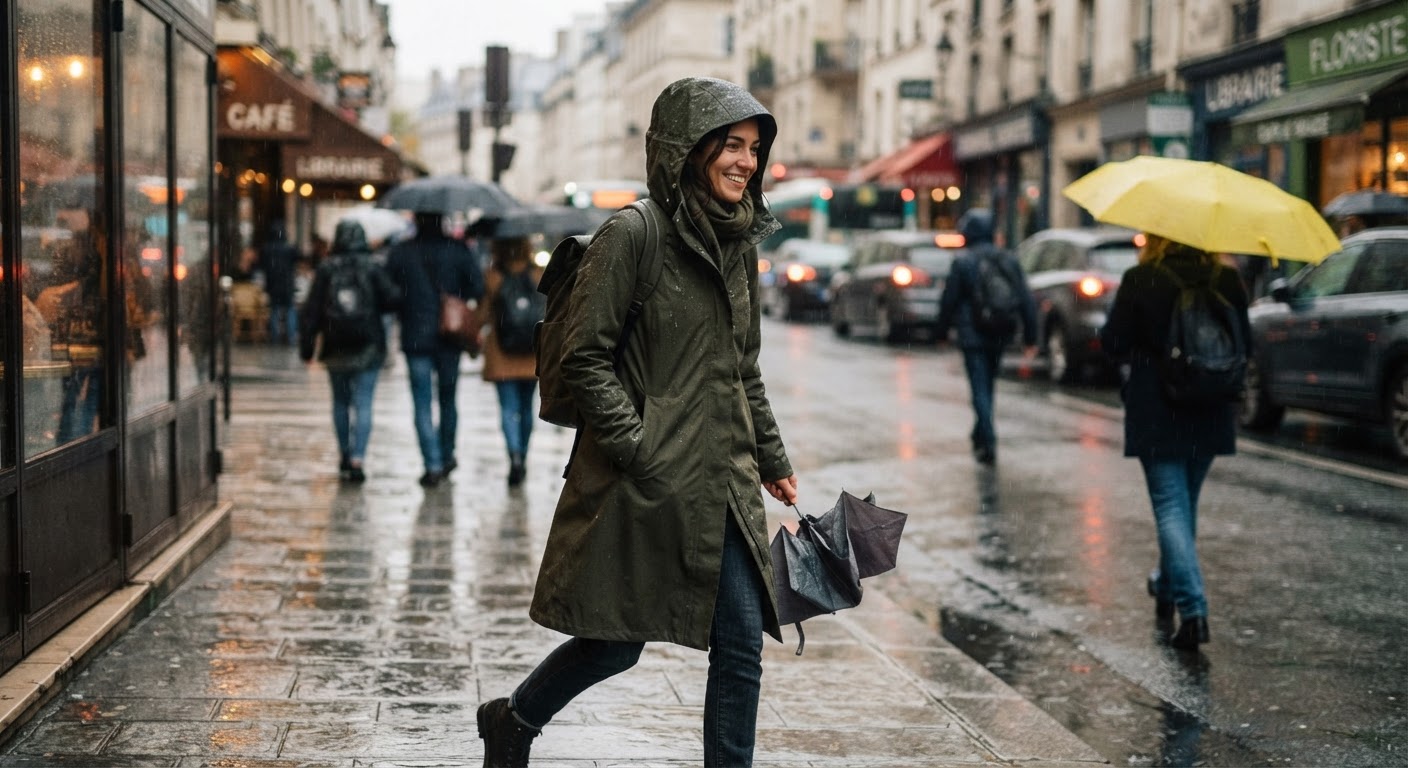
Waterproofing prevents water droplets from penetrating the outer shell, but interior humidity can cause discomfort if sweat cannot escape. This balance is measured in breathability ratings:
- Rain Resilience: High-performance outer shells manage continuous exposure during a light rain duration minutes of 120+ minutes without letting moisture leak through sealed seams.
- Vapor Transmission: A breathability rating gsm of 5,000 g/m² ensures water vapor escapes during active use, while a breathable mesh lining prevents overheating in warm weather.
Hydrostatic head, quoted in millimetres, measures how much water pressure the fabric resists before leaking. As a rough guide, under 5,000mm handles light rain and short exposure, 5,000 to 10,000mm covers steady rain and ordinary use, and above 10,000mm is genuinely heavy-weather territory.
Breathability, usually quoted as grams per square metre per twenty-four hours, measures how much water vapour escapes from the inside. Higher is better, and the number matters more the harder you are working in the garment.
The two are in tension, which is the central fact of all rainwear: making a fabric more waterproof generally makes it less breathable, and every garment picks a point on that curve.
Neither number means anything without sealed seams. Stitching is a line of holes, and an unsealed seam leaks regardless of the fabric's rating. Look inside at the shoulders and hood for a taped strip; that presence or absence tells you more than any figure on the swing tag.
And both numbers describe the fabric when new and clean. A dirty coat performs worse, and a coat whose outer finish has worn off wets out and feels like it has failed even when it has not.
Why Dual Sun and Rain Protection Matters
Weather conditions change rapidly throughout the day. A jacket equipped with UPF 50+ sun protection and a fully waterproof outer shell with sealed seams keeps you dry in downpours while insulating against intense afternoon sun rays. Investing in high-performance garments crafted from lightweight 100% Polyester ensures long-lasting comfort across all four seasons.
Read the full guide: The Ultimate Guide to All-Weather Protection: The Waterproof Hooded Trench Coat
The combination is less exotic than it sounds, because in practice the same property provides both. A fabric dense enough to stop rain is opaque, and an opaque fabric stops ultraviolet light. Sun protection in a waterproof shell is largely a consequence of the construction rather than a separate feature.
Where it genuinely earns its place is in changeable conditions, which is most of spring and autumn in a temperate climate and most of the year in a maritime one. A bright morning that turns to rain by afternoon is the normal case, not the exception, and carrying one layer for both is simply more practical than carrying two.
It matters more in specific situations: at altitude, where UV intensity rises appreciably; near water or snow, where reflection adds substantially to exposure; and for anyone spending long days outdoors regardless of forecast.
One thing worth stating plainly, since it is often left implied. A coat is not a substitute for sun protection generally. It covers the torso and arms and does that job well. Face, neck, ears, and hands remain exposed, and a hood helps with some of that but not all of it.