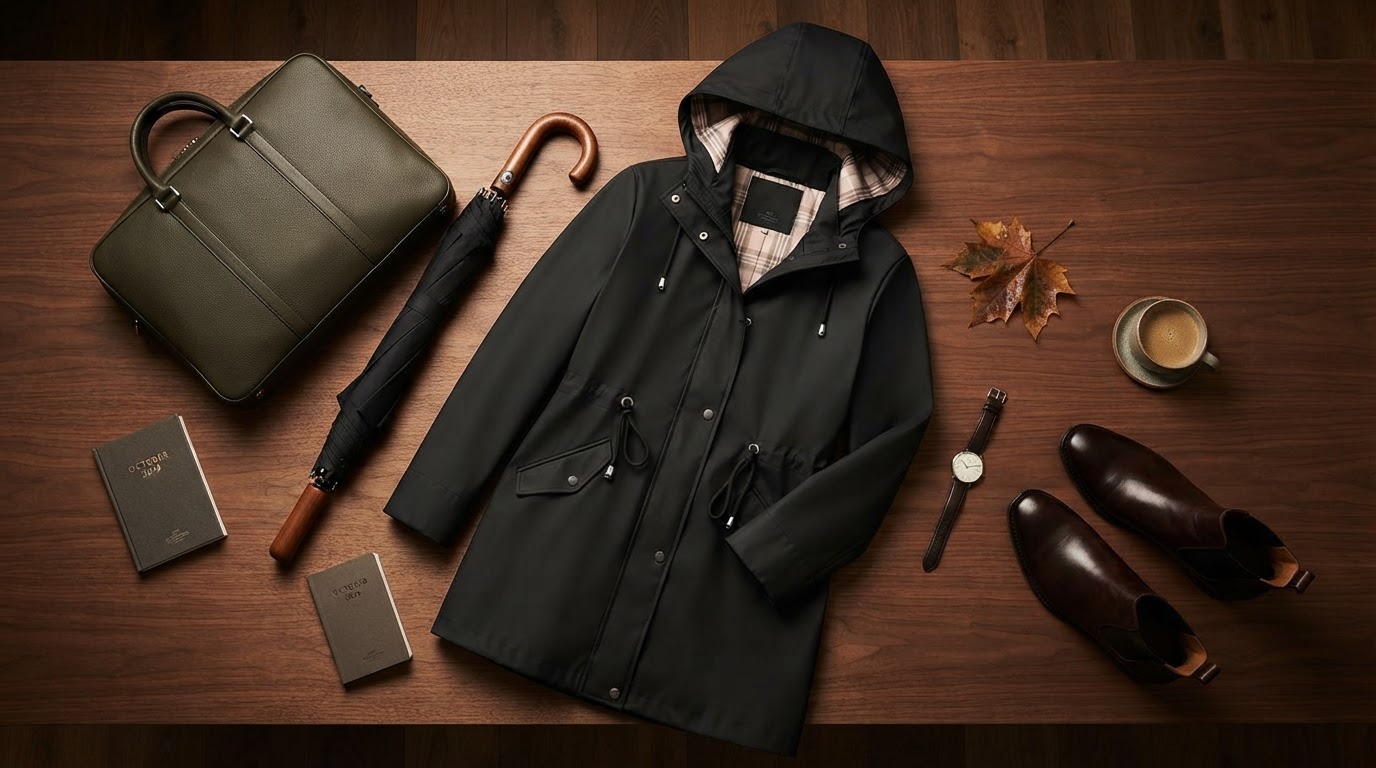
Selecting a Waterproof Hooded Trench Coat for Commuting
 Sam VasquezBuying Guide Lead
October 10, 2026. This guide evaluates how to select a waterproof hooded trench coat that maintains a professional silhouette during wet weather transit. It is written for professionals who require a balance of technical performance and workplace-appropriate aesthetics.
The Challenge of Professional Wet Weather Transit
Finding a jacket that survives a heavy downpour without looking like you are headed for a mountain trail is a persistent frustration for city dwellers. Most technical rain gear leans heavily into the "gorpcore" aesthetic—bright colors, noisy fabrics, and boxy silhouettes that clash with tailored workwear. According to New York Magazine's Strategist, finding a stylish, non-gorpy raincoat often requires testing dozens of options to find the right intersection of fashion and utility. This search for a commuter rain jacket with professional style usually ends in a compromise: you either arrive dry but looking underdressed, or you wear a traditional cotton trench that soaks through in ten minutes.
I have found that the core issue is fabric weight and drape. Traditional trench coats use gabardine which, while classic, lacks a true waterproof membrane. Conversely, high-end shells often use 3-layer Gore-Tex which is stiff and crinkles loudly during a morning meeting. If you are looking for a breathable waterproof overcoat for work, you need a garment that utilizes a soft-touch polyester or nylon face fabric bonded to a waterproof laminate. This construction allows the coat to hang like a standard overcoat while providing a hydrostatic head rating high enough to withstand a thirty-minute walk in the rain. Between the technical parka and the fashion trench, the waterproof hooded trench coat serves as the middle ground that actually works for a Tuesday morning commute.
Technical Features of the Waterproof Hooded Trench Coat
When I look at the specs for a reliable waterproof hooded trench coat, I focus on the integration of the hood and the length of the hem. A standard trench often lacks a hood entirely, relying on an umbrella that is easily inverted by city wind tunnels. The hooded trench coat for commuting solves this by incorporating an adjustable, structured hood that protects the face without obstructing peripheral vision. Based on search data, consumers are increasingly looking for a "women's raincoat with hood and pockets" or a "mens waterproof trench coat with hood" that offers at least a mid-thigh or knee-length cut. This extra length is critical; it ensures that rain runoff doesn't soak your trousers or skirt, a common failure point of shorter jackets.
Here is what I'd actually buy: a coat that features a 2-way zipper and a storm flap. The 2-way zipper is essential for sitting on a train or bus without the fabric bunching up at the waist, while the storm flap prevents wind-driven rain from entering through the zipper teeth. In terms of weight, a lightweight hooded rain trench is generally more versatile than a heavy, insulated version. You can layer a blazer or sweater underneath during the winter, but a heavy coat becomes unbearable during a humid spring morning. Many users searching for a hooded trench coat for rain forget that breathability is just as important as waterproofing. If the coat doesn't vent heat, you will arrive at the office damp from the inside out. Look for a coat with a mesh lining or discrete underarm grommets to manage temperature during active transit.
A Decision Framework for Your Next Commuter Coat
If you're on a budget, you might be tempted by a simple water-resistant mac. Skip this if your commute involves more than five minutes of exposure to the elements; water-resistance is merely a DWR coating that will eventually fail under pressure. For those who need a legitimate waterproof hooded trench coat, the choice usually comes down to the specific environment of your city. For example, Outdoor Gear Lab highlights the Patagonia Outdoor Everyday Rain Jacket as a top pick for style and comfort, which is excellent for casual environments, but it lacks the formal length required to cover a suit jacket. Between a short technical shell and a long trench, I'd go with the longer trench every time for the added protection it provides to your lower half.
Use this checklist to evaluate your options:
- Ensure the coat has fully taped or sealed seams, not just "waterproof fabric."
- Verify the hood is either adjustable or features a stiffened brim to keep water off your face.
- Check that the sleeve length allows for coverage of your shirt cuffs when reaching for a subway handrail.
- Confirm the presence of internal pockets to keep electronics dry and secure.
- Look for a matte finish rather than a shiny "slicker" texture to maintain a professional appearance.
Shop Waterproof Hooded Trench Coat here.