
How to Store Waterproof Jackets Long Term: Rainwear Care Guide
Many travelers assume packable trench coats should remain tucked inside their self-stow pockets during the off-season. In reality, long-term compression micro-cracks waterproof seam tape and degrades DWR coatings. The correct way to store a waterproof trench coat long term is to wash it with technical cleaner, line dry completely, and hang it loosely on a wide padded hanger in a cool, dark, climate-controlled closet.
End-of-Season Storage Preparation Timeline
- 7 Days Before Storage — Inspect jacket for surface soil, oils along collar/cuffs, and pocket debris. Spot-treat stubborn stains with a soft nylon brush and water.
- 3 Days Before Storage — Machine wash on delicate cycle using an additive-free technical outerwear wash. Never use standard detergent, bleach, or fabric softener.
- 2 Days Before Storage — Hang coat to air dry in a well-ventilated, shaded area. Ensure the breathable mesh lining and inner pocket bags are dry to the touch.
- 1 Day Before Storage — Inspect heat-sealed seam tape along shoulders and hood for cloudiness or lifting. Test water beaded response on the outer shell.
- Storage Day — Hang garment loosely on a broad padded or wide wooden hanger inside a dark, climate-controlled closet with 2+ inches of air clearance.
Seasonal Rainwear Care & Storage Schedule

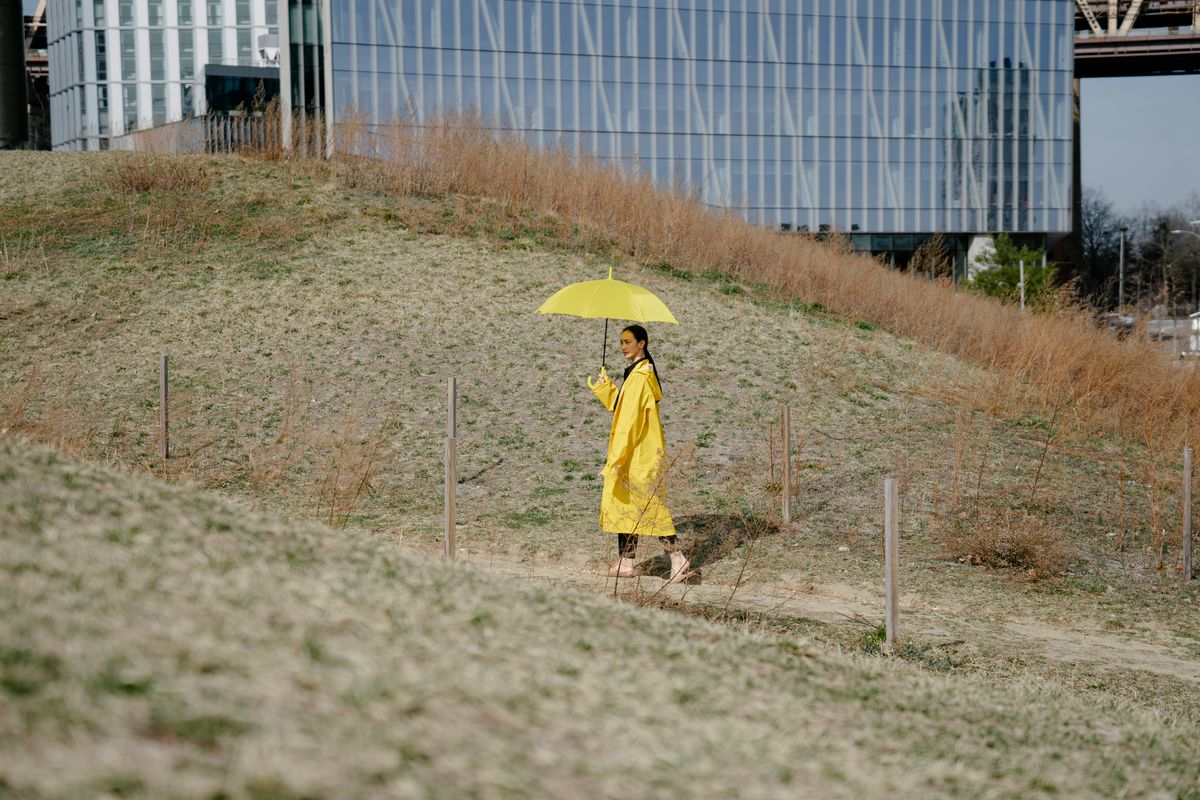
Photo by Md Nadim Mahmud on Pexels
- Spring Transition (Pre-Season) — Remove coat from closet. Spray shell lightly with water to test DWR beading. Heat-activate coating on low dryer cycle if water flattens.
- Mid-Summer (Active Use) — Rinse off dirt or saltwater spray after hikes. Store loosely hung between weekend getaways; never leave wet in a car trunk.
- Fall Transition (Post-Season) — Perform full technical wash, line dry, inspect seam tape condition, and transition garment to off-season closet storage.
- Winter Solstice (Mid-Storage Check) — Uncheck closet environment; ensure no ambient dampness or heat vents are blowing directly onto the hanging garment.
Troubleshooting Storage Damage & Degradation
| Symptom / Damage | Root Cause | Prevention Protocol | Recovery / Action Step |
| --- | --- | --- | --- |
| Clear Seam Tape Turning White or Peeling | Hydrolysis caused by storing coat damp or in high-heat attics | Ensure 100% dry prior to storage; keep storage under 80°F | Apply heat-seal seam repair tape using an iron on low heat with a press cloth buffer |
| Musty, Earthy Odor After Unpacking | Trapped ambient moisture in breathable mesh lining inside plastic tote | Store only in breathable fabric bags or open climate-controlled closets | Wash with additive-free technical wash; line dry thoroughly in a shaded outdoor breeze |
| Water Drops Soak In (Wetting Out) After Storage | DWR coating hydrophobic chains flattened or contaminated by static dust | Wash away body oils before storage to preserve fluoropolymer/silicone structure | Tumble dry on low heat for 20 minutes to reactivate DWR, or reapply spray-on DWR |
| Deep, Set-In Creases Across Hood & Shoulders | Long-term self-stow pocket compression over several months | Unpack coat immediately upon returning from travel trips | Hang in steamy bathroom during warm shower or use garment steamer at 6+ inches distance |
If your waterproof trench coat emerged from storage looking wrinkled, smelling musty, or losing its water repellency, use this diagnostic table to restore its performance.
5 Destructive Storage Mistakes That Ruin Packable Rainwear
Avoid these critical mistakes that compromise the structural integrity of technical waterproof coats during seasonal storage:
Annual Climate & Storage Transition Calendar
| Region / Climate Zone | Active Season | Storage Transition Month | Recommended Storage Setup |
| --- | --- | --- | --- |
| Pacific Northwest & Coastal East | October – May | June | Climate-controlled closet on padded hanger; inspect DWR prior to autumn rain return |
| Sunbelt & American Southwest | July – September (Monsoon) | October | Dark wardrobe closet away from sun bleed; protect UPF weave from ambient dust |
| Midwest & Northeast | April – November | December | Indoor wardrobe; ensure room humidity stays between 30% and 50% during winter heating |
| Southeast & Gulf Coast | Year-Round Shifts | August (Peak Humidity) | Air-conditioned closet with desiccant pack; avoid unconditioned storage units |
Track regional climate changes across the United States to know precisely when to transition your trench coat between active travel gear and off-season storage.
Frequently Asked Questions About Storing Technical Trench Coats
Get expert answers to common long-term care and storage questions.
Mid-Guide Checklist & Transition Guidance
Your decision: Determine your storage location: choose a cool, dark closet with a broad padded hanger, or an uncompressed fold in a breathable fabric container if space is tight.
Do this next: Wash your trench coat with an additive-free technical cleaner, ensure it is 100% dry, and hang it loosely to preserve seam tape integrity.
- Read next: Why Is My Rain Coat Wetting Out? How to Reapply DWR to Your Hooded Trench Coat
- Read next: How to Wash a Women's Waterproof Trench Coat Without Damaging the DWR Coating
If your current rainwear shows permanent seam peeling or loss of waterproofing after storage, explore the Waterproof Hooded Trench Coat engineered with durable sealed seams and UPF 50+ sun protection.
Before choosing your storage location, verify your pre-storage cleaning protocol.
Key Takeaways for Preserving Technical Outerwear
Keep these core tenets in mind every time you transition your rainwear for seasonal storage:
- Never store compressed: Self-stow pockets are for travel days, not multi-month seasonal storage.
- Clean before storage: Skin oils and grime attract dust and eat away at waterproof membranes over time.
- Avoid heat and dampness: Store between 60°F–75°F and 30%–50% relative humidity to protect seam tape.
- Skip fabric softeners: Only wash with technical washes designed for waterproof/breathable membranes.
- Hang loosely: Use broad wooden or padded hangers to maintain tailored shoulder geometry.
Environment Comparison: Where Should You Store Your Coat?
| Criteria | Climate-Controlled Closet | Unheated Attic / Garage | Damp Basement | Self-Stow Pocket |
| --- | --- | --- | --- | --- |
| Temperature Stability (60°F - 72°F) | Ideal (Stable) | Poor (Exceeds 85°F) | Moderate (Cool) | Irrelevant |
| Relative Humidity Control (30% - 50%) | Ideal | Fluctuates Wildly | High Risk (>65% Mold) | Traps Ambient Moisture |
| Seam Tape Physical Stress | Zero Tension | Heat Softening | Moisture Hydrolysis | High Constant Crease Tension |
| DWR Coating Longevity | Maximum Preservation | Rapid Heat Breakdown | Mildew Degradation | Friction Micro-Abrasion |
| Recommended Storage Duration | 6 - 12 Months | 0 Months (Avoid) | 0 Months (Avoid) | < 2 Weeks (Travel Only) |
Evaluating storage zones across your home based on critical environmental parameters.
Storage Method Decision Support: Hanging vs. Uncompressed Folding
Choose hanging on a broad padded hanger in a dark, climate-controlled closet as your default method. If closet space is unavailable, use a loose, uncompressed fold in a breathable cotton tote bag.
Best choice for
- Broad Padded Hanger in Dark Closet — Eliminates fabric creasing and stress on heat-sealed seam tape while maintaining air flow through breathable mesh lining.
- Loose Uncompressed Fold in Breathable Cotton Tote — Prevents permanent compression creases while allowing moisture vapor to escape, protecting DWR and UPF fabric filters.
- Storing coat inside its self-packing pocket for longer than two weeks during non-travel periods.
- Using thin wire hangers that distort shoulder structure and stretch seam tape along the neck line.
- Storing inside airtight plastic storage totes or vacuum bags that trap residual moisture and catalyze mold growth.
- Breathable Fabric Garment Bag — Provides extra dust and UV protection for light-colored trench coats hung in open garment racks.
Technical Fabric & Care Compatibility Matrix
| Garment Component | Technical Function | Storage Vulnerability | Safe Handling Limit |
| --- | --- | --- | --- |
| Waterproof Outer Shell + DWR | Repels liquid rain and prevents fabric wetting out | Oil contamination and static dust flatten hydrophobic polymers | Store clean; reactivate with gentle heat (15-20 min low dryer) |
| Heat-Sealed Seam Tape | Blocks water entry through needle stitch holes | Heat softens adhesives; tight folding causes micro-cracking | Keep storage ambient temperature strictly below 80°F |
| UPF 50+ UV-Filter Weave | Blocks 98% of harmful UVA/UVB rays | Direct sunlight bleed during storage causes photo-degradation | Store in total darkness or inside opaque fabric garment bags |
| Breathable Mesh Lining | Promotes airflow and prevents skin sticking in humidity | Trapped dampness creates breeding ground for mildew spores | Verify 100% dry interior touch before hanging or folding |
Understanding how each component of a high-performance trench coat reacts to storage conditions ensures you protect all technical layers.
Regional Storage Advice: Managing High Humidity vs. Arid Climates
Home climate dynamics vary significantly across US regions. Adjust your storage prep based on your local environment:
- Humid Coastal & Southern Regions (Gulf Coast, Florida, Pacific Northwest): Relative humidity inside closets can easily climb above 60% during summer months. Always place silica desiccant packs inside your closet or garment bag. Ensure the coat is never pressed tightly between heavy winter woolens, which blocks air circulation.
- Arid & High-Altitude Regions (Southwest, Mountain West): Dry air is generally ideal for preventing mold, but ambient indoor dust can settle into the DWR coating. Store your jacket inside a breathable cotton dust cover to keep the outer shell pristine.
- Variable Mid-Atlantic & Midwest Regions: Seasonal HVAC shifts bring dry winter heating and humid summer air. Maintain your coat in an interior bedroom closet rather than an exterior wall closet, which experiences temperature swings.
Step-by-Step End-of-Season Trench Care Checklist
- Empty all zippered pockets of travel items, tissues, and lip balms.
- Spot-treat any surface dirt, mud, or oils on collar and cuffs.
- Machine wash on delicate cycle using a technical outerwear cleaner (no standard detergent or fabric softener).
- Air-dry completely in a well-ventilated shade area; ensure breathable mesh lining is dry to the touch.
- Inspect heat-sealed seam tape along shoulders and hood for lifting or cloudiness.
- Hang garment on a broad, padded hanger in a dark closet away from direct HVAC vents.
Related Guides on Rainwear Care & Maintenance
- The Chimney Effect: Why Your Breathable Long Coat Fails
- The Overlooked Flaw in Most Long Waterproof Jackets for Women
- How a Breathable Waterproof Long Coat Stays Dry
Recommended Gear for Long-Term Rainwear Preservation
Looking for rainwear engineered to withstand years of active travel and seasonal storage? Discover our flagship trench coat.
Your Off-Season Storage Action Plan
Your decision: Choose a cool, dark wardrobe closet with broad padded hangers as your permanent off-season storage home.
Do this next: Clean your jacket with technical fabric wash today, line dry completely in the shade, and hang loosely before putting it away for the season.
- Read next: Why Is My Rain Coat Wetting Out? How to Reapply DWR to Your Hooded Trench Coat
- Read next: How to Wash a Women's Waterproof Trench Coat Without Damaging the DWR Coating
Ready for your next trip? Explore the Waterproof Hooded Trench Coat at waterprooftrenchcoat.com for stylish, all-weather defense.
By following this complete seasonal storage protocol, your technical trench coat will retain its waterproof barrier, taped seams, and UPF 50+ sun protection for years to come.