
How to Care for Sealed Seam Waterproof Jackets: Complete Cleaning & Seam Maintenance Guide
The 86°F/110°F rule guarantees 100% weatherproofing retention: wash sealed seam jackets at 86°F (30°C) maximum using liquid technical cleaner on a gentle cycle, then tumble dry on low heat (110°F/43°C maximum) for 15 minutes to reactivate DWR. Never use standard powder detergents, fabric softeners, or dry cleaning, as harsh chemicals and high heat melt heat-bonded thermoplastic seam tape and strip DWR within 1 to 3 wash cycles.
5 Core Rules for Preserving Sealed Seams & DWR
- Cap Wash Water at 86°F (30°C) to protect thermoplastic seam adhesives.
- Use Pure Liquid Tech Wash instead of standard optical-brightener detergents.
- Select Spray-On DWR for mesh-lined coats to preserve internal breathability.
- Limit Tumble Dry Heat to 110°F (43°C) for 15 minutes to reactivate surface DWR.
- Avoid Dry Cleaning Solvents completely—solvents dissolve heat-bonded seam tape.
- Cap Wash Water at 86°F (30°C): Polyurethane seam sealants soften above 104°F (40°C); gentle low-temp washing prevents seam tape peeling.
- Use Pure Liquid Tech Wash: Standard detergents leave hydrophilic residues that attract water; powder granules scrape internal tape edges.
- Select Spray-On DWR for Mesh Linings: Wash-in treatments coat internal breathable mesh linings, reducing moisture wicking by up to 80%.
- Limit Tumble Dry Heat to 110°F (43°C): 15 minutes of low-heat drying reactivates water-repellent polymers without loosening sealed seams.
- Avoid Dry Cleaning Solvents 100% of the Time: Perchloroethylene chemically dissolves heat-bonded seam adhesives instantly.
Pre-Wash & Washing Step-by-Step Checklist
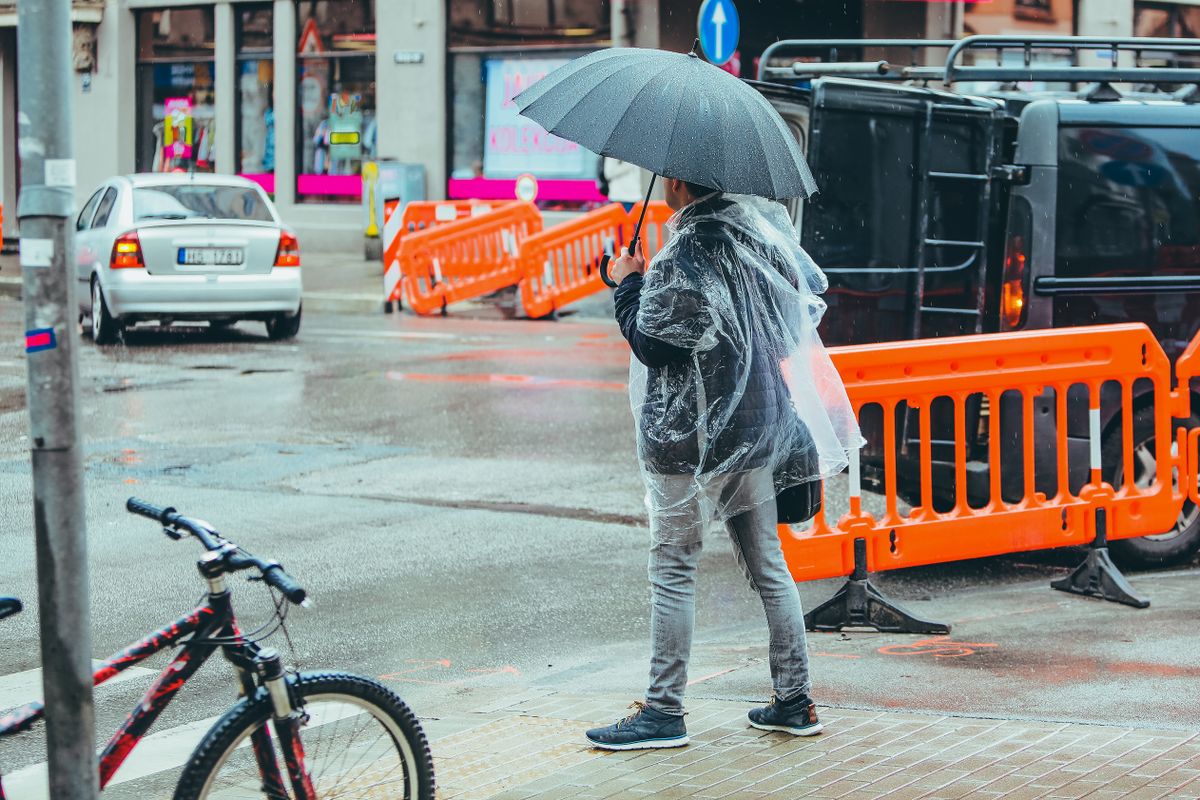
Photo by Vlad Fonsark on Pexels
- Empty all pockets and zip up all main zippers, pocket zips, and pit zips.
- Fasten all velcro straps and snap-button cuffs to prevent snagging interior mesh.
- Loosen all drawstrings at the hood and cinch waist.
- Clean out detergent dispenser drawer to remove residual powder or fabric softeners.
- Add 50ml (1.7 oz) of liquid technical wash to dispenser.
- Set machine cycle to Delicates/Gentle at 86°F (30°C) with low spin RPM.
- Perform a second rinse cycle to guarantee zero soap residue remains.
Traveler's Field Care Quick Sheet
- Daily Air Drying: Hang coat on a broad padded hanger in a dry, ventilated room; never leave compressed wet inside a backpack pocket.
- Spot Cleaning: Wipe off trail mud with lukewarm water (86°F / 30°C) and a soft microfiber towel; avoid scrub brushes on seam lines.
- DWR Water Droplet Test: Spritz water onto shell; if water beads off in 3 seconds, DWR is active. If fabric darkens within 5 seconds, heat-reactivate or spray fresh DWR.
- Emergency Seam Touch-up: If tape edges lift during travel, place a damp cotton cloth over the tape and press with a low-iron (230°F / 110°C) for 5-10 seconds.
Pro Tip: Preserving Mesh Linings with Spray-On DWR
When re-proofing technical outerwear equipped with a breathable mesh lining, always use spray-on DWR rather than wash-in formulas. Wash-in water repellents coat every surface equally, covering the interior mesh lining in silicone or fluoropolymer water-repellent film. This destroys the mesh's hydrophilic moisture-wicking properties, reducing garment breathability by up to 80% and trapping body perspiration inside. Applying a spray-on treatment exclusively to the damp exterior shell keeps the internal mesh fully functional while restoring 100% surface water repellency.
Troubleshooting Common Sealed Seam & DWR Failures
| Symptom | Root Cause | Diagnostic Test | Corrective Action |
| --- | --- | --- | --- |
| Water dampness along stitch lines | Polyurethane seam tape lifting or adhesive dry-out | Inspect inner lining under bright light for cloudy or peeling clear tape edges. | Cover lifting section with damp cotton cloth; iron at 230°F (110°C) for 5-10 sec to re-melt adhesive. Replace coat if tape is flaking off completely. |
| Fabric surface 'wetting out' (darkening fabric) | DWR coating worn off or contaminated by oils/dirt | Spritz water droplets on dry outer fabric. If droplets absorb in < 5 sec, DWR has failed. | Wash coat with 50ml liquid tech wash at 86°F (30°C), then tumble dry low (110°F/43°C) for 15 min. Apply spray-on DWR if water still fails to bead. |
| Sticky or gummy interior seam lines | Hydrolysis caused by storing jacket wet or in hot, humid spaces | Touch inner seam tape with finger; feels tacky or leaves residue. | Seam sealant has irreversibly degraded. Garment cannot be saved by home ironing; upgrade coat. |
| Clammy interior feeling despite zero rain entry | Detergent residue clogging fabric breathability or mesh lining hydrophobic contamination | Pour water on inner lining mesh; water should absorb immediately. If it beads, mesh is contaminated. | Machine wash with zero soap on warm rinse cycle twice to strip residue. Dry on low heat (110°F). |
Diagnose performance drops, moisture leaks, and tape issues with this step-by-step troubleshooting guide.
Immediate Seam Inspection Action Plan
Your decision: Determine whether your jacket simply requires routine dirt removal, DWR heat reactivation, or home seam-tape re-bonding.
Do this next: Inspect inner seams using the checklist, close all zippers/snaps, and perform a gentle 86°F liquid tech wash followed by 15 minutes of low-heat drying.
- Read next: Why Is My Rain Coat Wetting Out? How to Reapply DWR
- Read next: Fully Sealed Seams vs. Water-Resistant Coatings
If your seam tape is flaking and delaminating past repair, upgrade to our durably bonded Waterproof Hooded Trench Coat.
Before running your next laundry cycle, perform a 3-point inspection of your jacket's interior seams.
Seasonal Maintenance & Storage Schedule
- Post-Hike / Heavy Rain Use — Shake off loose water; hang coat on a wide padded hanger in a ventilated room at 65°F–72°F until dry. Never compress wet in pockets.
- Every 20–30 Wears (or 1 Month Urban Commuting) — Machine wash at 86°F (30°C) with 50ml tech wash. Perform double rinse. Tumble dry at low heat (110°F/43°C) for 15 minutes to reactivate DWR.
- Every 6 Months (Bi-Annual Prep) — Perform water droplet test. Apply spray-on DWR to exterior shell while damp if water absorption occurs. Inspect all seam tape intersections for lifting.
- End-of-Season Off-Storage (Summer/Winter Transition) — Deep wash with tech cleaner, air dry thoroughly for 48 hours. Hang uncompressed in a cool, dark, dry closet on a wide hanger. Do not store in car trunks.
Cleaning & Heat Threshold Matrix
| Care Parameter | Safe Operating Limit | Destructive Threshold | Impact on Seam Tape Adhesive | Impact on UPF 50+ Weave |
| --- | --- | --- | --- | --- |
| Water Wash Temp | 86°F (30°C) Gentle | 104°F (40°C)+ High Temp | Prevents glue softening; preserves thermal bond | Zero impact on structural UV blocking fibers |
| Dryer Reactivation | 110°F (43°C) Low Heat (15 min) | 140°F (60°C)+ High Heat | Maintains 100% seam flat seal integrity | Safe for high-density polyester matrix |
| Iron Seam Repair | 230°F (110°C) Silk Heat + Damp Cloth | 300°F (150°C)+ Direct Dry Iron | Re-melts PU adhesive safely in 5–10 seconds | Direct dry iron scorches outer face fabric |
| Cleaning Solvents | Pure Tech Liquid Cleaner (pH Neutral) | Dry Cleaning / Powder Detergents | Powders strip glue; solvents dissolve tape 100% | Surfactant buildup alters UV light refraction |
Compare safe cleaning methods against damaging treatments. Leading with exact numerical limits protects technical fabric integrity.
Recommended Gear & Technical Solutions
Engineered for active women needing versatile sun and rain protection across city commutes, trail hikes, and overseas travel.
Decision Tree: Seam Repair vs. Garment Replacement
Photo by Michele Raffoni on Pexels
Use this decision framework to evaluate seam tape lifting, peeling, or micro-cracking.
Best choice for
- Home Heat Press Repair — Polyurethane adhesive reactivates safely at 230°F (110°C) under a damp press cloth.
- Spray-On DWR + Low-Heat Tumble Dry — Restores surface tension without stressing sealed seams.
- Seam tape is crumbling into dry white flakes along the sleeve or shoulders.
- Internal membrane is yellowed, tacky, and peeling away from outer shell (hydrolysis).
- Professional Seam Re-Taping — Cost-effective for high-value outer layers when lifting is localized to high-friction stress points like underarms.
- Garment Replacement — When multi-layer membrane delamination occurs, home adhesives cannot restore 100% waterproof protection.
Fabric & Tape Material Care Specifications
| Component Layer | Material Engineering | Thermal Tolerance Limit | Primary Vulnerability | Preservation Protocol |
| --- | --- | --- | --- | --- |
| Seam Seal Tape | 0.15mm Thermoplastic Polyurethane (TPU) | 230°F (110°C) Max Short Contact | High heat, dry cleaning solvents, spin friction | Wash gentle <86°F; iron with damp press cloth only |
| Outer Face Fabric | High-Density UPF 50+ Poly-Blend | 300°F (149°C) | Abrasion, oil buildup clogging micropores | Wash with residue-free tech wash every 20 wears |
| Interior Lining | Hydrophilic Breathable Polyester Mesh | 250°F (121°C) | Wash-in DWR treatments, velcro hook snags | Zip all velcro pre-wash; use spray-on exterior DWR |
| DWR Finish | Fluoropolymer Water-Repellent Matrix | 110°F–120°F Activation Heat | Detergent surfactants, body oil accumulation | Reactivate with 15-min low heat dryer cycle |
Technical specifications detailing the thermal limits, chemical tolerances, and construction parameters of sealed seam UPF outerwear.
5 Destructive Mistakes That Ruin Sealed Seams
Avoid these common cleaning pitfalls to prevent permanent fabric delamination and seam leakage.
Seam & DWR Performance Over Time
- Months 1–12 (Initial Phase) — 100% waterproof performance. Factory DWR beads water instantly within 1–3 seconds. No seam maintenance needed.
- Months 12–24 (Routine Wear) — Face fabric may wet out slightly in shoulder areas due to backpack friction. Wash with tech cleaner and tumble dry low (110°F) for 15 minutes to reactivate DWR.
- Years 2–4 (Mid-Life Maintenance) — DWR requires spray-on re-application every 6 months. Inspect inner seams for micro-lifting along waist drawstring channels. Touch up edges with low-temperature iron (230°F) and press cloth.
- Year 5+ (Long-Term Storage & Care) — With proper 86°F washing and uncompressed dark closet storage, UPF 50+ sun protection remains at 98% efficiency and sealed seams stay intact.
Frequently Asked Questions About Sealed Seam Care
How do I re-stick or fix a peeling seam tape at home without burning the jacket?
Set a household iron to low or silk setting (maximum 230°F / 110°C) with steam turned off completely. Place a damp cotton press cloth over the lifting section of seam tape. Apply firm, steady downward pressure for 5 to 10 seconds. The heat transfers through the damp cloth to safely re-melt the polyurethane thermal adhesive without scorching or melting the surrounding fabric shell.
Can I dry clean a sealed seam waterproof trench coat?
No, never dry clean a sealed seam waterproof garment. Standard dry-cleaning solvents like perchloroethylene chemically break down and dissolve heat-bonded thermoplastic seam tape adhesives within a single cycle. Dry cleaning also completely strips the exterior DWR finish. Always gentle machine wash at home at 86°F (30°C) using liquid technical cleaner.
Does washing a sealed-seam coat strip away its UPF 50+ sun protection rating?
No. Washing does not strip UPF 50+ protection if the rating is derived from a high-density structural weave. The fabric's physical construction blocks 98% of harmful UV rays naturally. However, detergent residue buildup from standard laundry soaps can coat fibers and alter light refraction. Rinsing thoroughly with liquid tech wash ensures full UV protection remains active.
Should I use wash-in or spray-on DWR for a mesh-lined sealed seam trench coat?
Always use a spray-on DWR treatment for mesh-lined coats. Spraying allows you to apply water repellent exclusively to the damp exterior face fabric. Wash-in formulas coat internal mesh linings with water-repellent polymers, ruining their moisture-wicking capability and causing sweat to condense inside your jacket during active use.
How should I store my sealed seam trench coat during warm months to prevent seam tape breakdown?
Hang your thoroughly dried trench coat on a broad padded hanger in a cool, dry, dark closet away from direct sunlight. Never store a coat compressed inside its self-packing travel pocket for extended off-season months, and avoid hot environments like attics or car trunks, as heat and trapped moisture trigger hydrolysis that turns seam tape sticky.
Answers to the most critical technical questions regarding seam tape repair, UPF retention, and washing practices.
Related Technical Guides & Outerwear Care
- How to Care for Your Waterproof Commuter Trench
- How to Clean and Maintain Your Sealed-Seam Waterproof Trench Coat
- How to Care for UPF 50+ Rain Jackets: Washing & DWR Maintenance Guide
Your Action Plan for Perfect Coat Care
Your decision: Determine whether your jacket simply requires routine dirt removal, DWR heat reactivation, or home seam-tape re-bonding.
Do this next: Inspect inner seams using the checklist, close all zippers/snaps, and perform a gentle 86°F liquid tech wash followed by 15 minutes of low-heat drying.
- Read next: Why Is My Rain Coat Wetting Out? How to Reapply DWR
- Read next: Fully Sealed Seams vs. Water-Resistant Coatings
If your seam tape is flaking and delaminating past repair, upgrade to our durably bonded Waterproof Hooded Trench Coat.
Follow these steps to ensure your waterproof trench coat remains 100% dry and sun-protected for years to come.
Cover photo by cottonbro studio on Pexels.