The Overlooked Flaw in Most Long Waterproof Jackets for Women
 Daniel OkaforField Tester
I’ve spent years testing outerwear in the field, from mountain squalls to urban downpours. But after selling thousands of waterproof trench coats, the biggest dealbreaker isn't performance in a downpour, but the 'swish' noise the fabric makes in a quiet office. It’s the one thing lab tests for water-column pressure never measure: social friction. A high-performance shell designed for the trail can feel awkward and loud the moment you step inside.
The Problem with Performance Fabrics in Daily Life
What surprised me was how often this feedback came up. Customers weren't complaining about leaks; they were complaining about noise. That distinct 'rustle' of a technical waterproof membrane is a signal of ruggedness on a hike, but it feels out of place in a professional setting. I tested this for a week, wearing a standard high-spec rain jacket to my co-working space. Every time I moved, the crinkling sound drew attention. It felt stiff and impersonal, lacking the soft drape you want in a piece of daily apparel. This is where a focus on a minimalist hooded trench rainwear design becomes critical—it's not just about looks, but about integrating quietly into your environment.
Why Fabric 'Feel' Outranks Waterproof Ratings

For a coat you wear every day, the tactile experience matters more than a lab rating you might only need twice a year. While outdoor gear sites like REI do a great job explaining waterproof ratings, they don't capture the feeling of a jacket that drapes poorly or feels like a plastic bag against your skin. Our data shows customers will forgive a few drops of rain getting through during a severe storm, but they won't forgive a coat that feels clammy and restrictive. The real test of a long waterproof jacket for women isn't just staying dry, but feeling comfortable and confident while doing so. A jacket's breathability is a huge part of this, as a stiff, non-breathing fabric is what creates that unpleasant, sealed-in feeling. We've explored this specific issue in our guide to breathable jackets and their flaws.
How the Waterproof Hooded Trench Coat Earned Its Place
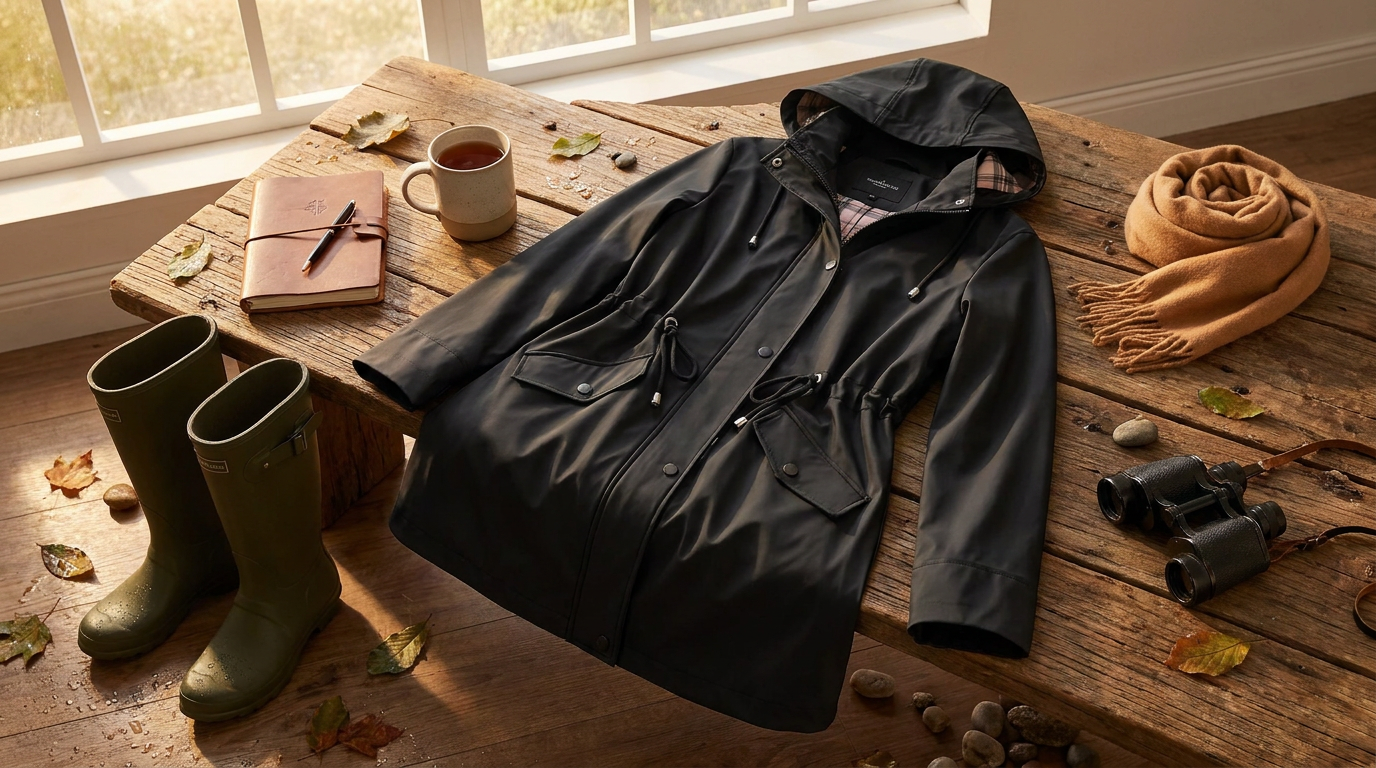
Here's the moment our Waterproof Hooded Trench Coat earned its place in my daily rotation. I was caught in a sudden rainstorm on my way to a meeting. I arrived, shook the water off at the door, and walked into the quiet lobby. The coat was silent. It draped over the chair like a piece of tailored clothing, not a rigid shell. It provided the necessary protection from the elements without sacrificing the soft, quiet feel essential for professional life. It’s designed around the idea that you need a stylish rain coat with a hood that works for the 95% of the time you aren't in a downpour. What I'd do differently next time is not even bother with the ultra-rigid 'expedition' shells for city life; the trade-off in comfort just isn't worth it.
Is a softer fabric truly waterproof enough?

Yes, for its intended purpose. While a soft-draped fabric may not have the same extreme laboratory ratings as a mountaineering hardshell, it is more than capable of handling the vast majority of urban and suburban rain conditions—from drizzles to steady downpours. The design prioritizes a better daily experience, accepting that absolute impermeability is less important than comfort, quietness, and breathability for the modern professional.
How does a quiet trench coat handle wind and commuting?
A quiet fabric doesn't mean a flimsy one. Our Waterproof Hooded Trench Coat is engineered to block wind effectively, a key requirement for any commuter. Because the material is less rigid, it offers better freedom of movement when walking, sitting on public transport, or getting in and out of a car. It combines weather protection with the practical comfort needed for a commuter raincoat in a trench style, proving that you don't need to wear a noisy, stiff jacket to stay protected.