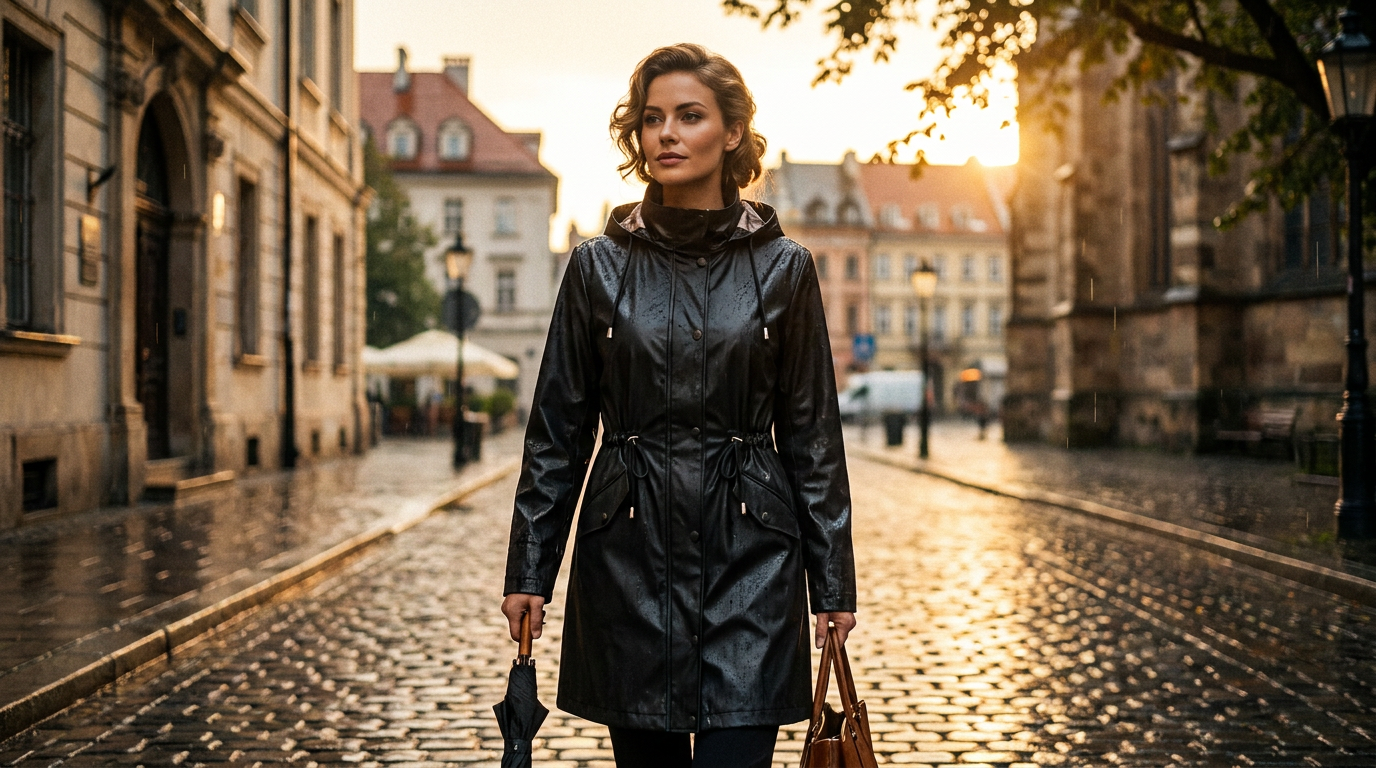
How a Breathable Waterproof Long Coat Stays Dry
 Priya RamanSenior Analyst
A truly waterproof coat is a wardrobe essential, but many face a common problem: staying dry from rain on the outside only to feel clammy from sweat on the inside. This happens when a coat blocks moisture from escaping. Our Waterproof Hooded Trench Coat is engineered with a classic silhouette to be a superior breathable waterproof long coat that keeps you comfortable during any transit.
The Science of Staying Comfortable: What is Breathability?
Breathability is a fabric's ability to allow moisture vapor (sweat) to pass from the inside to the outside. Without it, perspiration traps against the body, condensing and making you feel cold. High-performance outerwear uses sophisticated membranes—thin layers containing billions of microscopic pores. These pores are too small for water droplets to enter but large enough for vapor to escape. Technologies like Helly Hansen's HELLY TECH® utilize these principles, which we have integrated into our long-line coats. The membrane is only the last link in the chain, and what you wear beneath it decides how much vapor ever reaches it. A cotton hoodie or heavy cotton shirt absorbs sweat and holds it against the body as liquid — which no membrane can transport, since the pores move vapor, not water — so the wearer of a technically excellent coat over a soaked cotton mid-layer experiences it as "this coat doesn't breathe." Merino wool and synthetic base layers keep moisture moving as vapor, feeding the membrane what it is actually built to pass. The layering arithmetic for a commute also differs from a countryside walk: dress for the tenth minute of walking, not the first — leaving the house slightly cool means arriving at equilibrium, while leaving warm means the sweat production starts before the first crosswalk and the membrane spends the whole trip in deficit. The coat is a system component; the outfit is the system.
Three Pillars of Breathability in a Long Trench Coat

Photo by Daria Nekipelova on Pexels
Achieving breathability in a long coat is unique due to the larger surface area. We focus on three components for all-day protection.
4. Pace: The Pillar You Control in Real Time
No membrane rating survives a person running for a train, because sweat output scales with effort far faster than any fabric's transport ceiling. The practical corollary is that walking pace is a breathability control you carry with you: dropping perhaps ten percent off a rushed pace cuts heat production disproportionately, and often costs a two-minute earlier departure rather than any real time. The transitions are where the manual controls earn their keep — the two-way zipper opened from the bottom for the brisk uphill stretch, closed again on the exposed corner; the hood down during the sheltered arcade, up for the open plaza. Riders of the same commute learn its thermal map within a week: the overheated subway platform where the coat opens fully, the air-conditioned lobby where it closes. Worked this way, a mid-spec coat outperforms a flagship one worn as a sealed unit from door to door — active management beats passive membrane every time the weather is merely bad rather than biblical.
1. The Waterproof Breathable Membrane
Performance is measured by Moisture Vapor Transmission Rate (MVTR). While a 5,000g rating suits low activity, our Waterproof Hooded Trench Coat targets higher ratings to ensure sweat is wicked away during the demands of active urban life.
2. Mechanical Venting for Active Airflow
Mechanical vents allow rapid heat exchange. Our design features a vented back yoke to let moist air escape the upper back without breaking the waterproof seal. A two-way front zipper is also crucial; it allows you to unzip from the bottom for increased airflow while walking, making it a superior commuter raincoat in a trench style.
3. The Durable Water Repellent (DWR) Finish
DWR causes water to bead and roll off. If the face fabric absorbs water—known as “wetting out”—it clogs the membrane’s pores and kills breathability. We use a PFC-free DWR to ensure the coat remains lightweight and functional in downpours, a key feature noted in our spring travel packing guide.
Maintaining Peak Breathable Performance
Standard detergents leave residues that clog pores. Always use a technical cleaner formulated for waterproof gear. You can reactivate the DWR by tumbling the coat on low heat for 20 minutes. If water stops beading, reapply a DWR treatment. While a breathable hooded rain jacket for long length outdoor use might prioritize different features, our trench coat balances urban style with technical performance. A note on reading listings, since MVTR numbers are unevenly disclosed and unevenly honest. When a rating is absent, three proxy signals separate genuinely breathable construction from styled rubber: a named membrane or technology the brand is willing to specify, taped seams described as such (a maker meticulous about seam sealing is rarely careless about the membrane), and the presence of mechanical vents — a back yoke or underarm ventilation is a visible commitment to airflow that no marketing department fakes. Conversely, "waterproof" with no breathability mention at a suspiciously low price usually means a polyurethane slab that will keep rain out and sweat in with equal efficiency.
Calibrate the numbers you do find against your actual use: a 5,000g rating suits a bus stop wait, 10,000g covers a briskly walked commute, and expedition-grade figures beyond that are engineering you will never invoke between the front door and the office. Paying for headroom you cannot generate the sweat to test is the most common overspend in this category — the commuter's money is better spent on the vents and the fit than on the last decimal of membrane spec.
Frequently Asked Questions

Photo by cottonbro studio on Pexels
How is a long coat's breathability different from a short jacket's?
A long coat covers the torso and legs, trapping more heat. Effective breathability is critical here. Features like two-way zippers and back venting promote airflow across the larger surface area.Does a DWR coating affect breathability?
Yes. If the outer fabric "wets out," it creates a water barrier that blocks the membrane's pores, stopping moisture from escaping and making the coat feel heavy.Can a coat be 100% waterproof and 100% breathable?
No, there is always a trade-off. Technical rainwear seeks an optimal balance: maximum waterproofing with high moisture vapor escape.Shop Waterproof Hooded Trench Coat