
How to Wash and Care for Your UPF 50+ Waterproof Trench Coat
The 30/3 Rule dictates washing your coat every 30 days of active wear or after 3 major travel trips. Use 50ml (1.7 oz) of additive-free technical wash at 30°C (86°F) on a gentle cycle with a low spin speed (800 RPM max). Never use standard household laundry detergents, fabric softeners, or chlorine bleach, which clog breathable pores, dissolve seam sealant adhesives, and destroy DWR rain repellency.
Key Takeaways: Core Rules for Dual-Protection Care
- Use Residue-Free Tech Wash: Standard liquid and powder detergents leave hydrophilic (water-attracting) chemical surfactants that clog membrane pores and force outer fabric to wet out.
- Avoid Fabric Softeners at All Costs: Silicone and tallow waxes in fabric softeners permanently destroy DWR water beading and ruin breathable mesh linings.
- UPF 50+ Sun Protection Is Structural: Sun protection comes from high-density weaving and UV-absorbent fibers. Gentle washing cleans out sunscreen oils and body salts that dull this protective barrier.
- Heat Reactivates Waterproofing: Low heat application (a 20-minute tumble dry on low or a low-temp iron over a press cloth) restores dormant DWR polymer chains.
- Protect Sealed Seams: Keep wash temperatures at or below 30°C (86°F) to prevent polyurethane seam tape adhesives from delaminating.
Master Pre-Wash & Machine Wash Checklist
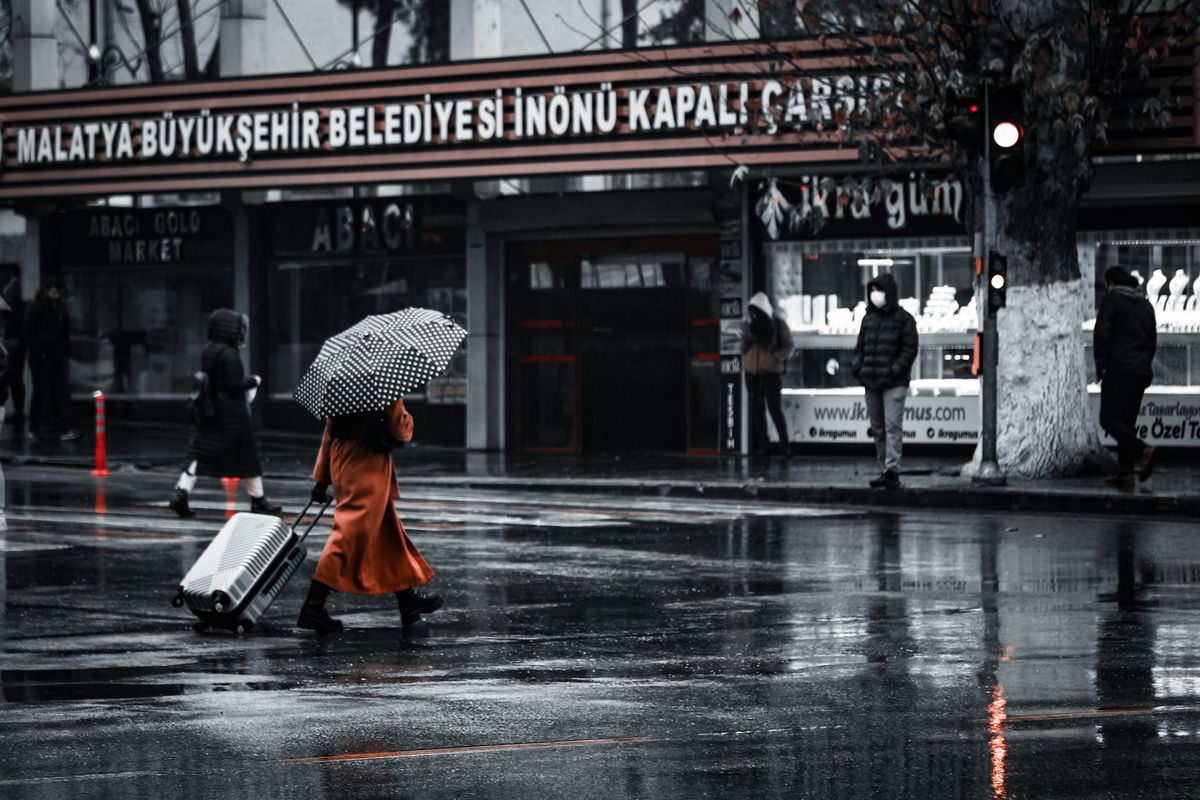
Photo by Emrah Yazıcıoğlu on Pexels
- 1. Check pockets: Remove all items, tissue paper, and travel accessories.
- 2. Secure all hardware: Zip main front zipper, close pocket zippers, and snap all cuffs closed.
- 3. Relax tension: Un-cinch waist drawstrings and fully open hood adjustment cords.
- 4. Wipe detergent drawer: Flush out any residual liquid softeners or powdered detergent clumps from previous laundry loads.
- 5. Measure cleaner: Add 50ml (1.7 oz) of additive-free technical wash into the detergent dispenser.
- 6. Set cycle parameters: Select Gentle/Delicate cycle, 30°C (86°F) water temperature, and low spin speed (max 800 RPM).
- 7. Add extra rinse: Run a second rinse cycle to guarantee 100% soap removal from breathable membrane pores and mesh lining.
- 8. Air dry or reactivate: Hang to air dry on a broad padded hanger away from direct sunlight, or tumble dry on gentle warm heat for 20 minutes if garment care label permits.
Printable Care Card & Laundry Room Reference
- DETERGENT: 50ml Technical Residue-Free Wash ONLY (No Tide, Gain, or Woolite).
- WATER TEMP: Cool/Warm at 30°C (86°F) maximum.
- CYCLE: Gentle / Delicate with extra rinse cycle.
- HARDWARE: All zippers zipped, cuffs snapped, drawstrings loosened.
- FORBIDDEN: Fabric softeners, optical brighteners, bleach, dry cleaning.
- DRYING: Line dry on padded hanger in shade OR tumble dry warm (low heat) for 20 mins to reactivate DWR.
- IRONING: Cool synthetic setting with press cloth; NO STEAM.
Visual Guide: Do's and Don'ts of Technical Outerwear Care
This visual reference outlines safe laundering habits versus common household mistakes that ruin technical performance.
Expert Pro-Tip: Reactivating DWR Without Fiber Shrinkage
When water drops stop beading on your outer shell and begin flattening out—a phenomenon known as 'wetting out'—your DWR coating isn't necessarily worn off; its microscopic hydrophobic spikacles have simply laid flat from friction and dirt.
> Pro-Tip from Technical Textile Specialists: After air drying your clean jacket, place it in the dryer on low warm heat for 20 minutes. The gentle warmth forces the fluoropolymer or non-PFC DWR chains to stand upright again, fully restoring 100% water beading performance. If you don't have a dryer, pass a dry iron set to low (synthetic mode) over a cotton towel placed over the outer shell. Never let direct iron metal contact the coat fabric or seam tape.
Troubleshooting Matrix: Common Fabric & Coating Issues
| Symptom | Root Cause | Immediate Fix | Prevention Rule |
| --- | --- | --- | --- |
| Fabric 'wets out' (water darkens outer shell instead of beading) | DWR layer coated in dirt, body oils, or household detergent surfactants. | Wash with 50ml technical wash; tumble dry warm for 20 minutes to reactivate DWR. | Reapply spray-on DWR after every 10–15 washes. |
| White chalky stains on neck collar or cuff lining | Mineral sunscreen accumulation (zinc oxide/titanium dioxide) mixed with skin sebum. | Pre-spot clean using soft toothbrush soaked in dilute tech wash, then delicate wash. | Apply sunscreen 15 minutes before putting on jacket to allow full skin absorption. |
| Musty smell coming from breathable mesh lining | Moisture trapped while jacket was packed away damp in pocket or suitcase. | Wash coat with technical wash + odor eliminator; hang to air dry in well-ventilated space. | Never store jacket folded in its pocket when damp; air dry fully within 4 hours. |
| Water leaking at shoulder or armhole seams | Polyurethane seam tape lifting due to high wash heat or standard detergent degradation. | Apply seam sealer repair adhesive over lifted tape edge and press firmly with low-heat iron over wax paper. | Wash at max 30°C (86°F) and avoid high spin cycles (>800 RPM). |
Identify and resolve common performance degradation symptoms before they compromise your travel plans.
Seasonal & Mileage-Based Care Timeline
- After Every 10–12 Wears (or 1 Major Trip) — Inspect collar and sleeve cuffs for sunscreen or body oil accumulation. Spot clean collar if needed, or run a basic gentle wash cycle with specialized tech wash.
- Every 30 Days of Continuous Commuting / Active Wear — Run full machine wash routine (30°C, delicate cycle, tech wash). Tumble dry on warm low heat for 20 minutes to reactivate DWR surface treatment.
- Every 6 Months (or After 25–30 Wash Cycles) — Perform the Spray Test. If clean outer shell wets out after warm heat activation, apply a spray-on DWR re-proofing treatment to high-friction areas (shoulders, cuffs, waist).
- End of Travel Season / Long-Term Storage — Deep wash garment to remove hidden salts. Ensure coat is 100% dry. Hang un-compressed on a padded hanger in a dark, dry closet. Do not leave packed in its pocket.
Recommended Technical Trench Coat & Care Essentials
Engineered for maximum versatility across changing weather conditions, keeping your technical gear clean ensures lifelong protection.
Maintaining a coat that offers both waterproof weather defense and UPF 50+ sun shielding requires balancing two technical systems. The outer shell relies on a Durable Water Repellent (DWR) chemical treatment applied over a tight synthetic weave, paired with micro-porous polyurethane seam sealing tape underneath. Simultaneously, the sun protection relies on dense weave geometry and optical UV-blocking structural yarns.
When you use standard household laundry detergents, chemical surfactants attach to the outer fibers. Household detergents are engineered to be hydrophilic—meaning they attract water. When surfactant residue stays on your trench coat, it pulls rainwater past the outer shell, causing the fabric to wet out even if the waterproof membrane beneath is intact. Furthermore, liquid softeners deposit silicone waxes that clog breathable mesh linings, trapping sweat body salts inside and creating a humid microclimate against your skin.
Keep your technical coat performing at peak level on every rainy, sunny adventure by treating it to clean, residue-free laundry care.
Side-by-Side: Technical Wash vs. Standard Household Detergents
| Care Parameter | Specialized Tech Wash | Standard Liquid Detergent | Powder Laundry Detergent | Fabric Softeners & Conditioners |
| --- | --- | --- | --- | --- |
| DWR Coating Safety | Preserves & protects hydrophobic layer | Strips coating with harsh surfactants | Scours and abrades coating particles | Destroys water beading completely |
| Breathable Membrane Impact | Leaves zero pore-clogging residues | Leaves hydrophilic soap films | Undissolved grains clog microscopic pores | Coats pores in impermeable wax film |
| UPF 50+ Structural Weave | Cleans sweat salts without fiber damage | May contain optical brighteners that fade colors | Abrasive powders can fuzz high-density weave | Leaves greasy film that attracts sun-degrading dirt |
| Seam Seal Tape Longevity | pH neutral; safe for seam adhesives | High pH can loosen polyurethane adhesives | Alkaline residues degrade tape glue | Solvent additives lift tape edges |
Compare how different washing agents affect the critical functional layers of your waterproof and UPF-rated jacket.
Decision Support: Machine Wash vs. Spot Cleaning vs. DWR Re-Proofing

Photo by Alina Rossoshanska on Pexels
Selecting the minimum required intervention preserves fabric integrity and extends garment lifespan.
Best choice for
- Targeted Spot Cleaning — Prevents unnecessary mechanical agitation of seam tapes and conserves overall DWR strength.
- Full Machine Wash with Tech Wash — Flushes accumulated salts and skin oils out of breathable mesh lining and pore membranes.
- Wash + Spray-On DWR Re-Proofing — Rebuilds the outer hydrophobic barrier when thermal reactivation can no longer restore original beading.
- Avoid dry cleaning: Dry cleaning solvents (perchloroethylene) dissolve polyurethane seam tape glue and melt low-temp synthetic UV coatings.
- Avoid hand wringing: Wringing or twisting technical jackets snaps sealed seam tape bonds and stresses protective outer stitching.
- Wash-In DWR Re-proofer — Not recommended for mesh-lined coats because wash-in formulas coat the inner breathable mesh lining, reducing moisture-wicking comfort.
Fabric Specification & Care Tolerances Matrix
| Garment Component | Material Composition | Max Temp / Heat Limit | Chemical Tolerances | Care Mandatory |
| --- | --- | --- | --- | --- |
| Outer Shell Fabric | High-density hydrophobic synthetic weave | 30°C (86°F) Wash / Low Heat Dryer | pH 6.5–7.5 neutral cleansers only | Keep free of household surfactants |
| UPF 50+ Sun Shield | UV-absorbing filament fibers (blocks 98% UV) | 40°C (104°F) thermal threshold | Zero chlorine bleach or peroxide | Remove sunscreen oils promptly |
| Seam Sealing Tape | Thermoplastic polyurethane (TPU) adhesive | 30°C (86°F) wash water max | No petroleum solvents or dry-clean fluids | Low spin speed (<800 RPM) to prevent peeling |
| Inner Breathable Mesh | 100% Breathable poly-mesh lining | 60°C (140°F) heat tolerance | Zero fabric softeners or tallow compounds | Double rinse to clear soap traps |
Refer to these precise technical limits when setting washing, drying, and ironing controls.
7 Mistakes That Instantly Ruin UPF 50+ and Waterproofing
Avoid these critical laundry pitfalls to protect your garment's high-performance attributes:
Lifecycle Care Progression: Year 1 through Year 5+
- Months 0 – 12 (Factory Fresh Phase) — DWR is factory-peak. Simply wash with 50ml tech wash every 30 days of use. Tumble dry warm for 20 minutes to restore beading after washing. No re-proofing agents needed.
- Months 12 – 24 (Active Travel Phase) — High-friction areas (shoulder strap points, waist drawstrings) may begin wetting out. Perform local spray-on DWR applications to high-wear zones after clean wash cycles.
- Months 24 – 36 (Mid-Life Maintenance) — Full-body spray-on DWR application recommended every 15 washes. Check inner seam tapes around hood and neck; re-press any minor lifting edges with low-heat iron over press cloth.
- Year 5 and Beyond (Extended Performance) — Maintain clean laundry schedule with residue-free wash. UPF 50+ structural UV weave remains 98% effective for life as long as fibers are kept free of dirt, oil, and degradation.
Frequently Asked Questions About UPF & Rainwear Care
Get rapid answers to the most common questions regarding sun protection and technical washing rules.
Your Post-Wash Action Plan
Your decision: Determine whether your coat simply needs a clean gentle wash or a full DWR re-proofing treatment.
Do this next: Run the spray test: flick clean water onto the dry outer shell. If water beads up immediately into crisp round spheres, follow the basic wash checklist. If water flattens and darkens the outer fabric, follow the wash + DWR reapplication protocol.
- Read next: Why Is My Rain Coat Wetting Out? How to Reapply DWR to Your Hooded Trench Coat
- Read next: How to Clean and Maintain Sealed Seam Waterproof Jackets: A Complete Care Guide
Waterproof Hooded Trench Coat in Slate Grey or Midnight Navy — built with sealed seams and durable UPF 50+ UV barrier.
Follow these simple diagnostic steps to verify your coat is fully restored and ready for your next outdoor adventure.