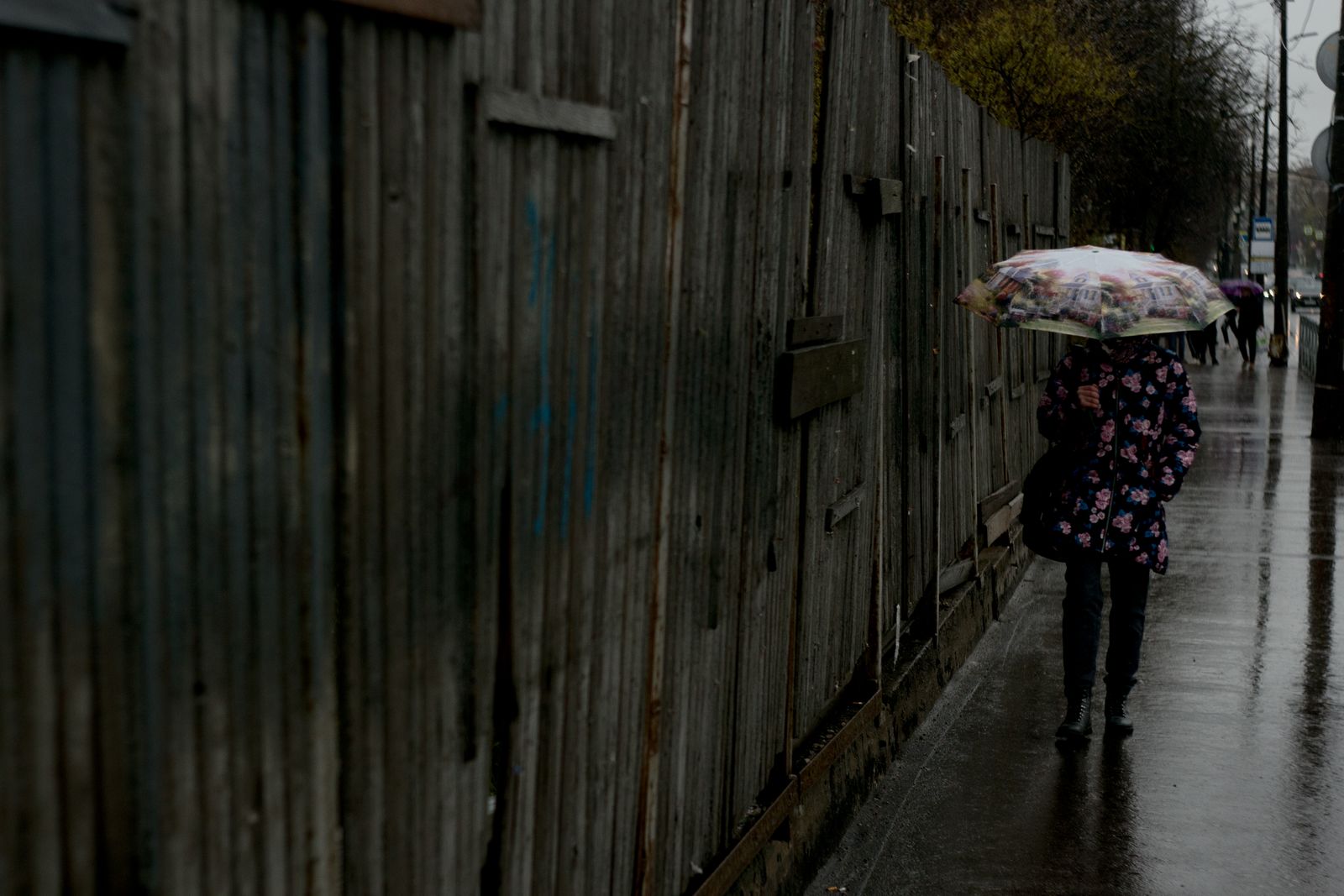
Why Does Waterproof Rainwear Feel Humid? Understanding Breathability & Mesh Linings
Waterproof rainwear feels humid because a sealed shell has to move your body's water vapor outward through the fabric, and on a warm, damp day the air outside is already so full of moisture that the vapor has nowhere to go. It condenses on the inside of the shell instead, leaving damp patches that feel exactly like a leak. In most cases the water on the inside of a rain jacket is perspiration, not rain, and the fix is better ventilation and a smarter lining rather than heavier waterproofing.
Is the moisture inside the jacket rain or sweat?
Start by checking where the dampness is. Sweat collects on the inside face of the shell in a broad, even film, and it shows up first across the back, under the arms, and along the chest, where your body puts out the most heat. A genuine leak is local and traceable: it follows a seam line, a zipper, a hood edge, or a worn spot, and the fabric will feel wet from the outside in at that exact point.
A second test is temperature. Sweat-driven dampness gets worse when you speed up, climb a hill, or step into a heated train car, and it eases when you slow down and open up. A leak behaves the opposite way — it depends on how hard it is raining, not on how hard you are working.
How does breathability work in a waterproof jacket?
Photo by cottonbro studio on Pexels
A waterproof fabric blocks liquid water while still allowing water vapor to pass. Liquid water arrives in droplets that are far too large to pass through the tiny pathways in a waterproof membrane or coating, while individual vapor molecules are small enough to diffuse through. That is the whole trick, and it is why "waterproof and breathable" is not a contradiction.
But diffusion needs a reason to happen. Vapor only moves from the humid side to the drier side, which means breathability is driven by the difference in humidity and temperature between the inside of your jacket and the air outside. On a cold, dry day that difference is large and the fabric passes vapor efficiently. On a muggy 78-degree day in the rain, the outside air is nearly saturated and the gradient collapses. The fabric has not failed; the physics simply stopped cooperating.
This is why the same jacket that felt perfect on an autumn hike feels swampy on a summer one. It also explains why manufacturers publish breathability figures measured in controlled lab conditions that no real weather ever reproduces.
Why is humid weather the hardest test for any rain shell?
Three things stack up at once in humid rain:
- The vapor gradient nearly disappears. With outside humidity high, vapor has little incentive to leave the inside of the jacket.
- Your sweat rate rises. Warm air means more perspiration to move in the first place, so supply goes up while transport capacity goes down.
- The outer face wets out. A film of water sitting on the outside of the fabric physically blocks vapor from escaping, even on a shell that is still perfectly waterproof.
What does a mesh lining do that a plain liner cannot?
A mesh lining solves a different problem than the shell fabric does. It holds the waterproof layer a small distance away from your skin and clothing, so the two are never pressed flat against each other. That gap matters for three reasons.
First, it creates a channel for air to move. Warm, humid air rises through the space between lining and shell and escapes at the hem, cuffs, and collar rather than sitting against your back. Second, it stops the clammy contact feeling. Condensation that forms on the inside of the shell stays on the shell instead of transferring straight onto your arms. Third, an open lining structure gives condensation a large surface area to evaporate from, so the jacket dries out from the inside far faster once conditions improve.
The Waterproof Hooded Trench Coat uses a breathable mesh lining for exactly this reason — it is the feature that keeps a fully sealed, waterproof shell from overheating in warm weather. For the longer version of how lining and shell interact over a long garment, see this guide to choosing a breathable waterproof hooded trench coat.
How to stop sweating in a rain coat: seven adjustments

What should you look for in a jacket for humid climates?
- A ventilating lining rather than a solid liner glued to the shell face.
- Adjustable openings at the hood, waist, and cuffs, so you can dial airflow up and down as your effort changes.
- Sealed seams, so you are never tempted to over-tighten everything in defense against a drip.
- Low weight and packability. A shell you can fold away the moment the rain stops is a shell you will not sweat in unnecessarily.
- Sun protection, since humid climates are rarely rainy all day. A UPF 50+ fabric that blocks 98% of harmful UV rays means the jacket still has a job once the clouds clear.
FAQ
Does a higher waterproof rating make a jacket feel more humid? Not directly. Waterproof ratings and breathability are measured separately, and a highly waterproof fabric can also be highly breathable. What actually drives the humid feeling is the vapor gradient, your effort level, and whether the jacket gives you a way to vent.
Is condensation inside a jacket a sign of a defect? Usually not. Condensation on the inside face of the shell is the expected result of warm, moist air meeting a cooler surface. Look for a traceable entry point along a seam, zipper, or worn patch before concluding that the fabric has failed.
Will a mesh lining make the jacket hotter in cold weather? A mesh lining adds very little insulation, so it does not make a shell noticeably warmer. It mostly changes how air and moisture move, which is why it helps in heat without turning the jacket into a winter coat.
Why does a jacket feel wet on the outside but still keep you dry? That is wetting out. Surface water has soaked the outer face of the fabric while the waterproof layer underneath is still doing its job. The jacket is working; it just cannot breathe well until the outer surface dries.
A practical next step
Take the jacket you already own out in warm rain and pay attention to the sequence rather than the outcome. Note when the dampness starts, what you were doing, and which openings were closed. Nine times out of ten there will be a specific moment — a hill, a closed hood, a cinched waist — that created the problem, and adjusting that one habit will change how the jacket feels far more than swapping fabrics. If the dampness turns out to be tracing a seam or a zipper instead, that is a waterproofing issue, and it is worth reading how a long waterproof coat should perform before replacing anything.
Cover photo by Plato Terentev on Pexels.