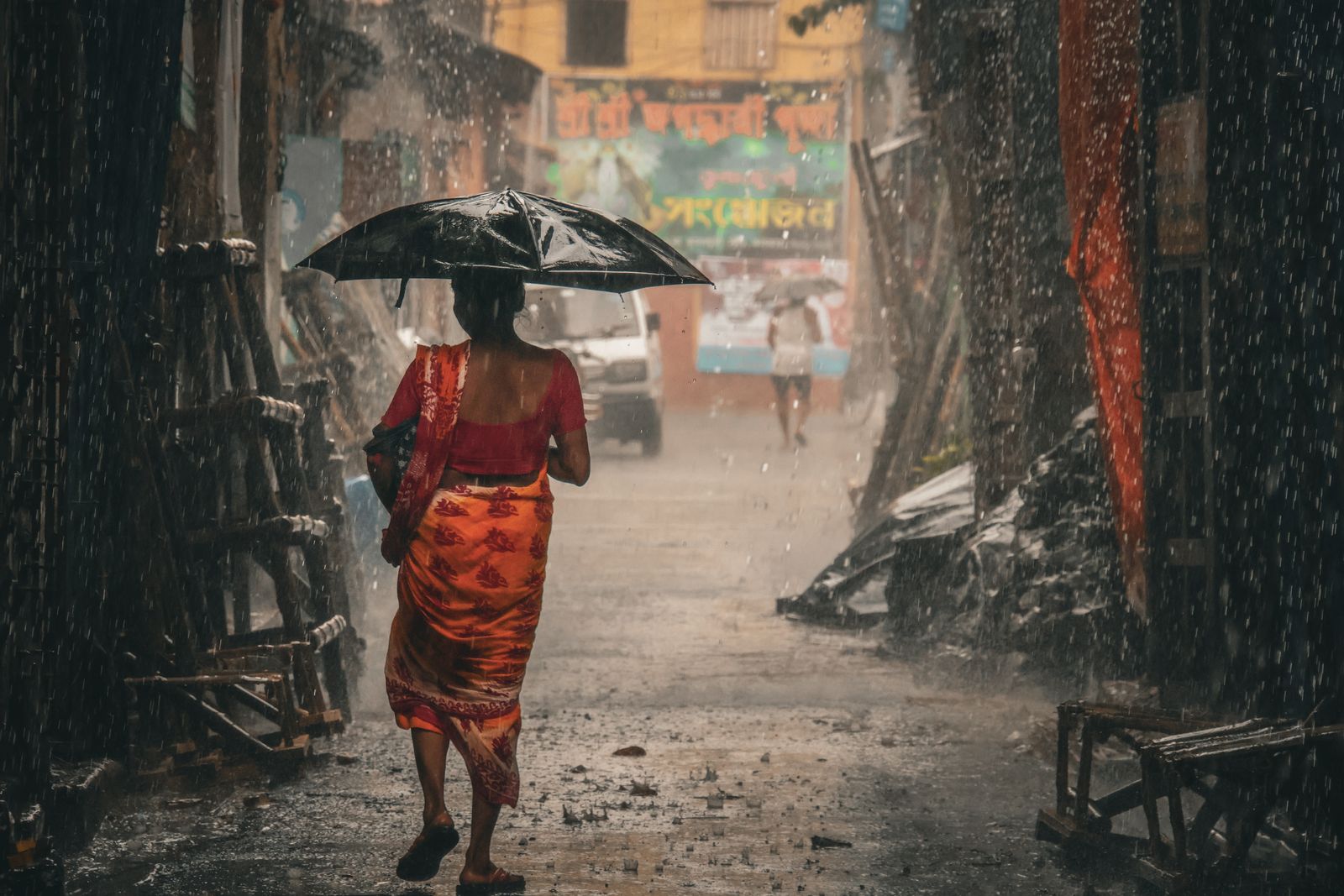
Breathable Waterproof Rain Jacket Technology Explained: How to Stay Dry Without Overheating
Should you choose a 3-layer alpine membrane or a 2-layer mesh-lined coat for humid travel?
Choose a 2-layer waterproof shell with a breathable mesh lining. Standard microporous membranes fail in high ambient humidity because the internal-to-external vapor pressure gradient collapses, trapping sweat inside and causing the dreaded 'sauna effect.' A mesh lining creates an essential air buffer that prevents wet fabric from clinging to skin, while fully sealed seams and mechanical adjustments maintain total downpour protection.
Fabric Construction Matrix Across Travel Scenarios
| Scenario | 2-Layer Mesh-Lined Trench Coat | 2.5-Layer Ultralight Shell | 3-Layer Technical Alpine Shell |
| --- | --- | --- | --- |
| Warm Tropical Rain (75°F–85°F, 85%+ Humidity) | Superior: Mesh lining prevents clammy skin cling; internal air gap allows sweat evaporation. | Failure Mode: Interior print coating feels sticky and wet against bare skin; severe sweat buildup. | Moderate Failure: Heavy face fabric retains heat; membrane stops breathing due to zero vapor gradient. |
| Humid Urban Commuting & Sightseeing | Optimal: Flattering silhouette with cinchable waist, full weather protection, and all-day skin comfort. | Acceptable: Highly compact for emergency carry, but uncomfortable over sleeveless shirts. | Overkill: Rigid, crinkly fabric looks out of place in cities and offers poor airflow at low exertion. |
| Cool Mountain Deluge (45°F–60°F, High Exertion) | Good: Provides steady thermal buffer and moisture management, though slightly heavier in a pack. | Moderate: Good breathability while DWR lasts, but chills skin when fabric wets out. | Superior: Maximum hydrostatic head and high vapor transfer under steep temperature gradients. |
| One-Bag Multi-Climate Travel (Sun + Rain) | Best Overall: Packs into its own pocket; offers UPF 50+ sun defense and full rain shelter in one piece. | Good for Packing: Ultra-small pack volume, but lacks UV protection and multi-day wear comfort. | Poor for Travel: Bulky, non-packable structure that lacks sun protection for clear warm days. |
Compare how different waterproof jacket constructions perform under real-world weather and activity scenarios, highlighting where unlined membranes fail in humid heat.
Trade-Offs: Unlined Microporous Membranes vs. Mesh-Lined Coated Shells
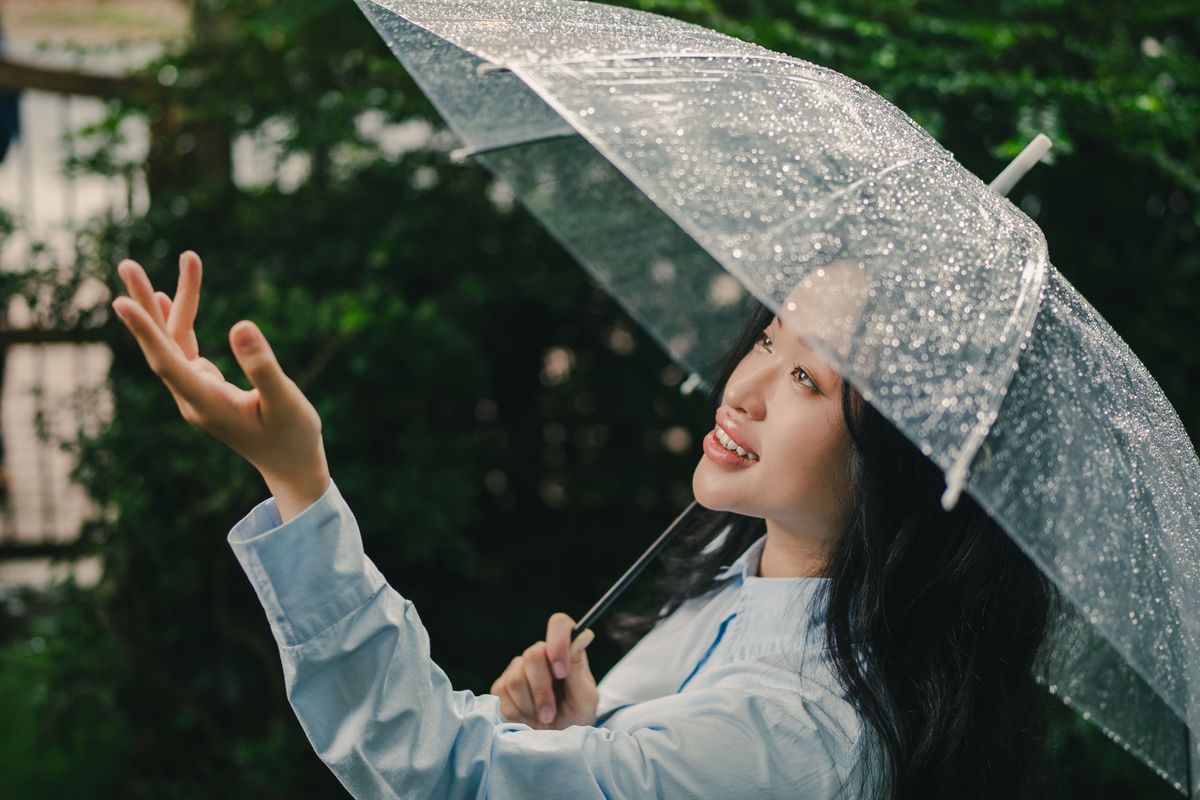
Pros
- 2-Layer Mesh Linings create a physical air separation barrier, preventing cold wet membrane contact against bare arms.
- Mechanical airflow control (adjustable drawstrings, snap cuffs, loose trench skirts) keeps moisture moving even when ambient relative humidity hits 90%+.
- UPF 50+ dual-rated shells shield against high-altitude solar radiation on multi-weather days without requiring an extra layer.
- Hydrostatic head ratings above 10,000 mm with fully sealed seams guarantee zero liquid penetration during heavy downpours.
- Unlined 2.5-layer membranes wet out rapidly when face fabric DWR degrades, turning the jacket interior into a condensation trap.
- Pure microporous membranes require a thermal gradient (warm inside, cold outside) to push vapor out—making them useless in 80°F tropical rain.
- Ultra-thin packable shells lack structural drape, showing sweat spots and clinging tightly to the body during humid exertion.
The Humidity Failure Point: What Fabric Specs Don't Tell You
Breathability ratings like MVTR (Moisture Vapor Transmission Rate) are measured in dry laboratory conditions (typically 50% relative humidity). In the real world, when ambient humidity hits 85% or higher, the vapor pressure differential between the inside of your coat and the outside air drops to near zero.
When this pressure gradient collapses, sweat vapor cannot physically pass through microporous membrane pores (0.2 microns wide). Instead, vapor hits the cold inner face of the jacket shell, condenses into liquid water, and drips down your arms. This process is often mistaken for a leaking coat. To survive muggy climates, rely on mechanical separation (mesh linings) and tunable airflow (cinchable waists, open hems, adjustable cuffs) rather than membrane physics alone.
Rain Gear Selection Logic for Travelers
- Is your primary destination humid or warm (above 70°F / 21°C)? → Yes: Go to Question 2. No: Select a heavy 3-Layer Alpine Shell for cold mountain weather.
- Will you wear the jacket over short sleeves or bare skin? → Yes: Go to Question 3. No: An unlined 2.5-layer shell is acceptable if worn exclusively over long-sleeve thermal base layers.
- Do you need multi-weather sun protection (UPF 50+) and self-packing convenience? → Yes: Choose a 2-Layer Waterproof Hooded Trench Coat with a breathable mesh lining.. No: Choose a vented 2-layer sport rain jacket.
Visualizing Fabric Physics: Liquid Water vs. Sweat Vapor
A visual breakdown of how microscopic pore structure interacts with ambient humidity and internal lining air gaps.
Essential Rules for Breathable Rainwear
- Wetting Out Kills Breathability: When an outer fabric's DWR (Durable Water Repellent) wears off, water saturates the face fabric, creating a continuous liquid sheet that seals micropores completely.
- Mesh Linings Eliminate Clamminess: In warm rain, lightweight mesh linings act as spacer buffers, preventing sticky laminated coatings from clinging to bare skin.
- Seams Must Be Fully Sealed: Water-resistant coatings mean nothing if needle holes from garment construction remain unsealed. Look for fully taped seams behind the lining.
- Look for Dual Defense: Sunny mornings frequently turn into stormy afternoons. A UPF 50+ rated rain shell eliminates the need to carry separate sun and rain jackets.
Decoding Moisture Metrics: MVTR vs. RET Ratings
| Metric & Test Standard | Low Performance (Emergency) | Moderate Performance (Commuting) | High Performance (Active Travel) |
| --- | --- | --- | --- |
| MVTR (Inverted Cup / JIS L 1099 B1) | < 5,000 g/m²/24h: Moisture builds up rapidly during light walking. | 5,000–15,000 g/m²/24h: Comfortable for urban walks and light rain. | 15,000–25,000+ g/m²/24h: Excellent vapor transfer during steep hiking. |
| RET (Sweating Hot Plate / ISO 11092) | RET > 13: High resistance to moisture; feels like a plastic bag. | RET 6–13: Moderate resistance; good for everyday temperate travel. | RET 0–6: Extremely breathable; minimal barrier to evaporative cooling. |
| Hydrostatic Head (Waterproofness) | < 3,000 mm: Water resistant only; fails in driving rain or under pack straps. | 5,000–10,000 mm: Fully rainproof for sustained light-to-medium downpours. | 15,000–20,000+ mm: Heavy torrential rain and high-pressure wind resistance. |
| Next-to-Skin Barrier Mechanism | None (Raw polyurethane spray coating). Sticky and clammy. | 2.5-Layer Printed Carbon/Ceramic grid. Slightly reduces friction. | 2-Layer Suspended Mesh Lining. Physical air gap eliminates skin contact. |
Laboratory metrics explain how fabrics handle moisture vapor under controlled conditions. Use this matrix to translate technical hangtags into real-world comfort expectations.
Which Technology Fits Your Travel Style?
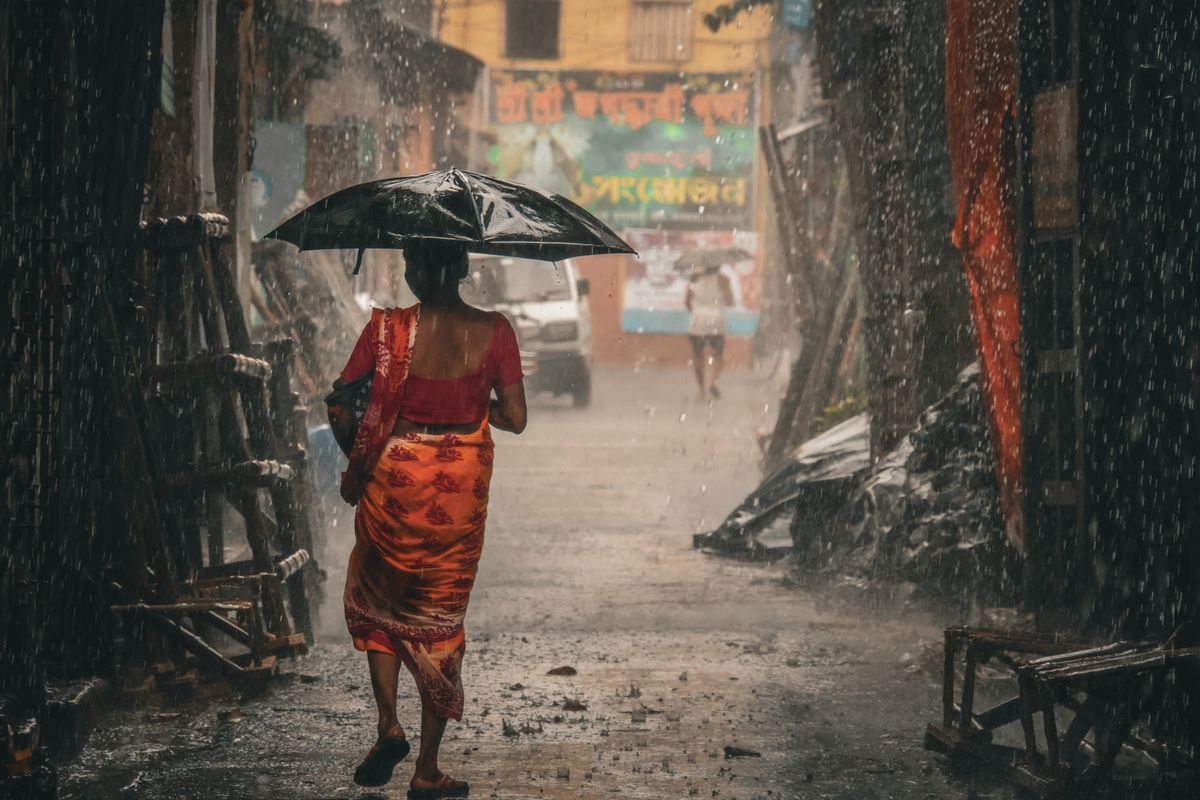
Photo by Siddique Sk on Pexels
Selecting the right rain coat depends heavily on ambient humidity, expected temperature ranges, and whether you pack light for multi-day trips.
Best choice for
- 2-Layer Mesh-Lined Trench Coat — The hanging mesh keeps damp shell fabric off bare arms, while cinchable waists and adjustable hoods let you dump excess heat manually.
- 2.5-Layer Minimalist Shell — Prioritizes minimal weight and pack size over next-to-skin comfort, assuming long-sleeve thermal base layers are always worn.
- Avoid unlined 2.5-layer jackets if traveling to humid tropical destinations where you will wear short sleeves or tank tops underneath.
- Avoid non-breathable rubberized rain slickers for active travel, as internal condensation will leave you as wet as the rain would.
- Waterproof Trench Coat with UPF 50+ — Combines weatherproofing with UV defense, replacing both a bulky rain coat and a sun shirt in a single packable garment.
Featured Solution for Humid & Variable Climates
Engineered for active women who refuse to let unpredictable weather dictate their itinerary.
Real-World Performance Across 3 Climate Scenarios
Scenario 1: Unexpected Afternoon Tropical Downpour (82°F, 90% Humidity) — Unlined shells fail here because breathability drops to zero in 90% humidity. The Waterproof Hooded Trench Coat uses its internal mesh lining to keep the damp outer shell off your arms, while the unzipped front placket and snap cuffs allow manual airflow, keeping you dry from both rain and trapped sweat.
Scenario 2: Windy Coastal Trail Hike with Intense UV Exposure (68°F, Variable Cloud Cover) — Standard rain gear offers no solar protection, while sun hoodies lack waterproof membranes. The Waterproof Hooded Trench Coat delivers certified UPF 50+ sun defense alongside sealed-seam waterproofing, shielding skin from invisible UV rays without forcing a layer change when dark rain clouds roll in.
Scenario 3: Single-Bag European Urban Transit & Sightseeing — Heavy alpine jackets take up half a carry-on and look overly technical in urban environments. This trench coat folds into its own pocket for compact stowage and features a cinchable waist that creates a tailored, flattering silhouette suitable for city dining and daily commuting.
See how fabric physics and design details translate into actual travel comfort.
To understand why rain jackets overheat, one must look at fluid dynamics and thermal gradients. Liquid water droplets under standard atmospheric pressure range from 100 to 300 microns in diameter. By contrast, water vapor molecules generated by human perspiration measure approximately 0.0004 microns.
The Role of Microporous Membranes and DWR
Waterproof-breathable membranes work by engineering microscopic pores around 0.2 microns in size—large enough for vapor gas to pass through, but far too small for liquid water droplets to penetrate. However, for gas molecules to move outward through these pores, two conditions must exist:When DWR wears away due to abrasion, dirt, or body oils, the outer face fabric absorbs liquid water—a failure mode known as wetting out. Once saturated, a continuous film of water covers the microscopic pores, completely blocking vapor transmission regardless of how expensive the jacket's internal membrane is.
Why Mesh Linings Outperform Unlined Shells in Warm Climates
In warm, humid weather (above 70°F with humidity over 80%), the ambient air outside the jacket is already saturated with water vapor. The vapor pressure differential drops to zero, bringing molecular diffusion to a standstill.In unlined 2.5-layer rain coats, sweat instantly condenses on the cold interior wall of the shell. Because there is no barrier, the coat sticks to skin like plastic wrap, creating intense clamminess. A 2-layer construction with a suspended mesh lining solves this failure mode mechanically. The mesh layer holds the cold waterproof membrane 2 to 3 millimeters away from your skin, establishing an internal micro-climate where air can circulate. Sweat evaporates into this buffer zone, keeping you comfortable even when ambient conditions stop chemical diffusion.
Frequently Asked Questions About Rain Jacket Technology
Get clear answers to common questions about fabric breathability, sweat condensation, and jacket construction.
How to Choose Your Next Waterproof Trench Coat
Your decision: If traveling through warm, humid, or variable climates, choose a 2-layer waterproof coat equipped with a breathable mesh lining and mechanical venting over an unlined technical shell.
Do this next: Evaluate your target region's average relative humidity and temperature. Inspect prospective outerwear for fully sealed seams, dual UPF/waterproof ratings, and cinchable fit adjustments.
- Read next: Fully Sealed Seams vs. Water-Resistant Coatings: What Keeps You Dry in a Downpour?
- Read next: Why Is My Rain Coat Wetting Out? How to Reapply DWR to Your Hooded Trench Coat
Check out the Women's Waterproof Hooded Trench Coat at https://waterprooftrenchcoat.com for an all-in-one UPF 50+, mesh-lined rain defense solution.
Make an informed choice for your next travel destination by balancing breathability specs with real-world airflow features.
Continue Exploring Waterproof Technology
Provide educational internal links to seam sealing, care guides, and UPF protection articles.
Cover photo by Siddique Sk on Pexels.