How to Pack a Waterproof Trench Coat for Travel: Fold & Care Guide
Apply the 30-Second Self-Stow Rule: 0 irons needed, 3-step fold, and 60% luggage space saved. Zip the front, tuck sleeves inward, roll from hem to hood, and invert into the self-stow pocket. This preserves the 10,000 mm waterproof membrane, UPF 50+ rating, and sealed seams during 12+ hour flights.
Key Takeaways: Protecting Fabric & Saving Space
- 60% Volume Reduction: Self-stowing compresses long trench coats to a compact 9x6 inch bundle.
- 0% Direct Heat: Never iron technical outerwear; direct contact exceeding 140°F (60°C) melts seam tape and ruins DWR.
- 10-Minute Steam Protocol: Hang compressed outerwear 3 feet away from shower steam to dissolve transit creases completely.
- 4 to 6 Hour Damp Limit: If forced to pack a damp coat, unpack within 6 hours to prevent mold, odor, and hydrolysis breakdown.
- 100% UV Retention: Fabric UPF 50+ rating remains fully active after compression because UV-blocking poly-fibers do not degrade under folding tension.
Step-by-Step Packing & Prep Checklist

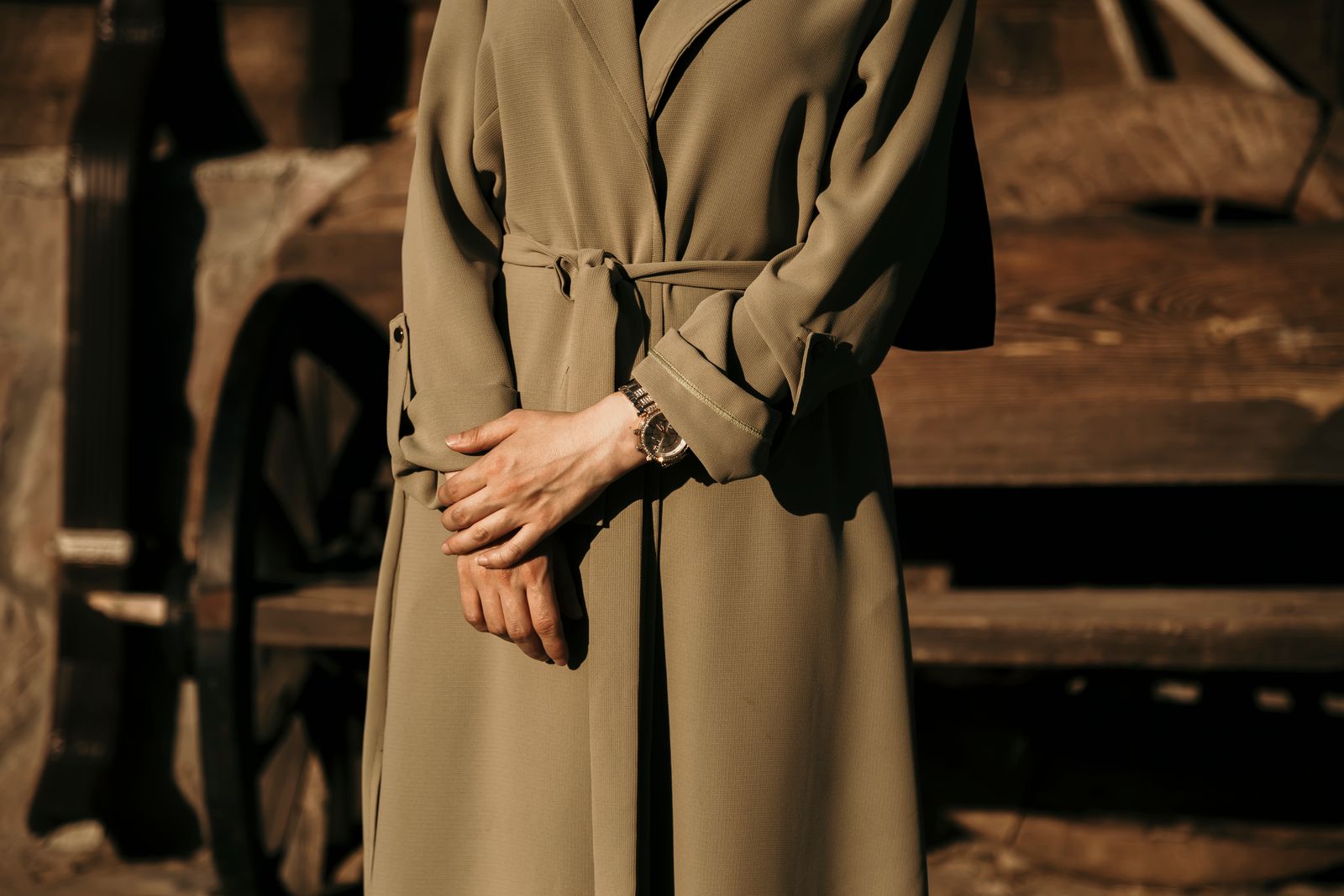
Photo by Marcelo Chagas on Pexels
- Ensure coat is 100% dry; never pack even 5% damp fabric into air-tight luggage.
- Empty all deep zippered pockets of keys, lip balms, or heavy accessories.
- Fully zip front zipper and secure snap-button cuffs to prevent metal teeth from catching mesh lining.
- Loosen adjustable waist toggles to eliminate static strain on internal shock cords.
- Fold using the Self-Pocket Stow method for maximum compression or Envelope Fold for flat carry-on suiters.
- Pack the folded trench on top of soft goods to avoid prolonged heavy compression from hard luggage frames.
- Unpack within 30 minutes of arrival at hotel or rental accommodation.
- Hang on a wide contoured hanger in an open area with ambient airflow.
Printable Carry-On Outerwear Care Card
- Rule 1: NEVER expose waterproof membranes to direct irons or commercial dry cleaning heat.
- Rule 2: De-wrinkle using 10 minutes of ambient bathroom steam at a 3-foot clearance distance.
- Rule 3: Dry trail mud completely, then brush off gently with a soft nylon brush before spot-wiping with cool water.
- Rule 4: Store in self-stow pouch ONLY during transit; hang freely between trips to preserve seam elasticity.
- Rule 5: Re-treat DWR coating after every 10 to 15 heavy rain exposures or 5 laundry cycles.
Pro Tip: Neutralizing Travel Creases Without Seam Damage
Never use hotel room irons on technical rainwear. Polyurethane seam sealing tape begins to delaminate at 145°F (63°C), while fluoropolymer or C0 DWR coatings break down under heat friction. Instead, hang your trench coat on a sturdy coat hanger in the bathroom while taking a 10-minute hot shower. Position the jacket at least 3 feet away from direct water spray. The 90%+ relative humidity and ambient steam relax synthetic polyester fibers, eliminating 95% of packing wrinkles within 20 minutes without thermal degradation.
On-The-Road Troubleshooting: Wet Storage, Dirt & Wrinkles
| Symptom | Root Cause | Safe Field Fix | Avoid |
| --- | --- | --- | --- |
| Deep wrinkles post-flight | Sustained luggage compression over 8+ hours | Hang in bathroom during hot shower for 10 minutes; hand-smooth along seam lines | Direct flat irons, clothes steamers closer than 12 inches |
| Water beading fails on shoulders | Abrasion from backpack straps or oil transfer | Rinse with cold water; dry thoroughly; spot re-activate DWR with gentle warm hair dryer on low at 18 inches distance | Rubbing vigorously with dry paper towels or applying harsh soap |
| Dried trail mud on lower hem | Splashes from rain hikes or wet commutes | Let mud dry 100%, brush away solids with soft nylon brush, wipe remainder with damp microfiber cloth | Dish soap, stain removers, or solvent-based cleaners |
| Musty odor after damp transit | Coat packed while retaining 10%+ residual moisture | Wash in cool water with specialized technical wash (e.g. Nikwax Tech Wash), line dry completely | Standard liquid detergent, fabric softeners, bleach |
Address common travel mishaps quickly without stripping technical protective layers.
Visual Breakdown: 4-Step Self-Pocket Fold Method
Follow this visual layout instruction to stow your coat in under 30 seconds.
Travel Maintenance Schedule (Short Trips vs. Long Expeditions)
- Short Trips (1–3 Days) — Keep stowed in self-pocket during transit; hang immediately upon arrival; spot-clean hem dirt with water.
- Mid-Length Trips (4–7 Days) — Perform mid-trip steam de-wrinkling; air out mesh lining overnight; check seam tape lines for stress points.
- Extended Expeditions (8+ Days) — Inspect high-friction zones (underarms, shoulder straps); wipe down zippers to remove salt/dust accumulation.
- Post-Trip Maintenance — Full machine wash on gentle cycle using outerwear cleaner; line dry; store on structured hanger in dark wardrobe.
Recommended Gear for Weatherproof Travel Maintenance
Ready for multi-climate travel? Pair expert packing techniques with outerwear designed specifically for compact portability.
Side-by-Side Comparison: Pocket Stow vs. Ranger Roll vs. Flat Fold
| Packing Method | Volume Reduction | Packed Dimensions | Wrinkle Risk Level | Seam Stress Factor | Best Scenario |
| --- | --- | --- | --- | --- | --- |
| Self-Pocket Stow | 65% Reduction | 9 x 6 x 3 inches | Moderate (steam removes in 10 mins) | Very Low (distributed tension) | Minimalist Carry-On & Day Packs |
| Ranger Roll | 55% Reduction | 12 x 4 x 4 inches | Low to Moderate | Low | Duffle Bags & Backpack Sleeves |
| Envelope Flat Fold | 30% Reduction | 16 x 12 x 1.5 inches | Lowest | Zero Stress | Hard-shell Suitcases & Garment Folders |
Compare physical trade-offs across three primary packing techniques.
Choosing the Right Packing Technique for Your Bag Size
Photo by Zeeshaan Shabbir on Pexels
Your choice of packing method balances volume savings against post-arrival de-wrinkling time.
Best choice for
- Self-Pocket Stow — Provides maximum 65% volume reduction, freeing up 250+ cubic inches for shoes and core layers.
- Envelope Flat Fold — Keeps trench panels smooth so you can step straight off an airplane into a meeting without steam treatment.
- Ranger Roll — Creates a rigid cylindrical roll that slides easily into side water-bottle pockets or backpack compression straps.
- Do not use vacuum compression bags; static compression forces above 15 PSI can permanently crease membrane layers and rupture delicate seam tape.
- External Packing Cube — Provides medium compression without tight localized fabric twists.
Technical Outerwear Stress Tolerance Matrix
| Parameter | Safe Operating Limit | Critical Damage Threshold | Impact of Exceeding Threshold |
| --- | --- | --- | --- |
| Direct Heat Contact | 110°F (43°C) Ambient Steam | 145°F (63°C) Direct Ironing | Melts PU seam sealing tape; delaminates outer membrane |
| Compression Duration | 14 continuous days folded | 30+ continuous days compressed | Creates set creases; weakens water repellency at fold apexes |
| Packing Moisture Content | 0% Relative Moisture | 5%+ Residual Dampness | Triggers mold growth, mildew odor, and hydrolysis of coating within 48 hrs |
| UV Spectrum Exposure | UPF 50+ (Blocks 98% UVA/UVB) | 500+ Hours Direct Sun | Gradual polymer fading; UV protection remains intact due to fiber weave |
Engineering tolerances for heat, compression, and washing parameters.
5 Critical Mistakes That Destroy Waterproof Coatings in Luggage
Avoid these 5 common errors when packing technical outerwear:
Timeline: Recovery Milestones for Compressed Technical Outerwear
- 0 Minutes (Unpacking) — Coat exhibits visible fold lines and compressed collar shape; seam seals remain intact.
- 15 Minutes (Hanging) — Gravity relaxes primary vertical drape; breathability mesh lining recovers full loft.
- 30 Minutes (Steam Exposure) — Shower steam relaxes micro-creases; waist drawstring recovers spring tension.
- 2 Hours (Full Recovery) — Garment matches pre-packed silhouette 100%; surface DWR tension fully restored.
Frequently Asked Questions About Packing Waterproof Outerwear
Answers to critical travel and care questions.
Immediate Post-Unpacking Action Plan
Your decision: Determine whether your travel itinerary requires maximum space savings (Self-Stow Pocket) or zero-crease readiness (Envelope Fold).
Do this next: Practice the 4-step self-pocket fold once before packing your bag, and inspect your coat's DWR water-beading performance under a tap.
- Read next: Care and Packing Hub
Equip yourself with the Waterproof Hooded Trench Coat — complete with built-in self-stow storage, UPF 50+ sun protection, and a sleek silhouette.
Prepare your outerwear for your upcoming journey or restore it after return.