
Fully Sealed Seams vs Water-Resistant: What Keeps You Dry in a Downpour?
No. Water-resistant coatings only delay liquid absorption on the fabric's surface. During sustained or heavy rainfall, water pressure easily penetrates the thousands of microscopic needle holes created during garment stitching. Only fully sealed seams—which apply heat-bonded waterproof tape across every interior stitch line—completely block water intrusion during torrential rain.
At-a-Glance Comparison: Rain Intensity vs. Seam Protection Tech
| Weather Scenario | Water-Resistant Coating Only | Critically Sealed Seams | Fully Sealed Seams |
| --- | --- | --- | --- |
| Light Mist & Drizzle (<10 mins) | Beads water off surface effectively; keeps you dry. | Complete protection. | Complete protection. |
| Sustained Moderate Rain (20–40 mins) | FAILS: Water forces through stitch holes at shoulders and neck. | Keeps core dry, but side and arm seams eventually leak. | Complete protection; zero moisture intrusion. |
| Heavy Downpour (30+ mins) | FAILS: Fabric wets out completely; seam holes stream water. | FAILS: Water penetrates unsealed side seams and armholes. | Complete protection; internal mesh lining remains dry. |
| Wind-Driven Storms & Carrying a Backpack | FAILS: Shoulder strap pressure accelerates stitch-hole leakage instantly. | FAILS: Friction and pressure force water through unsealed seams. | Complete protection; thermo-tape holds against mechanical pressure. |
Compare how surface coatings, critical seam sealing, and full seam sealing perform under real-world precipitation scenarios.
Failure Modes & Structural Trade-Offs

Pros
- Fully sealed seams create an impenetrable physical barrier across 100% of needle perforations.
- Thermo-taped construction withstands mechanical pressure from backpack straps and high wind speeds.
- High-end fully sealed trench coats incorporate breathable mesh linings to prevent internal condensation build-up.
- Combines long-term durability with uncompromising downpour defense without needing frequent surface re-treatments.
- Water-resistant coatings (DWR alone) fail rapidly once surface tension breaks under continuous rainfall.
- Unsealed needle punctures act as miniature funnels, pulling water inward via capillary action.
- Critically sealed jackets leave vulnerable movement seams (armpits, lower torso) completely exposed to rain.
- Full seam taping increases manufacturing complexity and initial cost compared to basic water-resistant shells.
5 Misconceptions That Lead to Soaked Travel Clothes
Don't fall for clever marketing terms. Here are the most frequent mistakes travelers and outdoor enthusiasts make when selecting rain gear.
Microscopic View: Needle Hole Intrusion vs. Thermo-Taped Defense
When a sewing machine constructs a coat, the needle punctures the fabric thousands of times. Without heat-bonded seam tape, these holes create direct channels for liquid water.
Evaluating Your Personal Weather Protection Needs
Your decision: Determine whether your travel or daily commute involves sustained heavy rain or just light mist.
Do this next: Turn your current rain jacket inside out and check the interior stitch lines around the shoulders, hood, and armholes.
- Read next: How Waterproof and Breathable Fabrics Work: Staying Dry Without Overheating
- Read next: Why Is My Rain Coat Wetting Out? How to Reapply DWR
Explore the Waterproof Hooded Trench Coat for fully sealed seam defense combined with UPF 50+ sun protection.
Take these concrete steps to inspect your current wardrobe and determine if your outerwear is built for your next trip.
Essential Summary: Seams vs. Coatings
- Fabric vs. Construction: Waterproof fabric is useless if the seams are not sealed; water will always find the path of least resistance through stitch perforations.
- Water-Resistant (DWR Only): Ideal for short light sprinkles or dry sun defense, but guaranteed to leak during sustained exposure.
- Critically Sealed: Tapes only high-exposure areas like the hood and shoulders; leaves armholes and torso seams vulnerable during active movement.
- Fully Sealed Seams: The gold standard for travel and trekking. Every interior seam is covered with heat-applied thermoplastic tape for 100% leak-proof reliability.
- All-Weather Versatility: Premium outerwear couples fully sealed seam tape with UPF 50+ UV blocking and breathable mesh linings to handle sun, humidity, and torrential downpours in a single garment.
Decision Guide: Matching Outerwear to Weather Conditions
Water-resistant coatings only delay water penetration on fabric surfaces; for sustained or heavy rain, fully sealed seams are strictly required to prevent needle-hole leakage.
Best choice for
- Fully Sealed Seams — Heat-bonded tape seals all needle holes against high hydrostatic pressure and shoulder strap friction.
- Water-Resistant DWR Coating — Sufficient for brief exposure to light drizzle without the manufacturing cost of full seam taping.
- Assuming a 'water-resistant' label will keep you dry in sustained rainfall over 15 minutes.
- Buying outerwear for wet-weather travel without verifying internal seam construction.
- Critically Sealed Seams — Seals only exposed areas like shoulders and hood; acceptable for short moderate rain but leaks at side seams during prolonged downpours.
Engineered Solution: All-Weather Sealed Protection
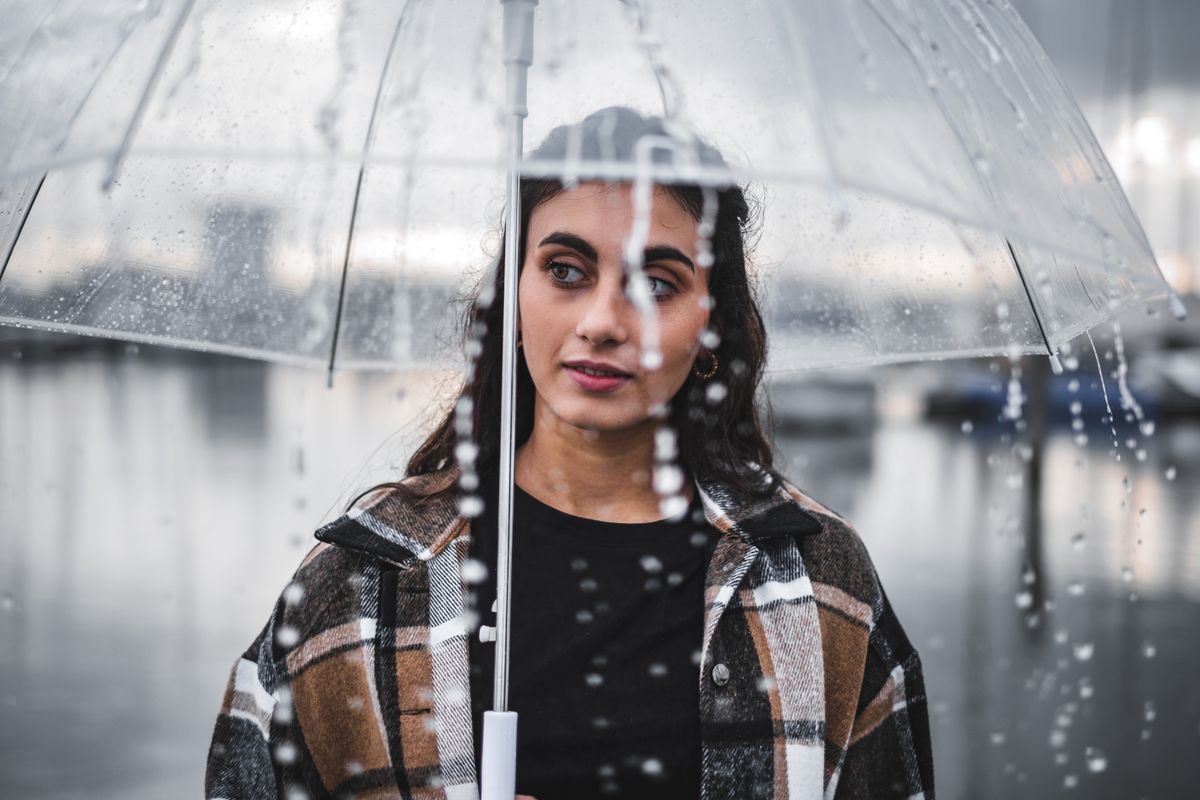
Photo by Michele Raffoni on Pexels
If you refuse to let unpredictable weather dictate your travel plans, you need a single garment that handles torrential rain, harsh humidity, and intense sun seamlessly.
Real-World Weather Scenarios Tested
Tropical Urban Downpour (30°C / 86°F with heavy sudden rain) — Choose a fully seam-sealed trench coat with breathable mesh lining. Standard rain jackets trap sweat in warm humidity, while water-resistant coats leak immediately.
Windy Coastal Hike with Heavy Daypack — Select a fully sealed seam garment. The pressure from daypack shoulder straps compresses fabric and forces water through unsealed stitch holes instantly.
Unpredictable One-Bag Travel (Sun, Drizzle, and Torrential Rain) — Pack a multi-functional UPF 50+ fully seam-sealed trench. It replaces your umbrella, sun jacket, and bulky windbreaker in a single compact pocket-packable design.
Here is how different garment constructions perform in real travel conditions.
To understand why jackets fail in the rain, one must look at how garments are made. A typical rain coat is assembled from multiple panels of technical fabric. During the manufacturing process, a high-speed sewing machine pierces the fabric thousands of times along shoulder seams, armholes, necklines, and pockets.
Even if the fabric itself possesses an exceptionally high Hydrostatic Head rating (such as 10,000mm to 20,000mm, meaning it can hold a column of water that high before leaking), those microscopic needle punctures act as unsealed open windows. When rain drops fall at high speed or when wind forces water against your body, liquid is driven straight through the stitch holes via capillary action.
How Water-Resistant Coatings Work (And Why They Fail)
Water-resistant jackets rely primarily on a Durable Water Repellent (DWR) chemical treatment applied to the exterior fabric surface. DWR alters the surface tension of the fabric, causing incoming water droplets to bead up and roll off rather than soaking into the weave.However, DWR has distinct physical limitations:
The Engineering of Fully Sealed Seams
To create true, uncompromising rain defense, outerwear engineers apply a secondary manufacturing process called thermo-taping or seam sealing.After the garment panels are stitched together, a specialized heating machine applies a multi-layer thermoplastic tape along the interior stitch lines under precise temperature, speed, and pressure. The heat melts the tape's adhesive backing directly into the fabric matrix, completely filling and covering every single needle hole.
When implemented across 100% of the garment's internal seams—including complex curves like set-in sleeves, pocket zippers, and hood crowns—the coat becomes a continuous, impenetrable shield against pressurized water. When paired with a breathable mesh lining, internal perspiration vapor can still evaporate outward without compromising external storm protection.
Further Technical Reading on Outerwear Technology
Expand your knowledge of technical fabric engineering and outerwear care with these detailed guides:
- How Waterproof and Breathable Fabrics Work: A complete breakdown of hydrophobic membranes, micro-porous structures, and ventilation.
- Maintaining Your Weatherproof Gear: How to wash sealed-seam coats safely without damaging interior thermo-tape adhesives.
- Understanding UPF Ratings in Rainwear: Why solar UV protection matters even on overcast, rainy travel days.
- One-Bag Travel Packing Strategies: How to choose lightweight, multi-functional outerwear that replaces three single-purpose jackets.
Frequently Asked Questions
Get expert answers to common technical questions about seam sealing and garment maintenance.
Ready for Complete Downpour Defense?
Your decision: Choose outerwear engineered with fully sealed thermo-taped seams, UPF 50+ sun protection, and breathable mesh lining.
Do this next: Order the Waterproof Hooded Trench Coat today and experience one jacket built for every weather scenario.
- Read next: Outerwear Weather Resistance Spec Comparison
Waterproof Hooded Trench Coat (UPF 50+, Fully Sealed Seams, Packable Design)
Don't let unpredictable storms spoil your next commute or weekend getaway.
Cover photo by Khoa Võ on Pexels.