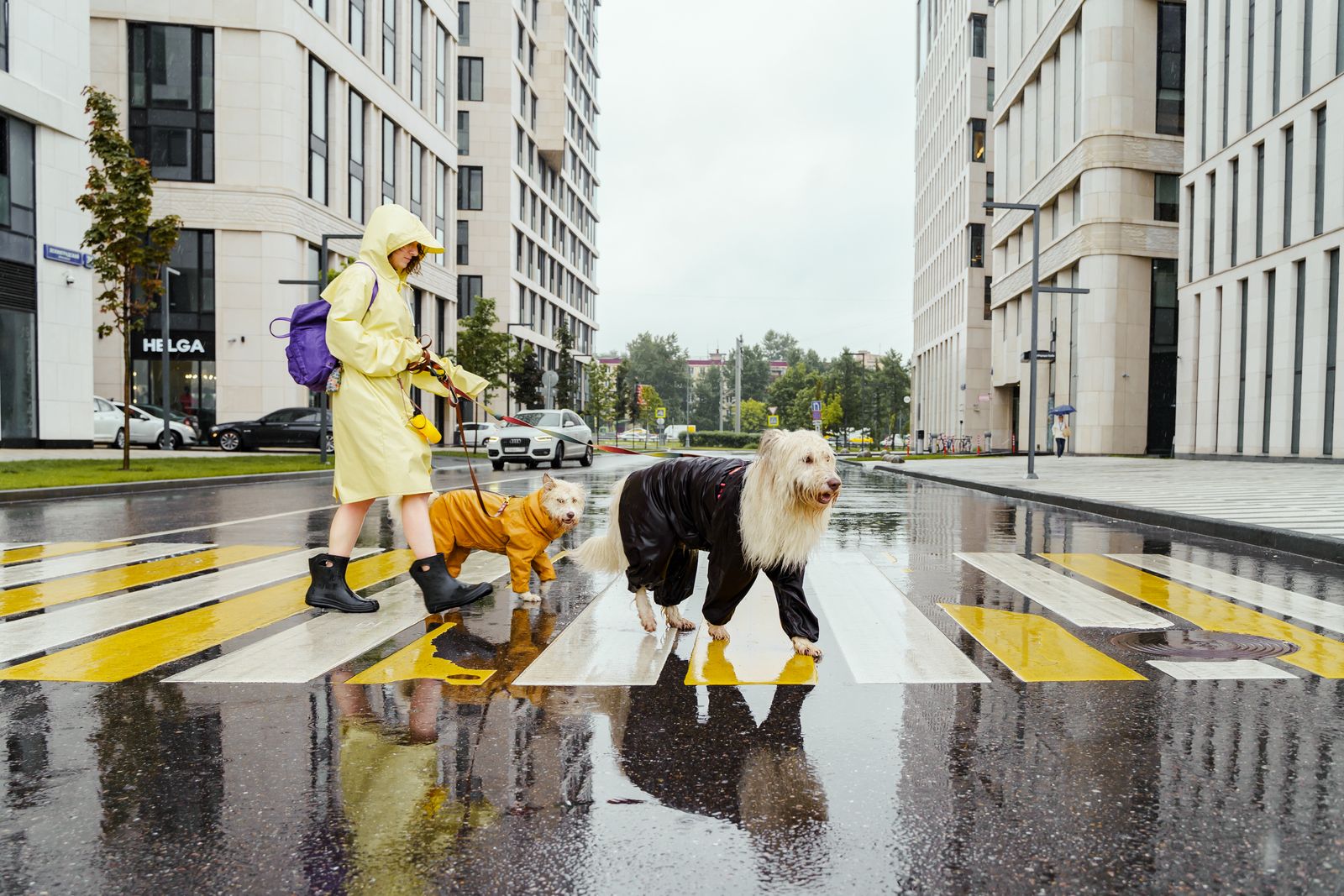
Best Breathable Travel Raincoats for Warm Climates: A Buyer's Guide
In warm, humid climates the coat that keeps you most comfortable is not the most waterproof one — it is the one that vents. Look for a breathable mesh lining, cuffs and a waist you can open and close, a full-length zip, and a shell with sealed seams so the waterproofing is real rather than nominal. Then judge it on how fast it dries and how small it packs, because in the tropics you will be putting it on and taking it off several times a day.
What "breathable" means when there is no spec on the label
Travel raincoats rarely publish laboratory breathability figures, and even when they do, the numbers are measured under conditions that have little to do with walking through a humid city. So the practical approach is to evaluate breathability by construction rather than by claim.
Three things you can check yourself, in a store or out of the box:
The lining. Hold the coat open and look at the inside face. A mesh lining is an open structure you can see through in places — it holds the waterproof shell off your skin and leaves an air channel between the two. A smooth, slick lining feels more luxurious and does the opposite: it lies flat against you and traps a film of humid air.
The openings. Count them. A full front zip, snap-button cuffs, an adjustable hood, and a cinchable waist give you four independent controls over airflow. Elastic cuffs and a fixed hem give you none.
The weight in your hand. Heavy shell fabric in a warm climate is a losing proposition regardless of how it is built. Light and packable is not a compromise here, it is the requirement.
Those three checks predict warm-weather comfort better than any figure on a hangtag. How to stay dry on humid rainy days covers why the interior moisture problem dominates in this climate.
The four failure modes in humid weather
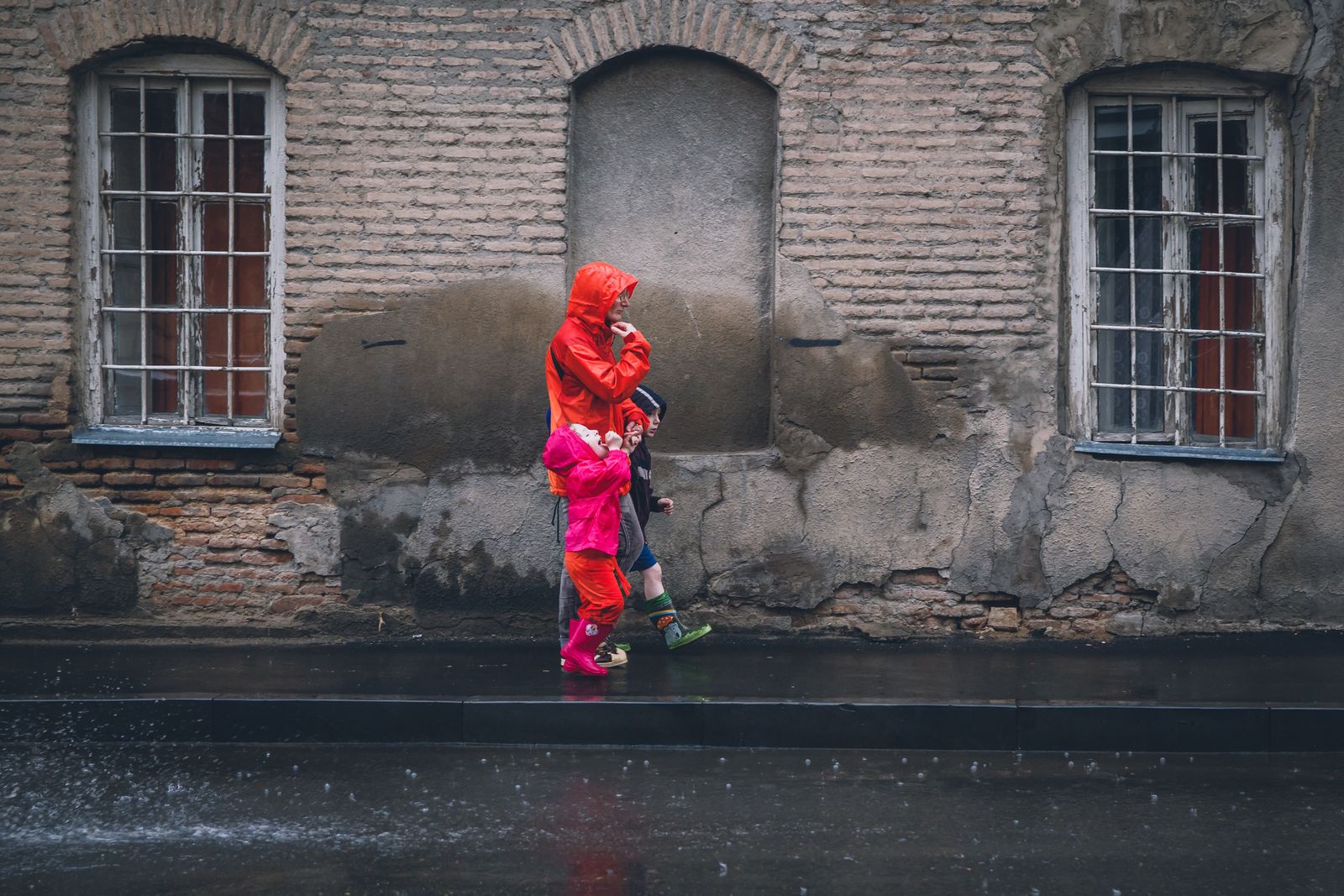
| What goes wrong | Why | What prevents it | |---|---|---| | Soaked from the inside | Sweat cannot escape a sealed shell | Breathable mesh lining plus active venting | | Clammy back, dry chest | Air cannot move from hem to collar | Ease the waist; do not over-cinch | | Coat comes off and stays off | Too hot to wear, so it lives in the bag | Light weight and openable cuffs | | Musty smell after a few days | Packed damp and left sealed | Dry before packing; pack wet coats separately |
The third row is the one that actually decides trips. A raincoat you find intolerable is a raincoat you are not wearing when it rains, and no amount of waterproof rating fixes that. Comfort in heat is a performance specification, not a luxury.
The buying checklist for warm-climate travel
- Sealed seams, stated. A waterproof fabric with unsealed stitch lines leaks at the shoulders. If the description does not mention seams, the claim is incomplete.
- A breathable mesh lining. The single highest-value feature for humidity.
- Snap-button cuffs. Two positions: closed against wind-driven rain, open to release heat. Cuffs are the fastest vent you have.
- An adjustable drawstring hood. In tropical rain you need the hood often, and one that does not track with your head is a constant irritation.
- A cinchable waist you can release. Cinch it in wind, open it in still heat. Both directions matter.
- A stated UPF rating. In the tropics the sun between showers is as much of an exposure as the rain. UPF 50+ blocks 98% of harmful UV rays over the skin the fabric covers.
- Two deep zippered pockets. Zippered, or they collect the water running down the front panel.
- Folds into its own pocket. In a climate where you take the coat on and off repeatedly, self-packing is not a gimmick.
- Length past the hips. Keeps the tops of your thighs dry and shaded, and stops runoff going into your waistband.
How the main options rank in humid heat
Long breathable trench with UPF. Best all-round choice for warm-climate travel. It covers the sun exposure between showers, seals against wind-driven rain, has secure pockets, and looks like a coat rather than emergency gear. The trade-off is that a long garment needs a genuinely breathable interior to work in heat — the length is only an advantage if air can move.
Ultralight emergency shell. Packs smallest and costs least. Usually has no breathable lining, minimal adjustment, and a hood that does not fit anyone. Fine as a backup, poor as your only layer.
Rain poncho. Unbeatable airflow and it covers a backpack. But it has no wrist seal, catches wind badly, has no usable pockets, and leaves your arms exposed to the sun.
Softshell. Comfortable and breathes well, but water resistant rather than waterproof. In tropical rain it wets out, and a saturated softshell breathes worse than a waterproof shell does.
Heavy hardshell. The wrong tool. Built for cold, sustained rain and wind, and far too warm above roughly 70°F.
Wearing it well in the tropics
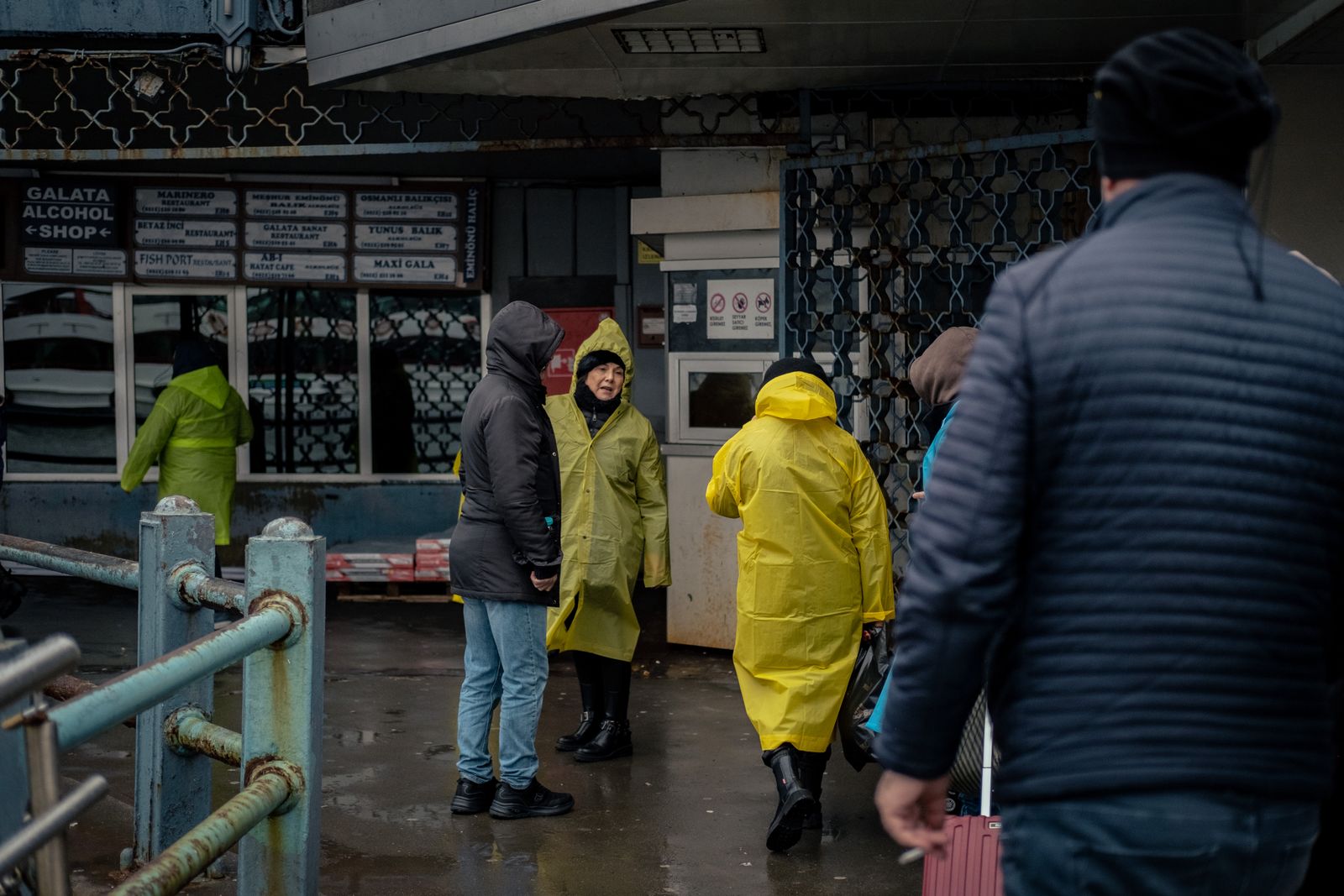
Photo by Zeynep Sude Emek on Pexels
Care in a humid climate
Humidity is harder on outerwear than rain is, because things stay damp longer. Two habits cover almost all of it.
Hang the coat rather than folding it whenever you are stationary for more than an hour. Air movement is what dries a shell; a folded coat on a hotel bed simply stays wet in the middle.
Wash it with a technical cleaner rather than ordinary detergent when it needs cleaning, in cool water, with no fabric softener. Detergent residue makes water spread across the shell instead of beading off, and a shell with a continuous film of water across its face breathes noticeably worse. That single mistake is behind a large share of complaints that a rain coat has stopped working.
FAQ
Is any waterproof coat comfortable in tropical heat? Comfortable is relative — you will be warmer in a shell than out of it. But a light coat with a breathable mesh lining and four openable adjustment points is genuinely wearable through a warm-weather downpour, whereas a heavy sealed shell is not. The construction difference is large enough to change the answer.
Should I choose water resistant instead of waterproof for better airflow? No. Water resistant fabric wets out under tropical rain, and once saturated it blocks airflow more than a waterproof shell does. Waterproof plus active venting is the more reliable pairing.
Do I need pit zips for a humid climate? They help, but they are not the only venting system. Opening the cuffs, releasing the waist, dropping the hood, and unzipping the front partway moves a lot of air. Judge the whole set of openings rather than one feature.
How do I stop a travel raincoat from smelling? Never pack it damp into a sealed pocket, hang it whenever you can, and give it a gentle cool wash with a technical cleaner when it has been worn hard. Almost every case of persistent odor traces back to a coat that was sealed away wet for a day or more.
Is a long coat too hot for the tropics? Not inherently — length adds coverage without adding much weight. What makes a long coat hot is a non-breathable interior, because a full-length garment has more volume of trapped air to move. With a mesh lining and a released waist, the length becomes an advantage.
A practical next step
Before you buy, do the two-second lining check: look inside and confirm you are seeing mesh rather than a smooth lining. Then count the openings you can control, and confirm the description states sealed seams. Those three checks filter out most of what will disappoint you in a humid climate. For a closer look at the airflow problem in full-length coats, why a breathable long coat can still fail is the useful follow-on, alongside the breathable coat selection guide and a review of lightweight hooded raincoats for travel.
Cover photo by Yaroslav Shuraev on Pexels.