Rethinking the Lightweight Hooded Raincoat for Travel
 Maya ChenContributing Editor
The singular focus on "packable" is a mistake; it prioritizes the 1% of time your raincoat is in a bag over the 99% it's on your body. The conventional wisdom says a lightweight hooded raincoat for travel must compress into a fist-sized pouch. This prioritizes convenience-in-transit over performance-at-destination. We're examining a different approach, using the Waterproof Hooded Trench Coat as a case study for a more substantial, yet still lightweight, travel jacket.
Beyond the Pouch: The Flaw in Ultra-Light Shells
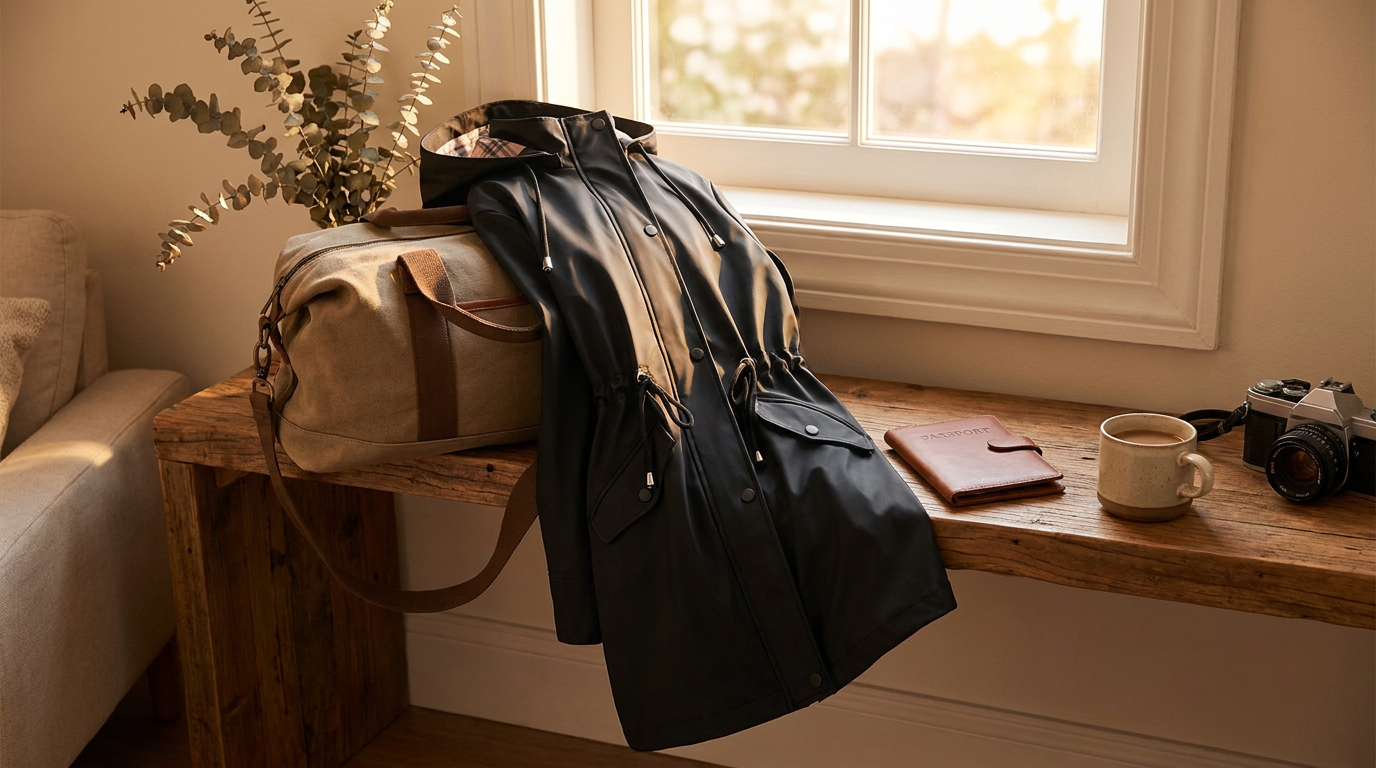
Here's the part nobody talks about: the moment you pull that ultra-light, 'packable' shell from its pouch, it fails. These crinkly, shapeless layers offer minimal structure, making you look and feel disheveled in travel photos or a client meeting. They are emergency ponchos, not outerwear. A coat like the Waterproof Hooded Trench Coat, while still only 1.2 lbs, uses a fabric with enough body to drape properly. It maintains a professional silhouette, making it a truly stylish rain coat with hood that you don't have to hide.
The Functional Value of Structure: Wind and Weather Resistance

A slightly heavier fabric does more than just look better; it performs better. The tissue-thin material of most packable shells offers poor wind resistance, leaving you chilled despite being 'dry.' A more structured coat functions as true outerwear. The Waterproof Hooded Trench Coat, for example, is not only fully windproof but also has a 10,000mm waterproof rating, a standard for handling heavy, sustained rain as defined by technical apparel brands like GORE-TEX. This level of protection, combined with a more robust fabric, provides tangible warmth and comfort that an emergency shell cannot. It's the difference between a flimsy barrier and a genuine piece of breathable, waterproof outerwear.
The Carry-On Math: One Versatile Coat vs. Two Specialized Jackets
The argument for an ultra-light shell often assumes you're also packing a 'nice' jacket for evenings or meetings. Run the math: a 0.5 lb rain shell plus a 1.5 lb blazer or separate jacket equals 2 lbs and significant luggage volume. A single, versatile 1.2 lb waterproof trench coat saves both weight and space. By choosing one coat that handles rain, wind, and professional settings, you adopt a more efficient, minimalist hooded trench rainwear strategy. It's a more logical approach to packing for variable conditions.
Is a 1.2 lb coat still considered a lightweight hooded raincoat for travel?

Photo by MART PRODUCTION on Pexels
Yes. 'Lightweight' is a relative term. Compared to a 0.5 lb emergency shell, it is heavier. But compared to a traditional 3-4 lb wool or insulated coat, it is exceptionally light. The 1.2 lb weight class represents a sweet spot, balancing packability with the structure, durability, and all-weather performance required of a primary travel jacket.
How does a structured trench improve on a packable shell for actual wear?
A structured trench improves on a shell in three key areas during wear: style, comfort, and protection. Its tailored lines and substantial fabric provide a polished look suitable for any setting. The added weight translates to better wind resistance and a feeling of security, unlike a flimsy shell that can feel cold and clammy. Finally, the longer hemline of a trench offers superior protection for your lower body from rain and spray.
I'll change my mind when a sub-1 lb shell provides the same structure, wind resistance, and professional silhouette as a proper trench. Until then, the obsession with packability remains a flawed metric for evaluating travel outerwear.