UPF vs SPF in Outerwear: What is the Difference and Why Does UPF 50+ Matter for Travel?
Should you rely on SPF sunscreen or a UPF 50+ waterproof trench coat for multi-climate travel? Topical SPF lotions protect against UVB burn rays but break down with sweat, wash off in rain, and require reapplication every two hours. A seam-sealed UPF 50+ waterproof trench coat blocks 98% of both UVA and UVB rays continuously—wet or dry—without reapplication, greasy residue, or liquid luggage limits.
UPF vs. SPF: Direct Metric & Scenario Comparison
| Travel Scenario | Standard Rain Shell | Topical SPF 50 Sunscreen | UPF 50+ Waterproof Trench Coat |
| --- | --- | --- | --- |
| Heavy Tropical Downpour | Bypasses UV radiation if unrated; leaks through unsealed seams | Fails entirely: washes away within minutes of rain exposure | Maintains 100% waterproof seal and continuous 98% UVA/UVB blockage |
| High-Altitude Mountain Hiking | Allows high UVA penetration through thin synthetic weaves | Requires reapplication every 2 hours; rubs off under pack straps | Blocks 98% of intense altitude solar rays with zero friction loss |
| Humid Urban Transit & Walking | Traps internal heat causing excessive sweating; unrated for sun | Becomes greasy with perspiration; clogs pores during warm walks | Breathable mesh lining vents heat while cinchable waist adds style |
| Minimalist Carry-On Travel | Requires extra sun hoodie layer plus separate shell (700g+) | Consumes limited TSA liquid bag space with multiple 3oz bottles | Replaces 3 separate garments into one packable 480g pocket-folding coat |
Compare how standard rain shells, topical sunscreens, and UPF 50+ waterproof trench coats perform across critical real-world travel environments.
Failure Modes & Trade-offs: Sunscreen Reliance vs. UPF 50+ Outerwear
Photo by Plato Terentev on Pexels
The Failure Modes of Relying Solely on SPF Lotion
- Sweat and Water Dissolution: Topical SPF lotion relies on an intact chemical film on the skin surface. Rain downpours, heavy humidity, and active hiking sweat break this barrier down, causing rapid protection loss within 40 to 80 minutes.
- Narrow Spectrum Gaps: Standard SPF testing measures delay against UVB-induced erythema (sunburn), but often provides inconsistent coverage against deeply penetrating UVA rays that cause premature aging and cellular damage.
- Application Friction Points: Backpack shoulder straps, waist belts, and watch bands physically rub off topical sunscreen, creating invisible unprotected strip zones on high-exposure skin areas.
- Carry-On Liquid Penalties: Packing enough liquid sunscreen for a two-week multi-climate itinerary consumes valuable TSA-compliant liquid volume and adds unnecessary dead weight to travel packs.
The Advantages of Permanent UPF 50+ Waterproof Defense
- Continuous Uninterrupted Shielding: A UPF 50+ rated garment continuously filters out 98% of both UVA and UVB radiation without degrading over time or requiring reapplication.
- Dual-Purpose Weather Isolation: Integrating a fully waterproof shell with sealed seams creates a total climate barrier against driving wind, torrents of rain, and high solar heat index in a single garment.
- Internal Microclimate Comfort: High-density protective weaves are paired with full breathable mesh linings to prevent internal humidity buildup and sticky skin contact during warm-weather travel.
Expert Field Tip: The Wetness & Stretch Factors in Fabric UV Defense
Never assume long sleeves equal complete sun protection. Standard white cotton t-shirts carry a UPF rating of just 5 to 7, allowing up to 20% of harmful UV radiation to penetrate directly to your skin. Worse, when standard fabrics absorb water, the swollen fibers open up interstitial spaces, dropping effective sun protection by over 50%.
When evaluating technical outerwear, ensure the garment utilizes hydrophobic fibers combined with a tight high-density weave and fully sealed seams. A true UPF 50+ waterproof shell sheds surface moisture entirely, preventing water retention from degrading its 98% UV attenuation.
Key Differences: UPF vs. SPF at a Glance
- Target Medium: UPF measures ultraviolet radiation transmittance through fabric; SPF measures burn protection duration on bare skin.
- Spectrum Coverage: UPF 50+ mandates strict testing across both UVA (315–400 nm) and UVB (280–315 nm) spectrums. Standard SPF primarily measures UVB mitigation.
- Physical Permanence: Garment UPF protection cannot wash off in rain or rub away under physical pack friction.
- Efficiency: A single UPF 50+ packable trench coat eliminates the need to carry separate rain jackets, sun hoodies, and excess lotion bottles.
Decision Support: Choosing the Right Protection Strategy for Your Journey
UPF 50+ waterproof outerwear is the optimal choice for multi-climate travel, replacing heavy sunscreen packs and separate rain shells with a single lightweight layer that blocks 98% of UVA and UVB rays continuously.
Best choice for
- UPF 50+ Waterproof Hooded Trench Coat — Eliminates the need to pack separate sun hoodies, rain jackets, and large sunscreen bottles by combining waterproof seam-sealing with permanent UPF 50+ UV protection.
- Breathable, mesh-lined UPF 50+ rain outerwear — Topical sunscreen washes off with rain and heavy sweat, while breathable UPF fabric provides constant protection without thermal buildup.
- You are traveling exclusively in cold winter sub-zero climates where heavy thermal insulation layering takes absolute priority over sun/rain crossover shells.
- Standard unrated rain jacket paired with frequent SPF 50 sunscreen reapplication — Requires constant reapplication every 2 hours, risks sunscreen runoff in rain downpours, and adds significant liquid pack weight.
Featured Solution: The All-in-One Dual Sun & Rain Trench Coat
For travelers refusing to compromise between feminine tailoring, wet-weather defense, and verified solar safety.
Travel Scenarios: Sun, Rain, and Pack Weight Realities
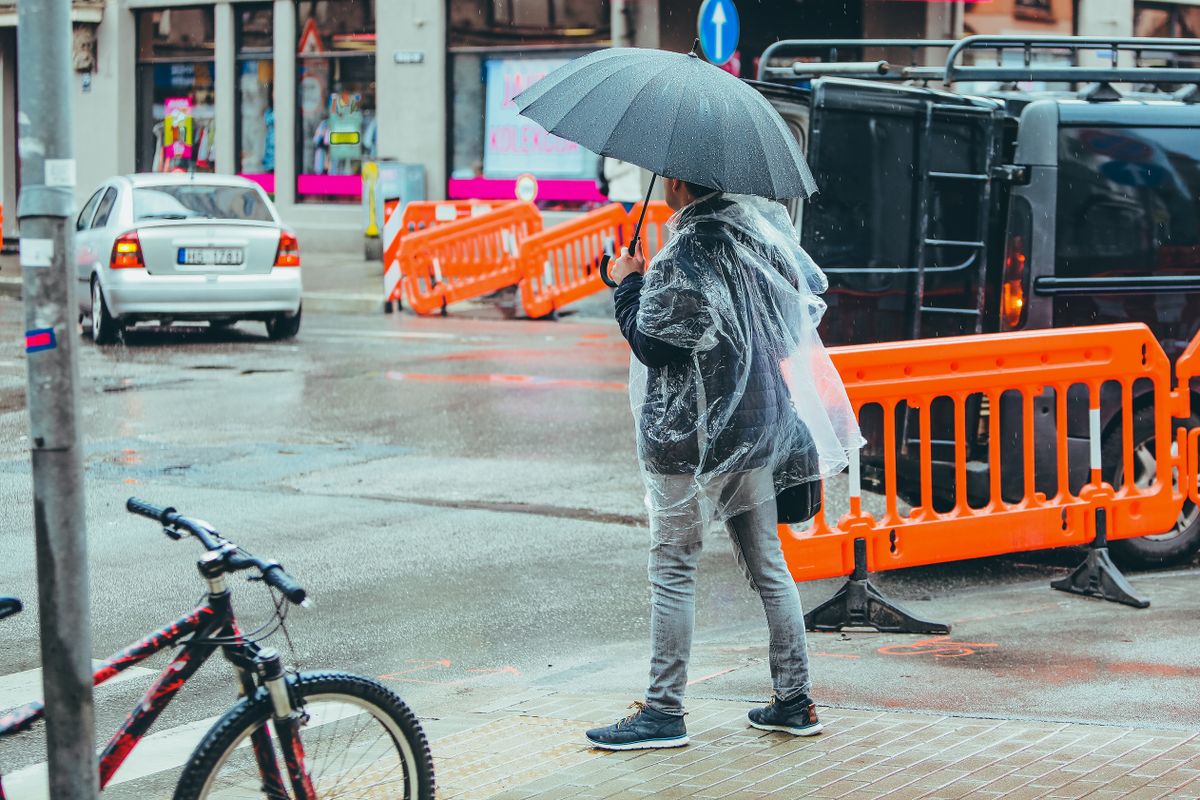
Photo by Vlad Fonsark on Pexels
Sudden Cloudburst during Alpine Summer Hike — Standard sun hoodies soak through immediately in heavy rain, while unrated windbreakers leak at unsealed stitch lines. Wearing a seam-sealed UPF 50+ trench coat keeps your underlying layers completely dry while preserving full UV defense when clouds break at high altitude.
All-Day Urban Exploration in Humid Mediterranean Cities — High ambient temperatures cause frequent sweating, breaking down topical sunscreen applications. The breathable internal mesh lining of a UPF 50+ trench coat prevents fabric cling, allowing passive airflow while blocking intense overhead solar glare.
One-Bag Packing for Two Weeks Across Microclimates — Instead of devoting precious carry-on space to bulky umbrellas, rain shells, sun hoodies, and liquid bottles, pack a single dual-rated trench coat that folds compactly into its own integrated storage pocket.
See how single-layer UPF 50+ waterproof protection solves real travel friction across common environments.
Understanding the technical optics of solar radiation is essential for active travelers. Sunlight delivers energy to the Earth across two dangerous ultraviolet bands: UVA (315–400 nm), which penetrates deep into the dermal skin layers causing premature photoaging and long-term DNA damage, and UVB (280–315 nm), which targets the surface epidermal layer, causing painful solar erythema (sunburn).
Why Topical SPF is Not Enough for Outerwear
Sun Protection Factor (SPF) is a dermatological metric reserved exclusively for topical lotions applied directly to human skin. SPF testing calculates how long a lotion delays UVB-induced reddening compared to unprotected skin. For example, SPF 30 theoretically allows a person who burns in 10 minutes to remain in the sun for 300 minutes without burning. However, SPF testing standardly ignores UVA mitigation unless labeled 'broad spectrum', and fails to account for physical breakdown caused by precipitation, humidity, friction, and sweat.
Ultraviolet Protection Factor (UPF), by contrast, is a rigorous textile testing standard (ASTM D6603 / AATCC 183) that measures the exact percentage of both UVA and UVB radiation filtered by woven fabric structures. A UPF 50+ rating represents the highest attainable classification in apparel, certifying that the fabric allows less than 1/50th (or under 2%) of all ultraviolet rays to pass through to the wearer.
The Anatomy of Dual-Protection Fabrics
Achieving true UPF 50+ protection inside a fully waterproof garment requires advanced engineering across three distinct structural layers:
Related Guides & Travel Resources
- The Ultimate Guide to UPF 50+ Outerwear: Choosing Dual Sun and Rain Defense
- How to Care for UPF 50+ Rain Jackets: Washing & DWR Maintenance Guide
- Do Rain Jackets Need UPF Protection? How UV-Blocking Waterproof Outerwear Works
Frequently Asked Questions About UPF & SPF in Outerwear
How to Build Your Travel Protection System
Your decision: Transition from packing multiple single-purpose layers and bulky liquid sunscreens to a single, dual-rated UPF 50+ waterproof trench coat.
Do this next: Select a UPF 50+ rated, seam-sealed trench coat with breathable mesh lining to ensure full sun and rain defense in a single travel piece.
- Read next: Do You Need UPF Protection on Rainy Days? The Science of UV Rays Through Clouds
- Read next: How to Wash and Care for Your UPF 50+ Waterproof Trench Coat Without Degrading UV Defense
Waterproof Hooded Trench Coat in Slate Grey or Classic Black for versatile travel styling.
Cover photo by cottonbro studio on Pexels.