
5 Flattering Trail-to-Town Outfit Formulas Using One Waterproof Trench Coat
A waterproof trench coat can carry an entire trip if it is styled deliberately rather than thrown over whatever is underneath. The five formulas below each pair the same coat with a different base, and each one is built to read as intentional in a restaurant as it does on a wet trail. The controls that make this possible are the ones on the coat itself: cinch the waist for shape in town, release it and open the cuffs for movement outdoors.
Why does one coat work for both trail and town?
Because the difference between hiking outerwear and city outerwear is mostly silhouette, not function. Technical jackets tend to read as sportswear because they are boxy, cropped, and busy with logos and cord ends. A trench shape is long, clean, and has a defined waist, so it reads as a coat rather than as gear — while still being a waterproof shell underneath.
The Waterproof Hooded Trench Coat is built around that dual role. It has a fully waterproof outer shell with sealed seams, a breathable mesh lining, and an adjustable drawstring hood for the trail side, and a cinchable waist that creates a flattering, feminine silhouette for the town side. The styling job is then simple: change what is under the coat and how tightly the waist is drawn.
The five formulas
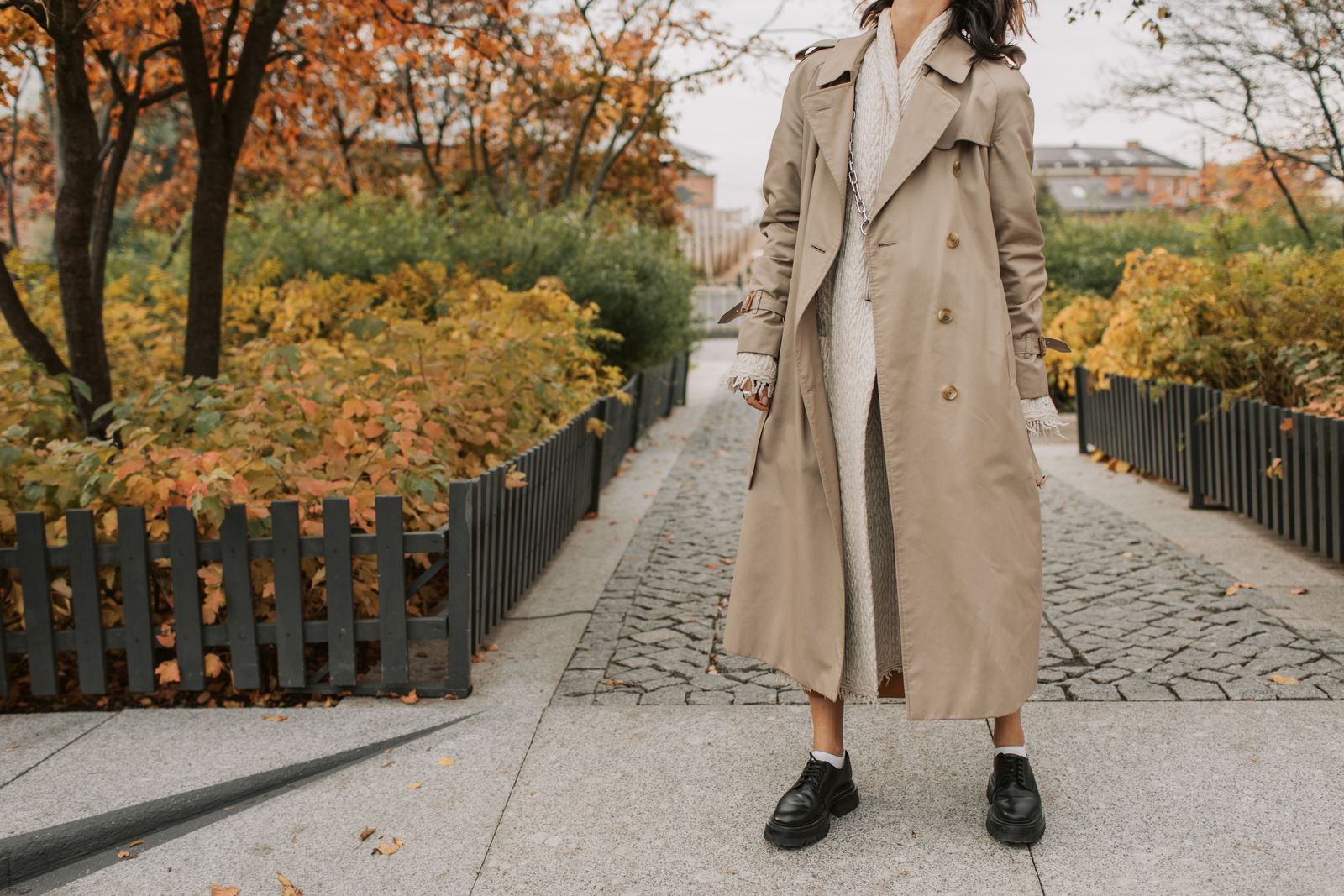
Photo by Vlada Karpovich on Pexels
1. The trailhead formula
Base: Hiking leggings or slim technical pants, a thin long-sleeve base layer, low-profile trail shoes.
Leave the waist loose and the cuffs unsnapped so you can push the sleeves up on a climb. Keep the hood cord tightened just enough that the brim holds its position when you turn your head. The look is deliberately utilitarian, and the coat's length protects the tops of your legs from rain running off the shell.
Why it works: Loose waist means air moves up and out instead of stalling against your back, which matters more than appearance while you are working hard.
2. The town-lunch formula
Base: Straight-leg jeans, a tucked knit or plain tee, leather sneakers or ankle boots.
Cinch the waist properly — enough to create a defined line, not enough to bunch the fabric. Snap the cuffs closed so the sleeve ends look finished. Drop the hood and let it lie flat across the shoulders. Load the two deep zippered pockets with phone and cards so you can leave a bag behind.
Why it works: The waist cinch is doing all the work here. It converts a technical shell into something with a waistline, which is the single visual cue that separates a coat from a rain jacket.
3. The dress-over formula
Base: A midi dress or skirt in a fabric that does not mind humidity, plus flat boots.
Cinch the waist to sit just above the dress's natural waistline so the two do not fight each other. Let the coat's hem fall over the skirt rather than trying to match lengths exactly — a small amount of dress showing below the coat looks intentional; an exact match looks accidental.
Why it works: A long coat over a long hem is a classic proportion, and it means you are covered without needing to change out of what you are already wearing.
4. The travel-day formula
Base: Soft wide-leg pants or joggers, a plain long-sleeve top, slip-on shoes.
Wear the coat loose through the airport and terminal, then pack it away once you are seated — it folds into its own pocket, so it does not need a separate bag. On arrival, cinch the waist and you are dressed for wherever you land. Practical packing details for this are covered in this travel-friendly hooded raincoat packing guide.
Why it works: The coat replaces the bulky layer most people carry and can be deployed in seconds when the weather at the destination is not what the forecast promised.
5. The shoulder-season city formula
Base: A fine-gauge sweater, dark trousers, a slim scarf, boots.
Snap the cuffs, cinch the waist firmly, and keep the hood down. The sweater adds enough loft that the coat's shape stays clean rather than clinging. Add the scarf inside the collar rather than over the coat, so the neckline stays sealed against wind.
Why it works: The sweater layer bridges the gap between a shell and a real coat when temperatures drop, without needing an insulated jacket.
Quick reference: which formula for which day?
| Day | Waist | Cuffs | Hood | Base layer | |---|---|---|---|---| | Trail hike | Loose | Open | Tightened | Technical, thin | | Lunch in town | Cinched | Snapped | Down, flat | Jeans and knit | | Dress day | Cinched high | Snapped | Down | Midi dress | | Travel transit | Loose, then packed | Open | Down | Soft, stretchy | | Cool city evening | Cinched firmly | Snapped | Down | Fine-gauge sweater |
What ruins the look, and how to avoid it
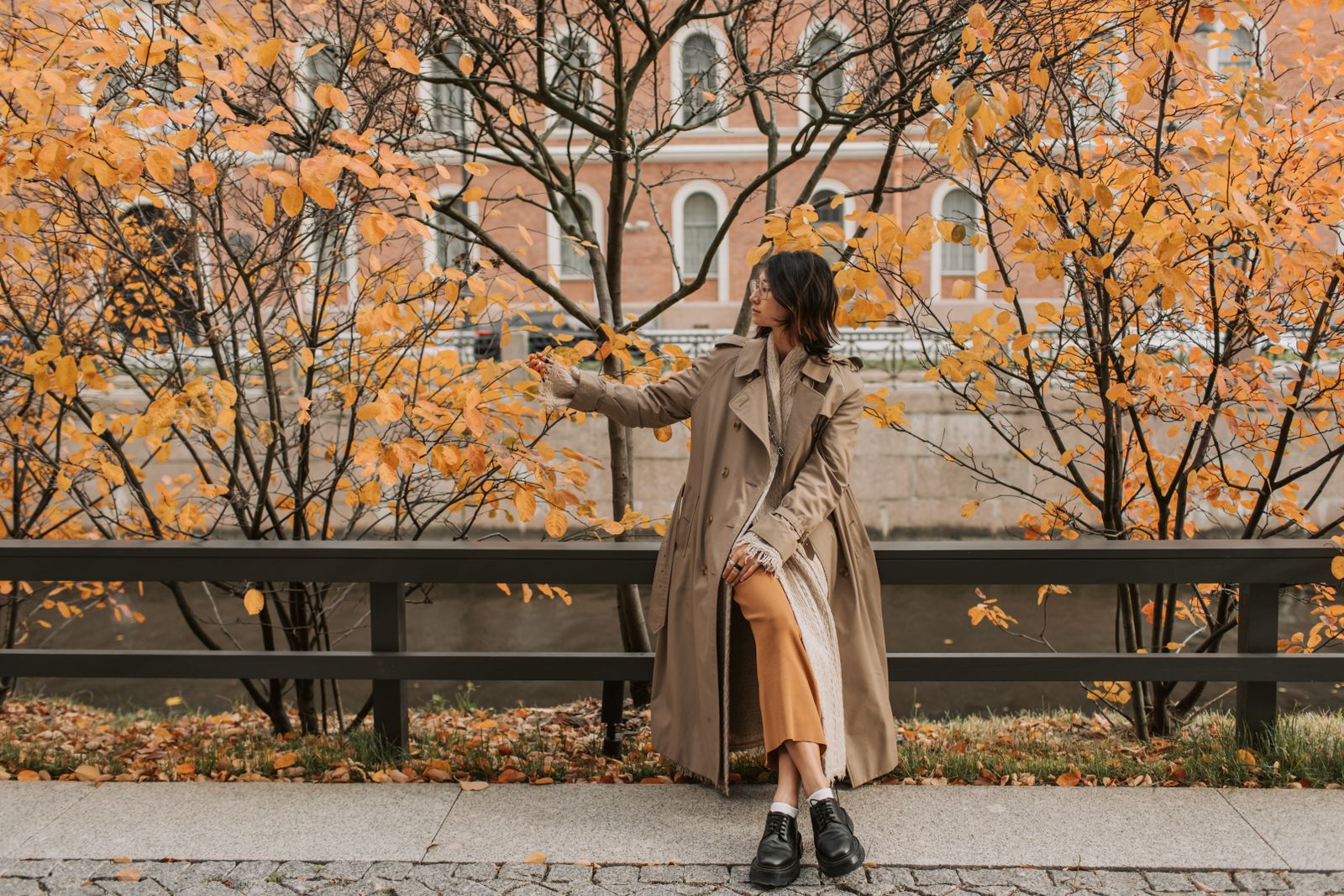
Photo by Vlada Karpovich on Pexels
- Over-cinching the waist. Pulling the drawstring too tight creates horizontal bunching that reads as a cinched sack. Draw it until the shape appears, then stop.
- Wearing the hood up indoors. The hood is weather equipment. Down and flat is the default; up is a response to conditions.
- Bulky mid-layers. A thick fleece under a shell fills the space the mesh lining needs to move air, and it flattens the silhouette. Choose one thin, warm layer instead of two medium ones.
- Cotton next to skin in humid weather. It holds sweat against you and undermines the coat's ventilation. A thin synthetic or merino layer works better.
- Letting the coat stay damp. A shell that starts the day damp inside feels clammy within minutes. Hang it open on a wide hanger in moving air overnight.
FAQ
Can a waterproof coat really look dressy enough for dinner? Yes, with two adjustments. Cinch the waist so there is a visible waistline, and snap the cuffs so the sleeve ends look deliberate rather than open. Those two changes shift the read from technical to tailored.
What shoes work across trail and town without changing? Low, dark, water-resistant ankle boots with a modest tread. They handle a damp path, look correct with trousers or a dress, and avoid the obvious sportswear cue that trail runners send.
How do you keep the coat from looking shapeless on a rainy commute? Keep the waist cinched while you are walking on level ground and only release it if you start overheating. Also avoid layering anything bulky underneath, since loft in the mid-layer is what makes a shell look formless.
Does styling change how well the coat protects you? Slightly, and mostly for the better. A cinched waist and snapped cuffs seal out wind-driven water, while an adjustable hood set correctly keeps the brim in place. The one trade-off is airflow, so release the waist when you are working hard.
A practical next step
Pick the two formulas that match how you actually spend your days and test them at home before a trip. Put each outfit on with the coat, cinch and release the waist, snap and open the cuffs, and note which combination looks right and which feels too warm. Ten minutes in front of a mirror tells you what to pack, and it means the coat gets worn rather than carried.
Cover photo by Yunus Tuğ on Pexels.