
From Trailhead to Dinner: FAQ on Switching One Jacket Between Settings
One jacket can cover a morning on a trail and an afternoon in a city, but the switch takes a few deliberate habits: reset the adjustments, deal with the hem, and keep valuables in closures you can trust in a crowd. The questions below are the ones travelers actually run into on days that start at a trailhead and end at a dinner table.
What changes about a jacket between a trail and a street?
The weather demands barely change. What changes is everything around the jacket: you go from carrying a pack to carrying nothing, from open exposure to wind funneled between buildings, from nobody looking at you to being in restaurants and shops, and from an empty path to a crowd where an open pocket is a liability.
That means the same coat needs a different configuration in each setting rather than a different set of features. A coat with an adjustable drawstring hood, a cinchable waist, snap-button cuffs, and two deep zippered pockets — as on the Waterproof Hooded Trench Coat — has the adjustment range to be set up both ways. Getting the transition right is mostly about using it.
How do you make a coat that got dirty on a trail presentable in town?
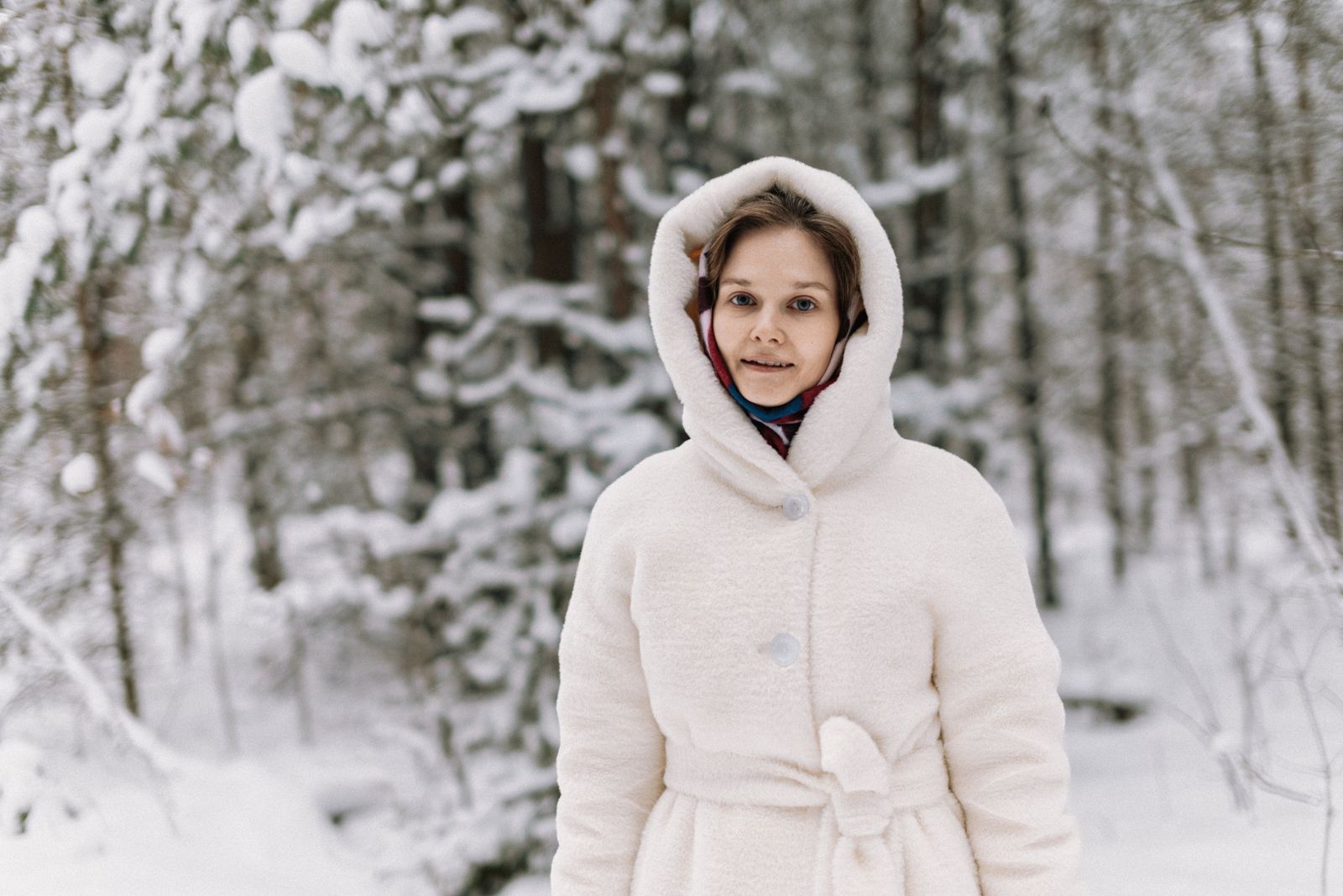
Photo by Siarhei Nester on Pexels
Deal with the hem and the cuffs, in that order. Those two areas collect nearly all visible trail dirt, and both clean up quickly.
The whole sequence takes about ten minutes, most of it while you are doing something else.
Can you actually hike in a trench-style coat?
For day hiking, yes. The limits are a loaded hip belt, which bunches the fabric where you want airflow, and dense off-trail scrub, which drags at a longer hem. On maintained trails, coastal paths, boardwalks, and park routes, the longer coverage is an advantage rather than a compromise, because it keeps rain off your thighs and boot tops while you stand still at viewpoints.
The adjustment to make is at the waist. Release the drawstring completely on the ascent so the coat hangs free and vents from the hem upward, then cinch it again once you stop moving. A coat worn cinched on a climb feels far warmer than the same coat worn open.
What should you keep in the pockets in a city versus on a trail?
The contents matter less than the closure. On a trail, a phone in a zippered pocket is protected from a slip; in a crowd, that same zipper is what stops it being lifted.
- Trail setup: phone in one zippered pocket, snacks and a folded map or ticket in the other, hood cord loose enough to adjust with gloves on.
- City setup: phone and transit card in the pocket you can reach without opening the coat, wallet in the inner-facing side, both zippers fully closed rather than half-closed.
- Either way: nothing loose in an open pocket while you are sitting down, since that is when things slide out.
- What not to carry: anything with a hard edge that presses against the shell under a pack strap, which is where abrasion marks come from.
How do you handle a jacket you no longer need to wear?
The answer decides whether you keep it with you. A shell that has to be tied to a bag strap gets left behind on marginal mornings; a coat that folds into its own pocket goes into a day bag and is there when the second shower arrives.
That is worth planning around, because most travel weather is not steady rain — it is showers with sun in between. The value of a coat that packs into itself is not saved suitcase space. It is that you carry it on the days you were not sure you needed it, which are the days it turns out to matter.
Does sun protection matter as much in a city as on a trail?
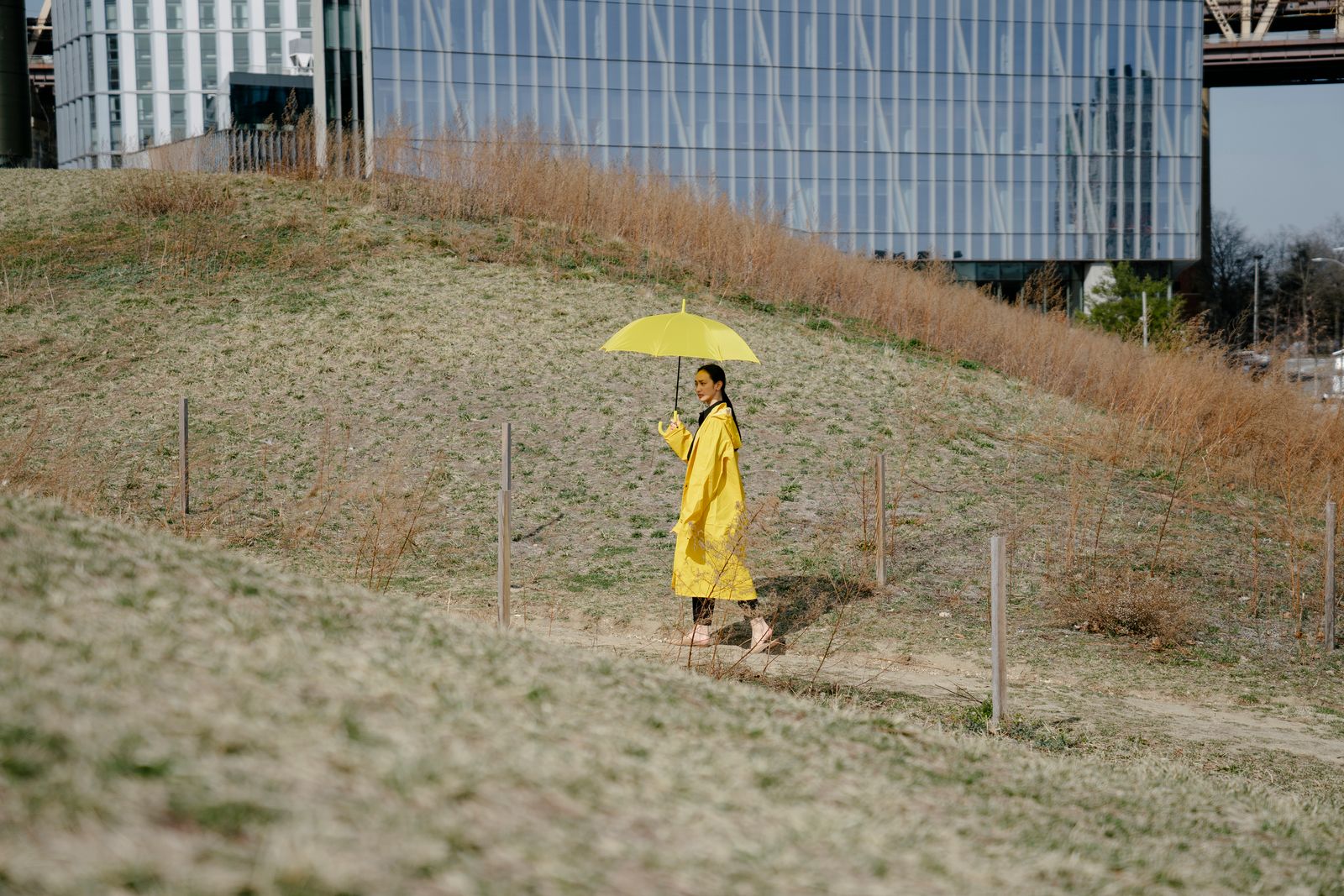
More than people expect. Pavement, glass, and water all reflect ultraviolet light, and long sightseeing days put you in the open for hours with no shade on offer. The Waterproof Hooded Trench Coat provides UPF 50+ sun protection that blocks 98% of harmful UV rays, which means the same garment that handled the morning's rain is doing useful work in the afternoon's glare.
The practical version of this is that you stop making the sun-or-rain decision at breakfast. One layer covers both, and the adjustable hood gives you shade for your face and neck when there is nowhere else to find it. Our travel guide to the coat covers how that plays out across a full itinerary.
How do you keep the coat comfortable when the day warms up?
Open things in order of effect: cuffs first, then the waist, then the hood. Wrists and forearms shed heat quickly and snap-button cuffs release in a second. Loosening the waist opens the bottom of the coat so air can move upward through it. Dropping the hood releases the heat your head is producing.
If all three are open and you are still too warm, the answer is to take the coat off rather than to keep adjusting. A breathable mesh lining helps by holding the shell slightly off your skin, but no lining can outrun a body producing more heat than the garment can shed.
FAQ
Should I size up so a trail layer fits underneath? Choose the size that fits over one thin mid-layer, not two. Excess room flaps in wind, funnels warm air out at the neck, and looks slack in town. The adjustments — waist, cuffs, hood — are there to take up slack, and they cannot add room that is not there.
Will a longer coat look out of place in a restaurant? A trench silhouette is one of the few outerwear shapes that reads correctly both outdoors and indoors, which is much of the reason the shape has lasted. Cinching the waist is what makes it look intentional rather than borrowed. Our styling guide covers the details.
What about wearing it on public transit after a hike? Cinch the waist so the coat does not catch on other passengers or on turnstiles, close both pocket zippers, and drop the hood so it is not resting against seat backs. The same setup works for daily commuting, which we cover in commuter rain jacket performance.
Do I need to wash the coat after every hike? No. Brush off dry dirt, spot-clean marks, and air it out. Save a full gentle wash for when water stops beading on the shoulders or after heavy sunscreen use, since over-washing offers no benefit and every wash cycle is mild wear.
A practical next step
Before your next mixed day, decide the two configurations in advance: loose waist, open cuffs, hood back for the trail; cinched waist, snapped cuffs, hood flat and pockets zipped for town. Practice switching between them once at home. Making the change becomes a thirty-second habit instead of something you skip because you are tired at the end of a walk.
Cover photo by Ron Lach on Pexels.