
Trail Shell or Waterproof Trench: Choosing One Jacket for Hiking and City Days
If your trip includes both a trail and a dinner reservation, the question is not which garment is more technical — it is which one you will still be wearing at 6 p.m. A hiking shell wins on stride freedom and weight; a waterproof trench wins on coverage, pocket capacity, and looking deliberate off the trail. For a one-jacket trip that mixes both, coverage and versatility usually decide it.
The real difference is where the garment stops
Nearly every functional gap between a hiking shell and a waterproof trench traces back to hem length. A hip-length shell is cut to keep a harness clear and a leg swinging freely. A longer coat trades a little of that freedom for protection over the hips, thighs, and boot tops.
That trade shows up differently depending on what you are doing. On steep, sustained climbing, the shorter hem is genuinely better. Standing at a viewpoint, waiting for a bus, sitting on a wet bench, or walking a city block in blowing rain, the longer hem is the one keeping you dry — because in those situations rain is landing on the parts a short shell leaves uncovered.
Side-by-side on the things that actually differ
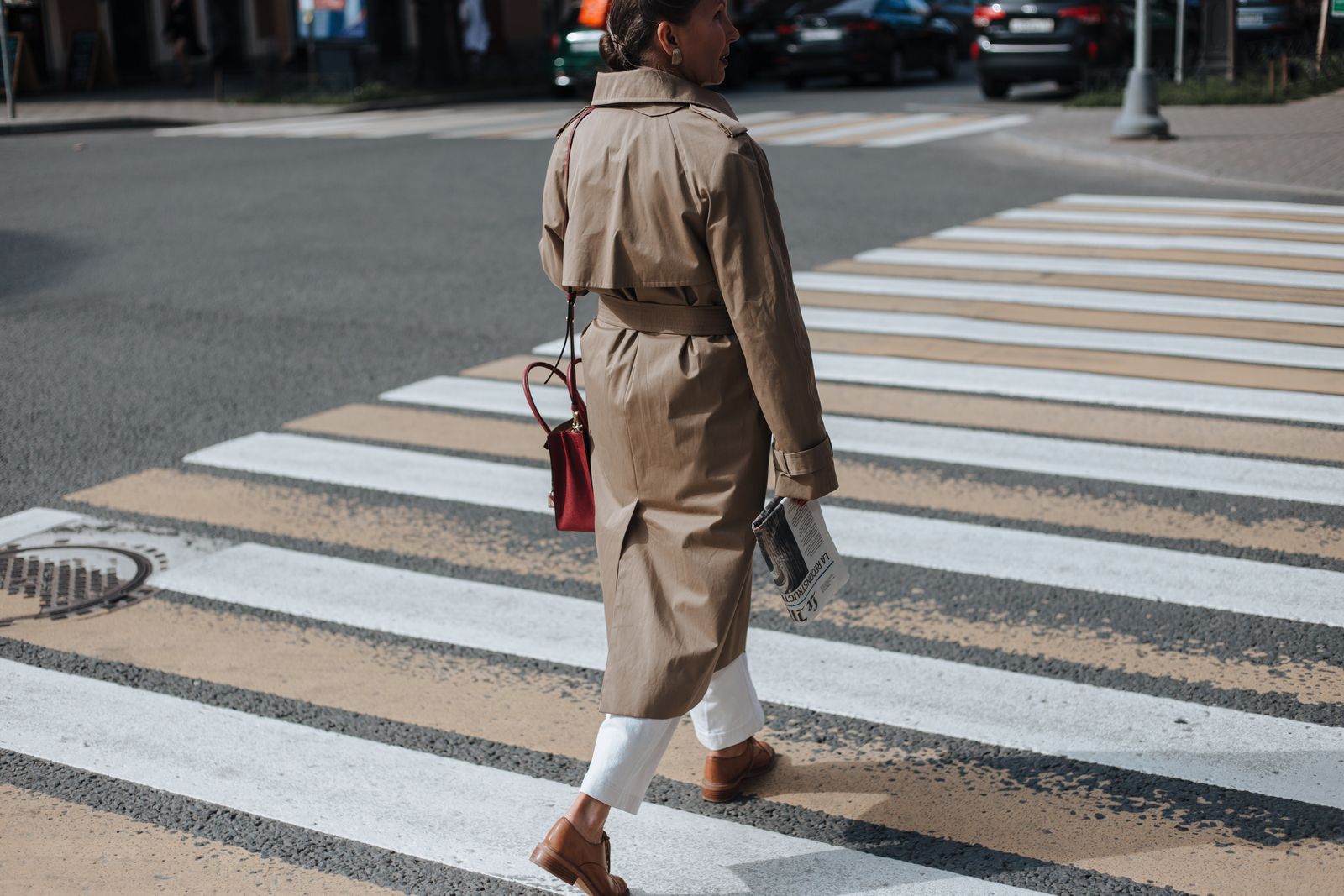
Photo by cottonbro studio on Pexels
| Factor | Packable hiking shell | Waterproof trench coat | |---|---|---| | Coverage | Hips and above | Continues over the thighs | | Freedom of stride | Highest | Good, and improves with the waist loosened | | Look in town | Reads as sportswear | Reads as outerwear | | Pocket capacity | Small, often hand-warmer only | Deep pockets that hold a phone, wallet, and transit card | | Wind behavior when open | Flaps and rides up | Can be cinched at the waist to stay controlled | | Sitting on wet surfaces | No help | Covers what you sit on | | Wearing over a dress or work clothes | Awkward proportions | Designed for it | | Packed size | Smallest available | Compact when it folds into its own pocket | | Sun coverage while standing | Arms and torso | Arms, torso, and legs when a UPF fabric is used |
Read that table as two different priority sets rather than a winner and a loser. If your itinerary is genuinely trail-dominant — multi-day hiking with a loaded pack and little town time — take the shell. If the trail portion is day hikes, viewpoints, and coastal paths, with the rest of the trip on foot in towns, the longer coat covers more of the actual day.
Where a hiking shell quietly costs you
Pockets that cannot hold anything. A phone in a shallow hand-warmer pocket comes out when you sit down. On the Waterproof Hooded Trench Coat, two deep zippered pockets close over what you put in them, which matters on crowded trains as much as it does on a windy overlook.
Nowhere to be but outdoors. A bright technical shell in a restaurant, museum, or hotel bar is a small, repeated friction. It is not vanity — it is that you take the jacket off, put it somewhere, and then do not have it when you step back outside into rain.
Nothing to control the fit. A shell that hangs straight catches wind and rides up. A cinchable waist gives you a way to hold the silhouette down in wind and to open it back up when you start climbing.
Legs left exposed. Rain-soaked trousers stay wet for hours and pull heat out of you the entire time. This is the single most common regret people report after a wet day in a hip-length shell.
Where a trench coat quietly costs you
Weight on a serious climb. More fabric is more fabric. On a hard uphill with a loaded pack, a longer coat is warmer and slightly more restrictive, even with the waist released.
Interaction with a hip belt. A pack's hip belt sits over the coat, which bunches fabric and blocks airflow at exactly the place you want it moving. Day packs without a substantial hip belt avoid the problem entirely.
Hem contact with mud and scrub. Off-trail, on overgrown paths, or in mud, a longer hem picks up dirt a short shell never touches. That is a laundry problem rather than a performance one, but it is real.
If your trip skews technical enough that these three points dominate, the shell is the right call. The comparison between packable construction and a traditional trench silhouette is worked through in more detail in packable rain jackets vs. traditional trench coats.
How to decide in five questions

Photo by Vika Glitter on Pexels
Making one coat work on both sides of the day
A long waterproof coat handles trail use better than people expect once you use its adjustments rather than wearing it in one fixed configuration.
- On the climb: release the waist entirely, unsnap the cuffs, push the hood back. The coat behaves like a loose shell and vents through the bottom hem.
- At the exposed viewpoint: cinch the waist, snap the cuffs, pull the drawstring hood down to the coverage you want. Wind-driven rain has far fewer entry points.
- Back in town: cinch the waist for shape, keep the hood adjustable for showers, and use the zippered pockets instead of digging through a bag.
- When it clears: fold it into its own pocket and carry it, rather than tying a wet shell to a strap.
FAQ
Can one jacket really cover hiking and city wear? For day hiking and general travel, yes — the requirements overlap more than outdoor marketing suggests, since both need waterproofing, a hood that adjusts, secure pockets, and heat management. Technical mountaineering and multi-day backpacking are the cases that genuinely need a dedicated shell.
Is a longer coat too warm for summer travel? Not necessarily. What determines warmth is the lining, the openings, and whether you can move air through the garment, more than how much fabric there is. A breathable mesh lining and cuffs and waist you can open change the picture considerably.
Does a trench coat look wrong on a trail? It is unusual, not impractical. Fit and function matter more than convention on a coastal path or a national-park boardwalk, and a coat that keeps your legs dry earns whatever look it gets.
What about carrying both? Two jackets for one trip means one is dead weight most days, and it is almost always the one at the bottom of the bag. Choosing a single garment that handles the majority of your hours is a better use of the space.
A practical next step
Take your itinerary and split the hours into trail, transit, and town. If trail hours are under about a third of the total, a longer waterproof coat with an adjustable hood, waist, and cuffs will cover more of your trip than a hip-length shell — and it will be the jacket you keep on rather than the one you keep taking off. For how to make it look intentional once you are off the trail, see our styling guide.
Cover photo by Ivan S on Pexels.