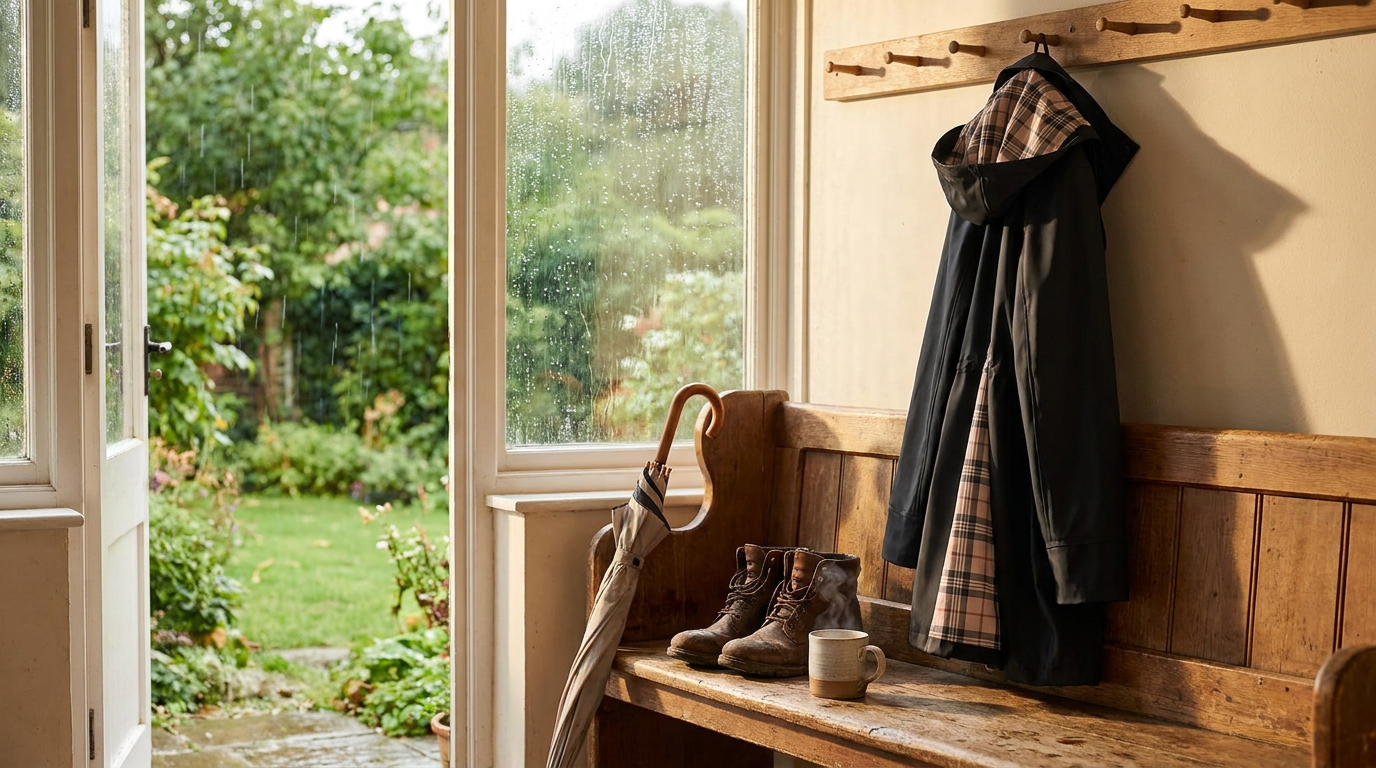
Why choose a long Waterproof Hooded Trench Coat?
 Daniel OkaforField Tester
June 14, 2026 — A long Waterproof Hooded Trench Coat provides comprehensive coverage from head to mid-calf, ensuring runoff does not saturate lower garments during extended exposure to precipitation.
Commuters and travelers frequently seek maximum coverage to protect professional attire. While shorter jackets offer mobility, they leave thighs and knees vulnerable to wind-driven rain. A silhouette reaching below the knee acts as a complete shield rather than just a top layer.
How does length affect waterproof performance?
A longer hem prevents rain and side-splash from soaking trousers, the primary failure point of shorter gear. Testing during a city downpour showed an extra 15 inches of fabric kept knees dry even when walking against the wind. According to Macy’s data, specialized long-sleeve notch collar trench coats and hooded variations like the Kimi + Kai Aine provide extended vertical protection while maintaining a structured aesthetic. The weight of the longer coat helps it stay pinned against the legs, though a rear vent is recommended for full mobility. Living with the extra length is a set of small habits rather than a sacrifice, and they form within a week. Stairs ask for the classic gesture — a hand gathering the front panel on the way up, the same move every long-coat wearer converges on. Getting into a car works best in two stages: sit first, then sweep the coat tails in after you, which keeps the hem off the door sill where road grime lives. On transit, unbutton the lower third before sitting; the coat drapes over the knees like a lap blanket — genuinely welcome on a cold platform — instead of straining at the button line. The one context where length is a real cost is any fast walking pace in a crosswind, which is exactly what the belt is for: cinched, the coat moves with you; loose, the front panels take turns wrapping your legs.
What makes a hood effective on a long trench coat?
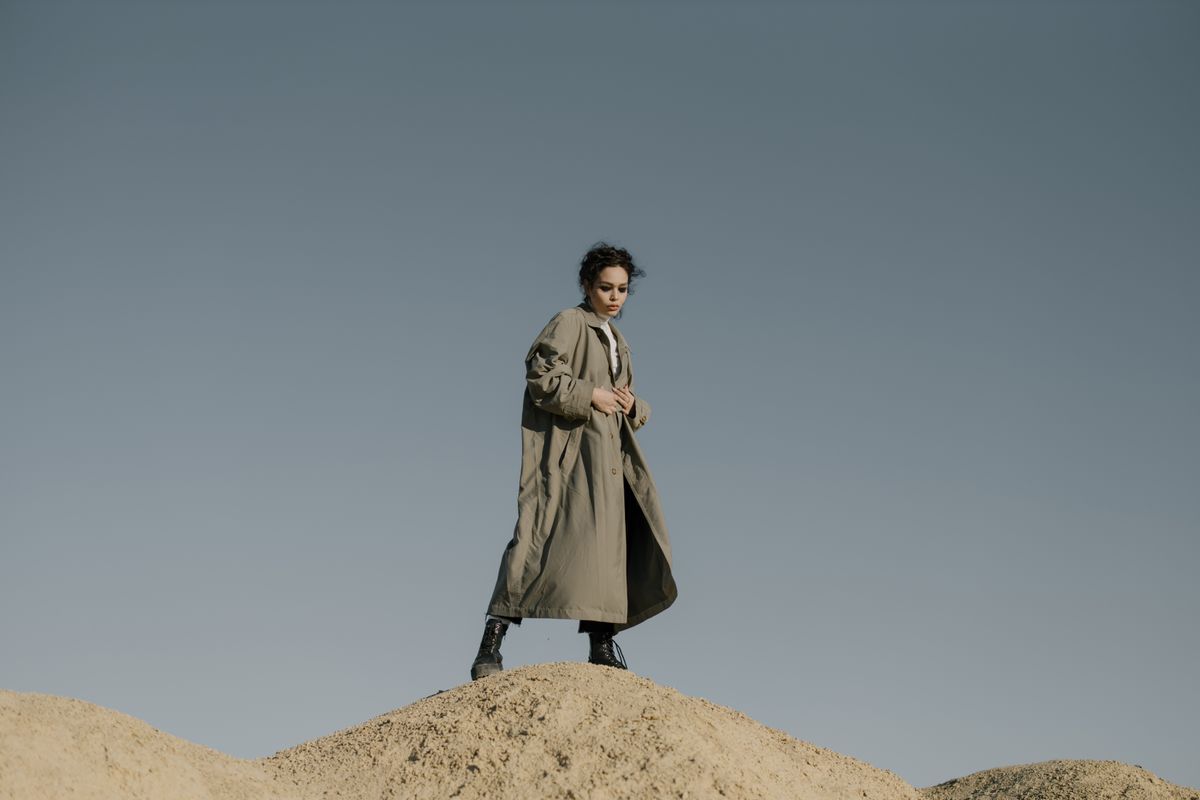
Photo by cottonbro studio on Pexels
An effective hood must feature adjustable toggle points and a stiffened brim to prevent the coat's weight from pulling the headpiece backward. Without a deep, structured hood, wind can catch the large surface area of a long coat and shift the garment, dragging the hood off the forehead. Travel and Leisure reports that the best technical trench coats utilize adjustable cuffs and storm flaps to seal out moisture. These features are critical on longer models to maintain internal temperature. The combination of an extended hem and deep hood creates a dry microclimate unmatched by standard-length jackets. A good hood also changes the umbrella calculus, and it is worth deciding your default before the weather decides for you. The hood wins in wind — the same gusts that invert an umbrella have no purchase on a toggled hood — and it keeps both hands free for bags, phones, and rail grips, which is most of what a commute demands. The umbrella wins in warm, still rain, when a hood over a full-length coat can feel like a sauna hood, and it protects the face and glasses in a way no hood brim fully manages. Most long-coat owners settle into hood-by-default with a compact umbrella living permanently in one pocket for the still-air exceptions.
Footwear is the last link in the chain: a coat this long delivers its runoff directly onto your shoes, concentrated at the hemline. Leather sneakers that survive under a short jacket get visibly soaked under a long one, so pairing the coat with genuinely water-resistant footwear is less a style suggestion than plumbing.
Quick answers
Q: Is a long trench coat suitable for heavy wind? / A: Yes, provided it has a belted waist or internal drawstrings. Securing the belt prevents the fabric from acting like a sail in gusts over 20 mph.
Q: How much do quality hooded trench coats typically cost? / A: Current market data from Nordstrom shows high-quality water-resistant trench coats with removable hoods generally range from $250 to $325.
Q: Can a long waterproof coat remain breathable? / A: It requires specific membrane technology. A breathable waterproof trench coat is essential when the garment covers most of your body to prevent internal condensation.
Q: Are these coats easy to pack for travel? / A: Many are designed for efficiency. Look for lightweight trench coat for rain options that use thin, high-density polymers to save space.
Q: Do I need a specific style for formal events? / A: A stylish waterproof coat with hood allows you to transition from a rainy commute to a professional setting seamlessly.
Learn more about Waterproof Hooded Trench Coat at https://waterprooftrenchcoat.com.
Coming home wet: the five-minute routine
What happens in the hallway after a soaked commute determines how the coat smells and performs in year three. Shake the worst of the water off outside the door, then hang the coat on a wide-shouldered hanger somewhere it can drip without consequence — over a bathtub or on a hook above hard flooring — and leave it spread open until fully dry before it returns to the closet. Hanging a wet coat straight into packed clothes is how linings go musty and neighboring garments get damp shoulders. Skip radiators and direct heater blasts, which stress coatings and dry the coat unevenly.
Long coats also make one quiet demand of the closet itself: full hanging drop. Folded over a standard-height rail or crammed against the closet floor, the lower third develops creases that show for days. If closet height is short, the coat lives better on a sturdy wall hook by the door — which happens to be exactly where a daily-rain coat is most useful anyway.
Sources

Photo by Vlada Karpovich on Pexels