
Layering Under a Waterproof Trench for Shoulder-Season Hill Walking
Layering under a long waterproof coat for a spring or autumn hill walk works best with two thin layers rather than one thick one, and the deciding factor is what happens when you stop moving. On the climb you generate more heat than you expect and want almost nothing on; at the top, in wind, with a damp base layer, you cool fast. Two thin layers let you manage both without ever taking the coat off, which is the whole point.
The rule that matters on a shoulder-season hill
Dress for ten minutes into the walk, not for how it feels in the car park. Standing still at the trailhead in April you will feel cold and want another layer. Fifteen minutes into a climb you will be too warm, you will stop, take the coat off, put it back on, and repeat that four times.
Starting slightly cold is the correct discomfort. Walk the first ten minutes deliberately slowly, then assess. If you are still cold at that point, add a layer; usually you will be removing one instead. The advantage of a coat you can vent — unsnap the cuffs, loosen the waist, open the front partway — is that you can shed heat without stopping and without repacking anything.
Three layers that work under a long coat, and one that does not
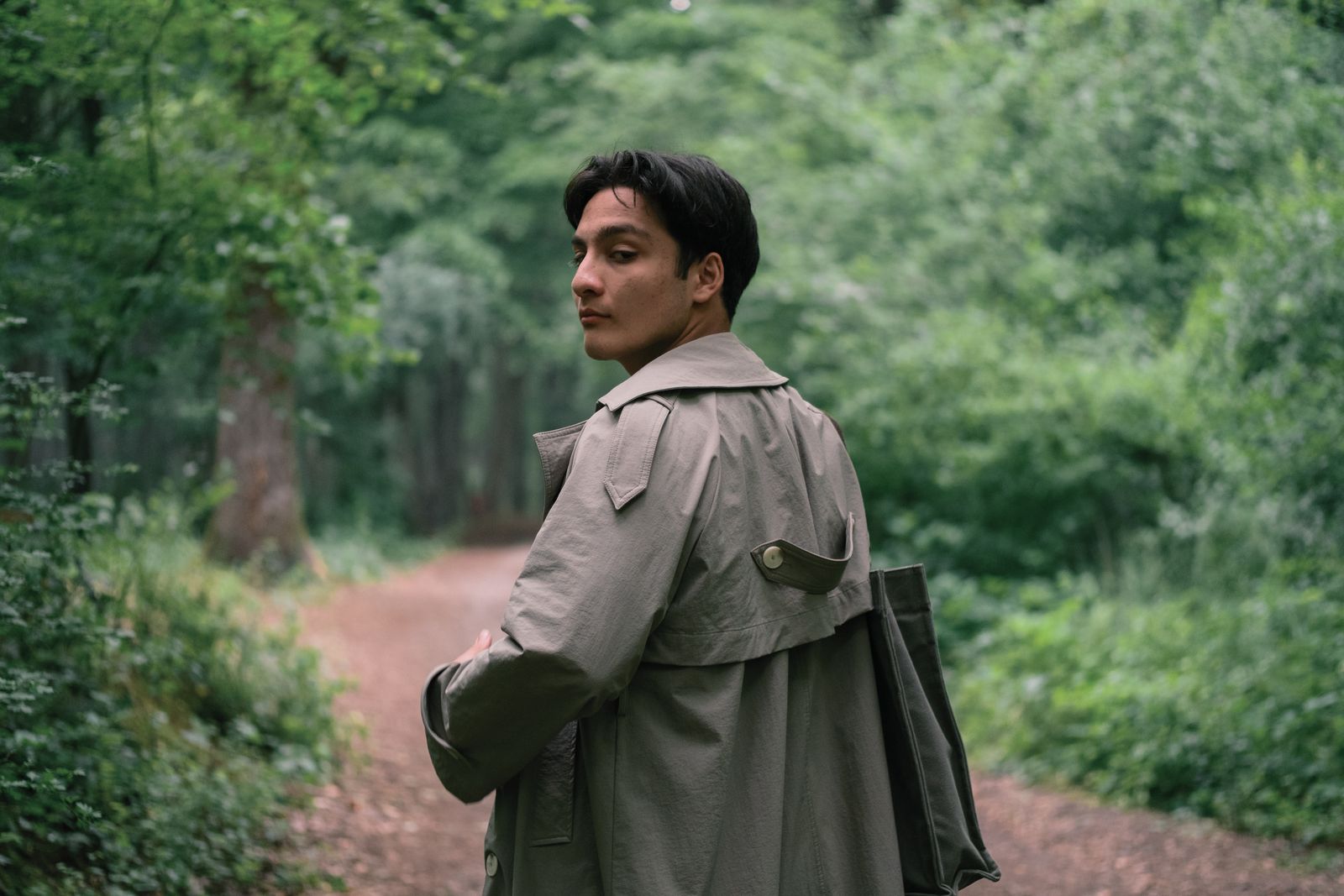
The system under a waterproof shell has three jobs, and each is a distinct layer:
- Base layer: move moisture off your skin. Thin, close-fitting, synthetic or merino. Its job is not warmth, it is getting sweat away from your skin so you are not wearing a wet cloth at the summit. This layer matters more than any other.
- Mid layer: hold warm air. A thin fleece or a light insulated layer. This is the layer you take off and put on during the walk, so it needs to compress into a bag easily.
- Optional summit layer: insulate when you stop. A packable insulated layer that comes out only when you have stopped moving. Thin enough to fit under the coat rather than over it.
- The one that does not work: cotton. A cotton t-shirt or hoodie absorbs sweat, holds it against your skin, and stops insulating once damp. In shoulder-season conditions on an exposed hill, a wet cotton base layer under a waterproof shell is the most common reason people get genuinely cold on a walk that should have been comfortable.
Which combination for which conditions?
| Conditions | Under the coat while walking | Add when you stop | |---|---|---| | Mild, 12 to 16 C, low wind, steady climb | Base layer only | Thin mid layer | | Cool, 6 to 12 C, breezy | Base layer plus thin mid layer, coat vented | Insulated layer under the coat | | Cold, 0 to 6 C, exposed ridge | Base layer, mid layer, coat closed and waist snug | Insulated layer, hood up, cuffs snapped | | Warm but wet, above 16 C with rain | Base layer only, coat closed but waist loose and cuffs open | Nothing; keep moving | | Cold and still raining hard | Base plus mid, coat fully closed, hood cinched | Get moving rather than adding layers while wet |
The bottom row is worth reading twice. Adding an insulated layer over a wet base layer while standing in rain makes you colder, not warmer, because you are now insulating cold water against your skin. In that situation the correct move is to walk.
Why bulk under a long coat behaves differently
A long waterproof coat has a large internal volume, particularly below the waist, which changes the layering calculation compared with a short jacket. Warm air rises inside the coat and escapes at the collar, which cools you efficiently while you are working but keeps cooling you once you have stopped. That is why the waist adjustment on the coat matters thermally rather than only visually: bringing it in reduces the volume of air being pumped through the coat with every stride.
Bulk also affects your arms more than your torso. Two layers on the torso is comfortable under a long coat; two layers on the arms is where binding shows up, because sleeves have no spare room. Keep the arms thinner than the body if you have the option — a vest-style mid layer under a coat solves cold-core-warm-arms better than a full fleece does. The general mechanics of heat moving through a long shell are covered in how a breathable waterproof long coat handles warm air.
Sleeves, cuffs, and hands
Hands are where shoulder-season walks go wrong first, because the temperature that is comfortable for your body is often too cold for fingers in wind.
What to do at the summit, before you stop
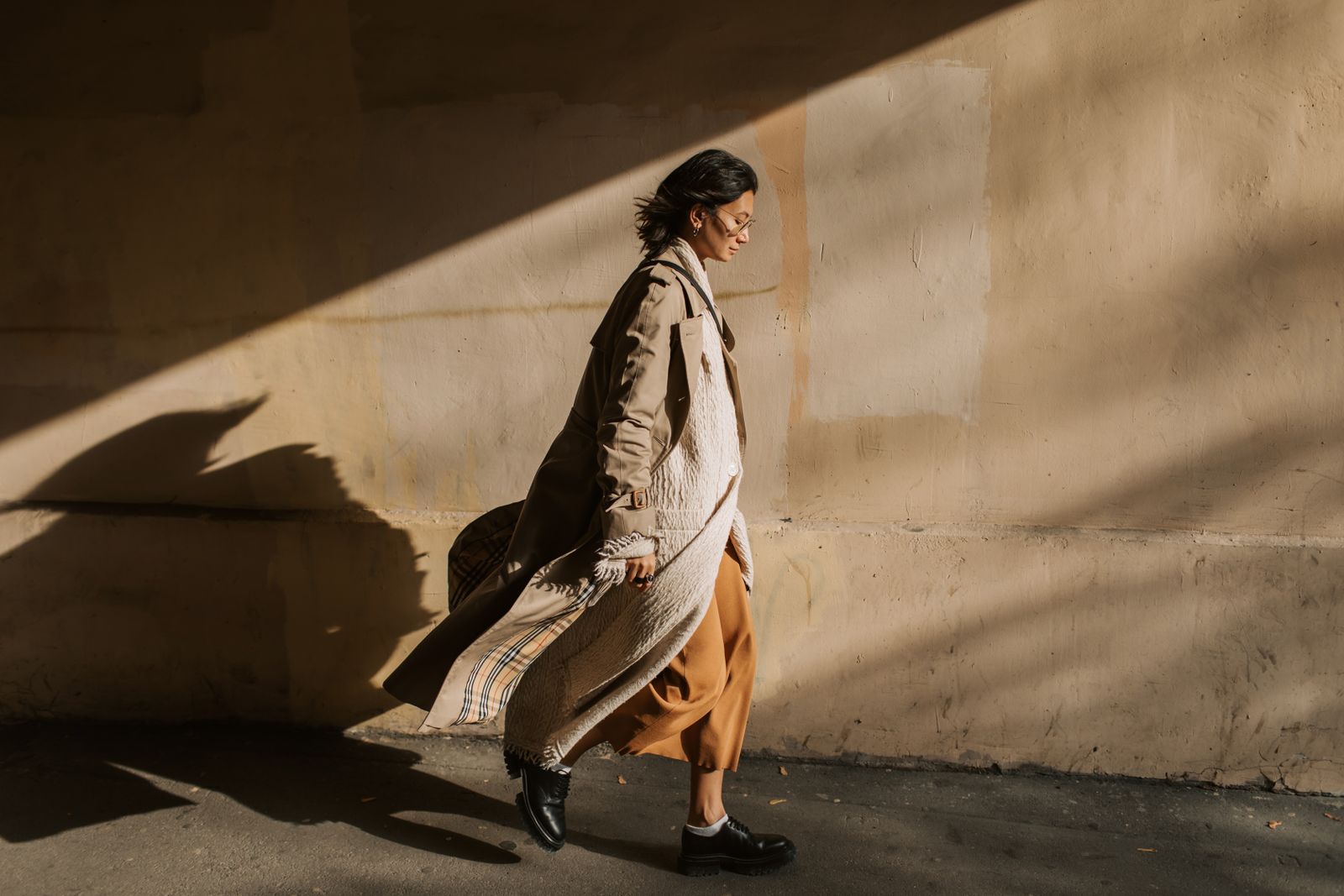
Photo by Vlada Karpovich on Pexels
The single biggest improvement to shoulder-season comfort is doing the layering change before you stop, not after. Two minutes below the top, while still walking, put the hood up and snap the cuffs. Then when you stop, add the insulated layer immediately rather than waiting to feel cold. By the time you feel cold your base layer has already chilled and you are recovering from a deficit rather than preventing one.
Add the insulated layer under the shell, not over it. Under the shell it stays dry and the coat continues to block wind; over the shell it gets wet and loses most of its value. A long coat has the room for this, which is a real advantage over a fitted jacket.
Legs, which a long coat only half solves
A long coat covers the thighs and, depending on length, the knees, which is more than a short jacket does. Below that you are on your own. In shoulder season the answer is quick-drying trousers rather than more insulation: legs generate heat while walking and stay warm even when the fabric is wet, provided the fabric is not cotton. Jeans on a wet hill are the same mistake as a cotton base layer, with the added problem that they take hours to dry and are heavy while wet.
Where the coat helps most on the legs is wind. A long hem blocks wind across the thighs, which is a large area of muscle losing heat, and that is a bigger comfort factor than most people credit. Keeping the coat closed and the hem down on an exposed ridge does more for leg warmth than a second pair of socks.
For lighter conditions, where the whole question is rain rather than cold, choosing a lightweight coat for rain covers what to prioritize when insulation is not the issue.
FAQ
How many layers should go under a waterproof coat in autumn? Two while walking, three when stopped, in most conditions between freezing and the mid-teens. What matters more than the count is that the layer against your skin is not cotton and that at least one layer can come off without removing the coat.
Can a puffy insulated jacket go under a long coat? A thin one, yes, and that is the better place for it because it stays dry. A thick one will bind at the shoulders and arms and will compress so much under the shell that it loses insulating value. Thin and packable is the specification worth looking for.
Does a breathable lining remove the need to think about layering? No. A breathable lining moves warm, moist air away from you far better than an unlined shell, which is why it prevents the clammy feeling on a climb — but it cannot dry a saturated cotton shirt or add warmth when you stop. It makes a good layering system work; it does not replace one. There is more on how that lining behaves in this look at choosing a breathable waterproof hooded trench coat.
What if the forecast is warm but there is rain? Base layer only underneath, coat closed against the rain, and vent aggressively: cuffs open, waist loose, front partly open if the rain allows. Warm rain is a heat management problem rather than a cold one, and the mistake is adding layers because it is raining rather than because it is cold.
What to do next
Before your next shoulder-season walk, lay out two thin layers instead of one thick one and check that nothing against your skin is cotton. Then practice one thing on the walk: put the hood up and snap the cuffs two minutes before you stop at the top, rather than after you have already started to cool.
Cover photo by Vlada Karpovich on Pexels.