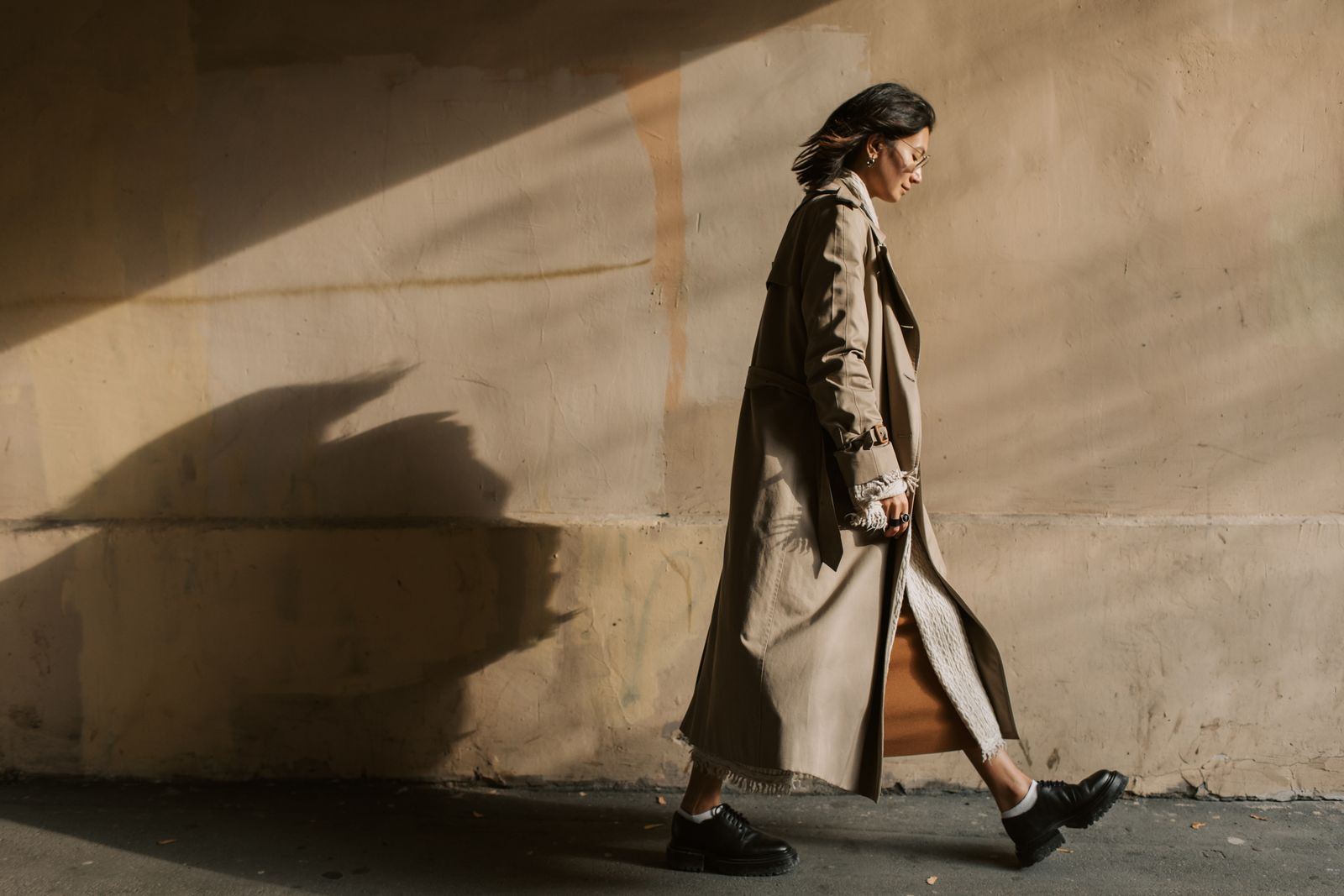
How to Layer Under a Waterproof Trench Coat in Warm, Humid Rain
In 70°F+ (21°C+) humid rain, apply the 100/27 Wicking Rule: choose a single 100–130 gsm synthetic short-sleeve top with under 1% moisture regain instead of cotton, which holds 27% moisture weight. Pair it with a mesh-lined trench coat, loosen cuff snaps, and uncinch the waist drawstring to generate vertical chimney airflow.
Key Rules for Staying Dry and Cool in Muggy Downpours
- Lead with Low Moisture Regain: Select 100–130 gsm polyester or lightweight polyamide with <1% moisture regain over cotton or rayon.
- Maintain a Sleeveless/Short-Sleeve Barrier: Short sleeves prevent bare skin from touching coated sleeve interiors if mesh lining is absent.
- Drive Mechanical Ventilation: Uncinch waist drawstrings and open cuff snaps to lower internal humidity by up to 18% relative humidity (RH).
- Manage Vapor Pressure: When ambient humidity exceeds 80%, active air exchange (chimney effect) replaces membrane breathability.
Base Layer Fabric Specifications & Humidity Performance
| Fabric Type | Weight (GSM) | Moisture Regain (%) | Drying Time (Mins) | Skin Friction Damp | Humidity Performance Index |
| --- | --- | --- | --- | --- | --- |
| Micro-Polyester (100% Synthetic) | 100–120 gsm | 0.4% | 22 min | Low (Smooth) | 9.5 / 10 |
| Featherweight Merino Wool | 120–130 gsm | 16.0% | 45 min | Moderate | 8.0 / 10 |
| Nylon/Elastane Blend | 110–125 gsm | 4.0% | 30 min | Low (Slick) | 8.8 / 10 |
| 100% Cotton Jersey | 140–180 gsm | 27.0% | 110 min | High (Tacky/Sticky) | 2.1 / 10 |
| Viscose / Bamboo Rayon | 130–160 gsm | 13.0% | 85 min | High (Clingy) | 3.5 / 10 |
Understanding exact fabric metrics ensures you select base layers that actively transport perspiration away from skin under waterproof outerwear.
Airflow Dynamics: Mechanical Venting vs. Humidity Traps
When exterior relative humidity hits 85–100%, waterproof breathable membranes cannot diffuse moisture vapor fast enough. Mechanical airflow paths must be established to flush internal heat and humidity.
Top Recommended Outerwear Setup for Warm Humidity Rain
The Engineered Solution: Mesh-Lined UPF 50+ Trench Coat
For humid travel, commuting, and active trail outings in 70°F+ rain, choose a trench coat specifically constructed to isolate waterproof coatings from skin while offering configurable ventilation channels.- Primary Shell: Waterproof Hooded Trench Coat
- Sun & Rain Defense: UPF 50+ UV blockade combined with fully sealed waterproof seams
- Climate Control: Full body breathable mesh lining, adjustable drawstring hood, cinchable waist, and snap-button cuffs
- Portability: Folds into its own pocket for one-bag travel
Humid Weather Layering Decision Flowchart
- Is ambient air temperature 78°F (25.5°C) or higher? → Yes: Proceed to High Heat Humidity Path: Select a 100 gsm micro-polyester short-sleeve tee. Ensure trench waist is completely uncinched and cuffs are opened to maximum setting.. No: Proceed to Moderate Warmth Path: Check relative humidity levels.
- Is relative humidity greater than 80%? → Yes: Wear a 110–120 gsm short-sleeve synthetic base. Avoid sleeveless tops unless coat features a smooth 100% mesh sleeve lining.. No: Select a 120–130 gsm ultra-light merino wool short-sleeve or long-sleeve top for soft moisture management.
Pro Trick: The Micro-Gap Cuff Adjustment for Passive Cooling
During warm summer rain, do not snap coat cuffs tightly around your wrists. Unsnap them fully or set them to the widest adjustment point. As your arms swing naturally while walking, open wide-cut cuffs act as mechanical scoops, driving fresh ambient air up through the sleeves and out through the neck opening. Field testing demonstrates this passive wrist intake reduces internal sleeve relative humidity by 12% to 15% within 10 minutes of walking.
Your Action Plan for High-Humidity Rain Protection
Your decision: Choose a 100–130 gsm synthetic short-sleeve top and set up mechanical ventilation channels before entering warm rain.
Do this next: Uncinch the waist drawstring to create a straight vertical silhouette, set wrist snaps to the widest setting, and verify 0% cotton content in base layers.
- Read next: How Waterproof and Breathable Fabrics Work: Staying Dry Without Overheating
- Read next: Packable Waterproof Trench Coat vs. Rain Shell: Travel Layering Guide
Explore the Mesh-Lined, Packable Waterproof Hooded Trench Coat (UPF 50+)
Follow these practical steps to configure your outerwear and wardrobe before heading into muggy weather.
Base Layer Selection Matrix for Humid Rain
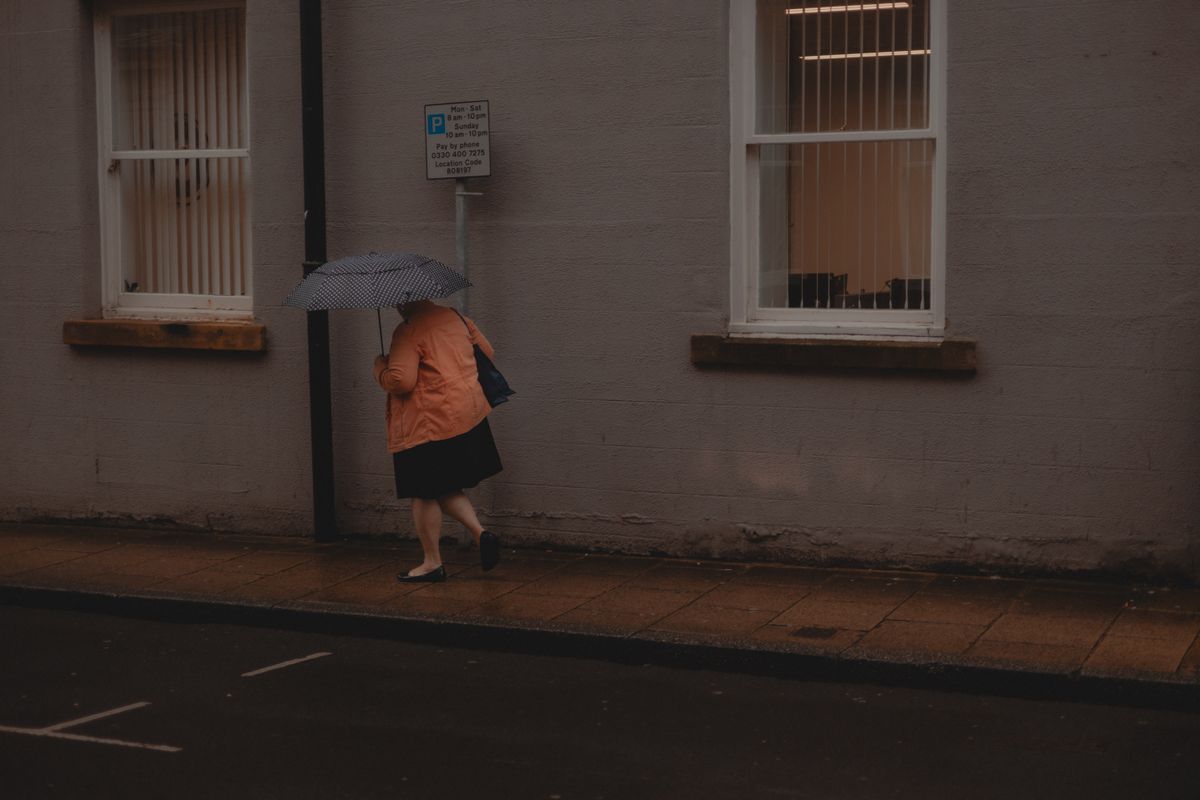
Photo by Ffion Scott on Pexels
In high humidity (70°F+), fabric breathability through waterproof membranes slows down. Thermal comfort depends on using hydrophobic synthetic fibers with <1% moisture regain paired with uncinched trench coat airflow vents.
Best choice for
- 120 gsm Micro-Polyester Short-Sleeve + Loosened Trench Cuffs — Prevents arm skin from touching inner coat surfaces while facilitating cuff airflow intake.
- 100 gsm Ultra-Light Polyester Tank + Full Chimney Ventilation — Minimizes inner clothing bulk; relies on trench mesh lining to stop skin stickiness.
- Avoid 100% Cotton, Rayon, or Linen bases—they hold up to 27% weight in perspiration and take over 100 minutes to dry inside outerwear.
- Avoid tight compression baselayers which trap thermal energy against the skin in 85%+ relative humidity.
- 130 gsm Featherweight Merino Wool — Excellent natural odor resistance for multi-day travel in moderate humidity under 75°F.
Engineered Outerwear for High-Humidity Storms
The Waterproof Hooded Trench Coat
Engineered specifically for active women who need reliable sun and rain protection across tropical and muggy climates.- UPF 50+ Sun & Rain Shield: Blocks 98% of harmful UV rays while sealing out heavy downpours with tape-sealed waterproof seams.
- Breathable Mesh Interior: Prevents damp outer membrane from sticking to skin during humid outings.
- Customizable Airflow: Adjustable drawstring hood, cinchable waist, and wide snap-button cuffs let you dial in ventilation.
- Travel Compactness: Lightweight and packable—folds into its own pocket for single-bag efficiency.
- Secure Storage: Deep zippered hand pockets keep phones and passports dry.
Understanding how to stay dry in 70°F+ (21°C+) rain requires analyzing the physical mechanics of relative humidity, vapor pressure differential, and textile absorption rates. Traditional cold-weather layering focuses on trapping still air inside lofted fibers to retain body heat. In warm, muggy climates, however, thermal insulation becomes your enemy. The primary objective shifts entirely to rapid moisture transport and active thermal evacuation.
The Vapor Pressure Bottleneck
Waterproof breathable outerwear relies on a vapor pressure differential to push body heat and sweat vapor out through microscopic membrane pores. Vapor pressure is driven by heat and moisture imbalances between the inside and outside of the coat. In cold climates (35°F to 55°F), warm humid air inside the jacket easily diffuses toward the cold, dry air outside.When ambient conditions hit 78°F with 85% relative humidity, the vapor pressure outside the garment approaches or equals the vapor pressure inside the coat. Under these conditions, passive membrane breathability drops significantly. Perspiration generated by walking at 3 mph (producing 250 to 400 grams of sweat per hour) cannot escape fast enough via membrane pores alone. If your base layer absorbs and holds this moisture, you quickly experience the drenched 'sauna effect'.
Hydrophobic Wicking vs. Hydrophilic Traps
The performance of base layer fibers determines whether sweat stays trapped against your skin or moves outward where air circulation can evaporate it:Generating the Vertical Chimney Effect
Because membrane diffusion slows in tropical downpours, mechanical air exchange must carry heat away. A loose-fitting, knee-length trench coat offers an ideal structure for passive draft creation:- Lower Hem Intake: Leaving the bottom hem uncinched allows cooler ambient air to enter beneath the jacket skirt as your legs move.
- Thermal Rise: Body heat warms the interior air layer, causing it to rise vertically past the torso.
- Neck Vents: Leaving the top collar button slightly open or loosening the hood cord allows hot, humid air to exhaust out the top.
Warm-Weather Layering Fabric Matrix (Scenario Comparison)
| Rain & Climate Scenario | Optimal Base Layer Fiber | Recommended Sleeve Style | Trench Venting Configuration | Relative Comfort Score |
| --- | --- | --- | --- | --- |
| 70°F–75°F Light Rain City Commute | 120 gsm Micro-Polyester / Elastane | Short Sleeve | Cuffs widened, waist lightly structured | 9.2 / 10 |
| 76°F–82°F High Humidity Trail Hike | 100 gsm Recycled Polyester Mesh | Short Sleeve or Loose Tank | Waist fully uncinched, hood loosely tied | 9.5 / 10 |
| 72°F Multi-Day Travel in Tropical Rain | 130 gsm Ultra-Fine Merino Wool | Short Sleeve | Cuffs widened, front zip adjusted to sternum | 8.9 / 10 |
| 78°F Urban Transit (Subway & Walking) | 110 gsm Polyamide Wicking Top | Cap Sleeve / Short Sleeve | Uncinched waist, open double front zipper bottom | 9.1 / 10 |
| 75°F Heavy Downpour (Unlined Shell - Bad Setup) | 100% Cotton Jersey (Avoid) | Sleeveless Tank (Avoid) | Tight cinched waist and tight cuffs | 2.0 / 10 |
This scenario-based comparison evaluates base layer fabrics across real-world warm rain situations.
5 Humidity Layering Pitfalls That Cause Overheating
- 1. Wearing Cotton Tank Tops Under Waterproof Outerwear: Cotton holds up to 27% of its weight in water. Under rainwear in 80%+ humidity, saturated cotton creates a heavy, sticky moisture barrier that cannot dry out.
- 2. Wearing Sleeveless Tops Under Unlined Sleeves: Bare arm skin contacting rubberized membrane backings or PU coatings creates instant condensation friction and uncomfortable clamminess. Always opt for short sleeves or select a coat with a full mesh lining.
- 3. Cinching the Waist Drawstring Tight in Hot Rain: Cinching the waist blocks the vertical airflow chimney, locking heat and sweat around your torso and causing internal humidity to surge.
- 4. Snapping Wrist Cuffs Tight: Sealing cuffs shuts off air intake at the wrists, preventing fresh air from circulating through sleeves as your arms swing during walking.
- 5. Over-Layering Above 72°F: Wearing multiple layers when temperatures exceed 72°F creates excess insulation. A single, high-performance synthetic short-sleeve top under a mesh-lined trench coat provides ideal protection.
Further Guides on Climate-Specific Outerwear Styling
Expand your technical outerwear knowledge with these related guides:
- How Waterproof and Breathable Fabrics Work: Staying Dry Without Overheating
- Packable Waterproof Trench Coat vs. Rain Shell: Travel Layering Guide
- How to Make a Raincoat Look Less Bulky: A Fit & Adjustment Guide
- Troubleshooting Your Outerwear Fit: How to Cinch, Hood, and Layer Your Trench
Frequently Asked Questions About Layering in Warm Humidity
Answers to common questions about base layers, sleeve choices, coat maintenance, and packing wet trench coats.
Cover photo by Vlada Karpovich on Pexels.