
How to Pack a Trench Coat Without Wrinkles: Technical Folding Guide
Contrary to popular belief, ironing a technical raincoat on low heat is not safe—it melts waterproof membranes and seam tape. To pack a waterproof trench coat without wrinkles, zipper and button the coat flat, lay it face down, fold sleeves diagonally, and cushion folds with soft items or tissue paper.
Anatomy of a Safe Fold: Membrane Protection Zones
Understanding how your technical trench coat is built helps prevent hidden damage during travel. Standard trench coats rely on heavy cotton gabardine, but modern all-weather trench coats feature a multi-layer membrane system: an outer face fabric treated with Durable Water Repellent (DWR), a mid-layer waterproof breathable membrane, and an inner protective mesh lining.
When you fold technical rainwear at a sharp 180-degree angle under heavy luggage pressure, you subject the heat-sealed seam tape to severe mechanical stress. Over time, sharp creasing causes the seam tape to delaminate and micro-cracks to form in the waterproof membrane. Placing a soft layer (like a cotton shirt or tissue paper) inside the fold creates a rounded radius, protecting the structural integrity of the coat.
Packing Scenarios: Selecting the Right Method for Your Trip
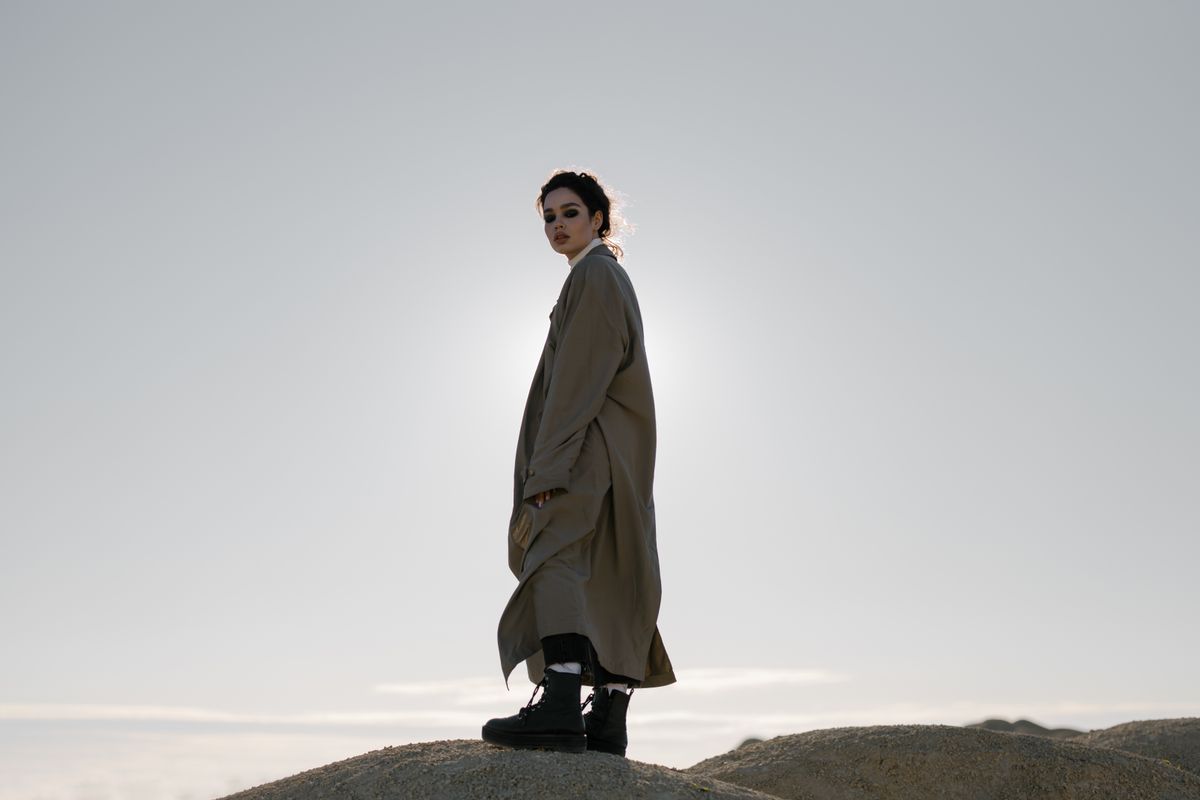
Photo by cottonbro studio on Pexels
Carry-On Suitcase Travel (3–7 Days) — Use the Padded Flat Third-Fold. Place tissue paper or a soft cotton shirt inside the fold lines to protect the cinchable waist and seam sealing while minimizing creasing across the skirt.
One-Bag Backpacking / Duffel Packing — Use the Soft Bundle Roll. Wrap the coat loosely around soft garments (like fleece or wool base layers) to avoid sharp fold lines without sacrificing bag volume.
Day Hikes & On-the-Go Weather Shifts — Use Self-Stow Pocket Packing. Fold the trench into its designated integrated stow pocket for quick portability, then unpack immediately upon arriving at your destination.
Business Travel with Garment Bag — Use a Padded Hanger with Garment Sleeve. Keep the coat draped vertically with buttons loosely fastened to completely eliminate folding pressure.
Every journey presents unique luggage constraints. Match your packing technique to your bag layout and travel style to ensure your trench coat arrives ready to wear.
Pre-Packing & Folding Checklist for Technical Outerwear
- Empty all pockets completely (keys and lip balm create sharp pressure points).
- Zip the main front closure and snap all button plackets flat.
- Ensure coat is 100% dry before folding; never pack damp technical outerwear.
- Place a soft item (like a cotton tee or tissue paper) along fold lines to absorb pressure.
- Pack coat on the top layer of your suitcase to prevent crushing under footwear or toiletries.
5 Critical Packing Mistakes That Destroy DWR and Seam Tape
Avoid these common mistakes to protect both the appearance and weatherproofing performance of your raincoat.
Step-by-Step Photo Guide: The 4-Step Technical Trench Folding Method
Follow this step-by-step technique to fold your trench coat flat and wrinkle-free in under two minutes.
Unpacking Routine: Immediate Care Upon Arrival
Your decision: Decide on your packing method based on your bag layout and trip length.
Do this next: Lay your coat on a clean bed, secure all closures, and execute the padded flat third-fold before placing it on top of hard items in your luggage.
Related resource: Download our Printable Travel Outerwear Care Checklist (PDF)
Explore our Lightweight Waterproof Hooded Trench Coat featuring self-stowing pocket design and UPF 50+ protection.
Your packing method is only half the equation. How you handle your trench coat when you land determines how quickly minor transit wrinkles relax.
Key Takeaways: Wrinkle-Free Outerwear Travel Cheat Sheet
Keep these rules in mind whenever you pack technical rainwear for business or travel.
Decision Framework: Fold vs. Roll vs. Self-Stow vs. Garment Bag
Choose your packing method based on your luggage type, trip duration, and coat construction to prevent permanent fabric memory and DWR degradation.
Best choice for
- The Padded Flat Third-Fold — Protects structured hoods and shoulder seams while minimizing horizontal creasing across long coat skirts.
- The Soft Bundle Roll — Maximizes space efficiency without creating sharp fold lines across technical membrane backings.
- Self-Stow Pocket Packing — Provides fast, ultra-compact storage when coat is deployed repeatedly throughout the day.
- Avoid tight hard-rolling if the coat has been stored compressed for more than 30 days.
- Avoid high-heat irons or direct contact steamers which delaminate waterproof seam taping and melt DWR.
- Hanging Garment Sleeve — Ideal for business travel where luggage volume is unconstrained and immediate wearability is mandatory.
Travel Companion: Waterproof Hooded Trench Coat
Engineered for the woman who refuses to let weather dictate her plans. This waterproof UPF 50+ jacket combines serious sun and rain protection with a sleek, flattering silhouette.
- UPF 50+ Sun Protection: Blocks 98% of harmful UV rays during sunny trail hikes or open-air tours.
- 100% Waterproof Outer Shell: Fully sealed seams keep you dry during heavy downpours.
- Breathable Mesh Lining: Prevents overheating and clinginess on humid tropical commutes.
- Self-Stowing Design: Packs lightweight and compact directly into its own pocket for effortless travel.
- Customizable Silhouette: Features an adjustable drawstring hood, cinchable waist, and snap-button cuffs.
Fabric & Compression Limits Matrix

| Fabric & Membrane Type | Max Compression Time | Wrinkle Recovery Speed | Recommended Storage Method |
| --- | --- | --- | --- |
| 2.5-Layer Polyester with DWR & Mesh Lining | 3 to 5 Days | Fast (15–30 mins hanging) | Flat Padded Fold / Self-Stow Pocket |
| 3-Layer Heavy Nylon Hard-Shell | 1 to 2 Days | Moderate (1–2 hours hanging) | Soft Bundle Roll / Garment Sleeve |
| Polyurethane (PU) Coated Rubberized Shell | 24 Hours Max | Slow (Requires gentle steam) | Hanging Only (Never tight roll) |
Different technical outerwear fabrics react uniquely to travel pressure. Reference this chart to understand how long your garment can safely remain compressed.
Comparison: Packing Methods Across Luggage Types
| Scenario / Luggage Type | Recommended Method | Wrinkle Prevention Rating | DWR & Seam Safety | Space Efficiency |
| --- | --- | --- | --- | --- |
| Carry-On Hard Shell Case | Padded Flat Third-Fold | 5 / 5 (Excellent) | 5 / 5 (Maximum Protection) | 3 / 5 (Moderate) |
| Travel Backpack / Duffel Bag | Soft Bundle Roll | 4 / 5 (Good) | 4 / 5 (Safe with Soft Center) | 5 / 5 (Maximum Efficiency) |
| Day Pack / Commuter Tote | Self-Stow Pocket Pack | 3 / 5 (Acceptable for Transit) | 4 / 5 (Safe for Short Duration) | 5 / 5 (Ultra-Compact) |
| Suit Travel Garment Bag | Hanging Sleeve | 5 / 5 (Flawless) | 5 / 5 (Zero Stress) | 1 / 5 (Bulkier) |
Compare performance, space efficiency, and safety across four popular packing styles.
Pro Traveler Tip: The Low-Steam Bathroom Wrinkle Release
If your trench coat develops mild transit creases after a flight, avoid irons or handheld steamers applied directly to the shell. Instead, hang the coat on a broad, contoured hanger inside the bathroom while taking a warm shower.
The ambient moisture relaxes the outer face fabric without exposing the interior seam taping or exterior DWR coating to high temperatures. Within 15 to 20 minutes, subtle creases smooth out naturally.
Frequently Asked Questions
Get answers to common travel care questions for waterproof trench coats.
Final Summary & Next Steps
Your decision: Decide on your packing method based on your bag layout and trip length.
Do this next: Lay your coat on a clean bed, secure all closures, and execute the padded flat third-fold before placing it on top of hard items in your luggage.
Related resource: Download our Printable Travel Outerwear Care Checklist (PDF)
Explore our Lightweight Waterproof Hooded Trench Coat featuring self-stowing pocket design and UPF 50+ protection.
Mastering technical rainwear care ensures your outerwear delivers optimal protection and polished style on every journey.