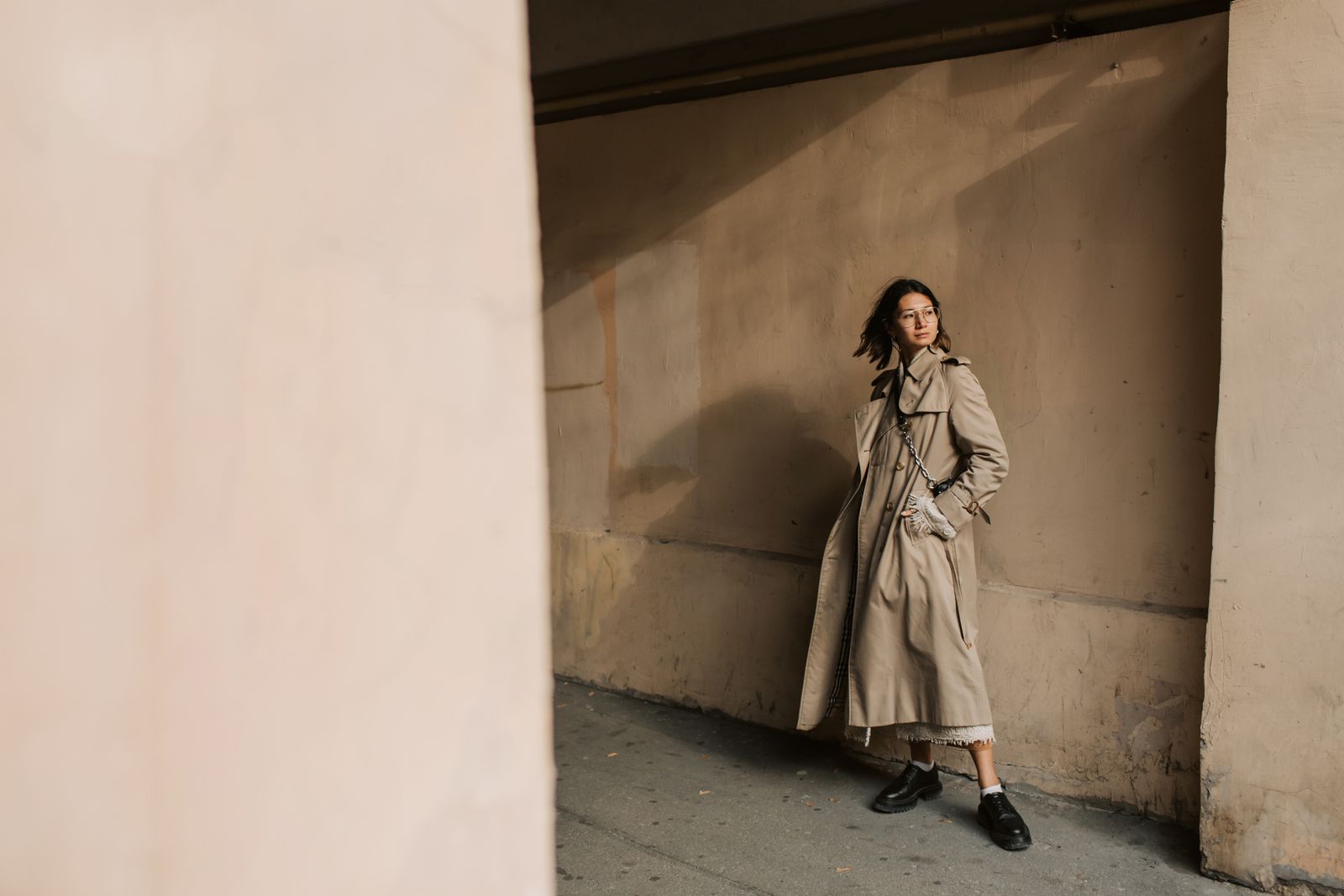
How to Choose a Flattering Waterproof Trench Coat for Your Body Type
A waterproof trench coat flatters almost any figure when three things are right: where the waist sits, how the shoulders fit, and where the hem lands relative to your leg. Fabric and color matter far less than those three points. The single most useful feature is an adjustable waist, because it lets one coat be shaped to a specific body rather than relying on the cut alone to do the work.
What actually makes a rain coat flattering?
Structure, not size. A shell that hangs straight from the shoulders with no waist definition reads as boxy on everyone, regardless of the body underneath. Adding a defined waistline creates a vertical break that lengthens the leg line and gives the eye a shape to follow.
Three fit points decide the outcome:
- Shoulder seam placement. The seam should sit close to the edge of your shoulder. Too far out and the coat looks borrowed; too far in and it restricts your reach.
- Waist position. The narrowest point of the coat should align with the narrowest point of your torso, which is usually just above the navel rather than at the hip.
- Hem position. A hem that ends at the widest part of your calf draws attention there. Below the knee or at mid-calf are the two positions that consistently work.
Why an adjustable waist matters more than a tailored cut

Photo by Vlada Karpovich on Pexels
A pre-shaped coat has one waist position, set by the pattern. If your natural waist sits higher or lower than the pattern assumes, the shaping fights your body instead of following it.
A drawstring or cinch lets you place the narrow point yourself. Pull it where your own waist is narrowest and the coat follows your proportions rather than a standard. That is why the cinchable waist on the Waterproof Hooded Trench Coat does more for silhouette than any amount of tailoring in a fixed-shape shell — it creates a flattering line on different bodies rather than one.
It also solves the layering problem. A tailored coat that fits over a shirt is tight over a sweater. An adjustable waist loosens for a mid-layer and tightens again when the layer comes off. The full case for adjustable shaping over a straight cut is set out in cinchable raincoat versus boxy jacket.
Fit guidance by body shape
These are starting points, not rules. The adjustments are the same in every case; what changes is where you set them.
| Shape | Waist cinch | Hem target | What to prioritize | |---|---|---|---| | Wider hips than shoulders | At the natural waist, moderate | Below the widest hip point | Shoulder fit that does not look narrow | | Wider shoulders than hips | Slightly below the natural waist | Mid-calf or lower | Softer cinch, avoid emphasizing the top | | Straight through the torso | Firm, at the narrowest point | Below the knee | Creating a waist that is not there naturally | | Fuller through the middle | Light, just under the bust line | Below the knee | A higher cinch point, never a tight one | | Petite frame | At the natural waist | Above mid-calf if possible | Avoiding a hem that covers most of the leg | | Tall frame | At the natural waist | Longest available length | Sleeve and hem length over everything else |
Two adjustments apply universally. Cinch until a waistline appears and then stop — pulling further creates horizontal bunching that reads as a gathered sack. And keep the mid-layer thin, because loft under a shell fills the space that the shape depends on.
How to check the fit before buying
Does a flattering coat compromise weather protection?
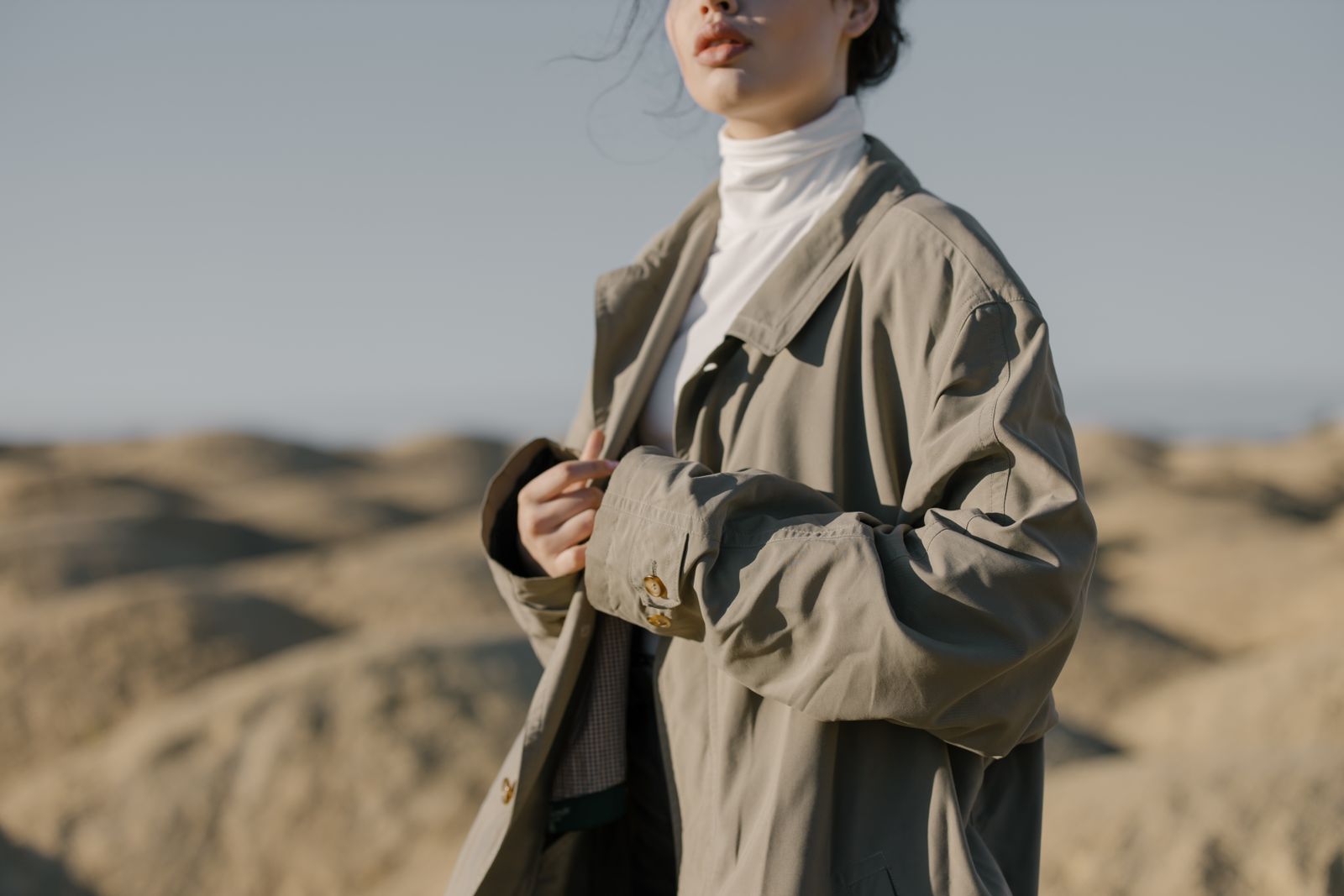
Photo by cottonbro studio on Pexels
Not when the shaping comes from adjustments rather than from a slimmer cut. Waterproofing lives in the outer fabric and the sealed seams, and neither is affected by how tightly you draw a waist cord. A cinched waist and snapped cuffs actually improve protection, because they close the openings that wind-driven rain exploits.
There is one genuine trade-off, and it is about heat rather than water. A cinched waist restricts the upward airflow that a breathable mesh lining relies on to move warm, humid air out at the collar and hem. On a climb or a fast walk in warm weather, release the waist and open the cuffs, then reset them when you slow down. Detailed instructions for working these adjustments are in this guide to adjusting the waist, hood, and cuffs.
What to avoid regardless of body type
- Sizing up to layer. A shell one size too large loses its silhouette and lets water in at the openings. Fit it over the thin layer you actually plan to wear.
- A bulky mid-layer. Two medium layers under a shell flatten the shape. One thin, warm layer does the same job and keeps the line clean.
- Wearing the hood up indoors. The hood is weather equipment. Down and lying flat is the default position.
- Over-cinching. The point where bunching starts is the point to stop. Shape comes from definition, not compression.
- Ignoring the hem length. Length is the most visible variable in a long coat and the one people check last.
FAQ
Is a long trench coat unflattering on a shorter frame? Not inherently. A hem that stops above mid-calf keeps enough leg visible to preserve proportion, and cinching the waist at the natural waistline rather than lower keeps the upper body from looking compressed. The problem is a hem covering most of the leg, not the length itself.
Should you size up for a waterproof coat? Rarely by more than needed for one thin layer. A shell needs a little room for air to move, but too much room undermines both the silhouette and the weather protection at the cuffs and hem.
Can a cinched waist look wrong if the fabric is technical? Only if the fabric bunches when drawn. Cinch it in a mirror and check the profile: a clean waistline with soft vertical folds looks intentional, while horizontal ridges around the waist mean it has been pulled too tight.
Does a hood add bulk at the shoulders? An adjustable hood lies fairly flat when the drawstring is loose and the hood is down, so it adds little visual bulk. Tightening the cord while the hood is down is what makes it bunch at the collar, so leave it slack when the hood is not in use.
A practical next step
Find the narrowest point of your torso with your hands, note where it sits relative to your navel, and use that as the cinch position when you try any coat on. Then check the shoulder seam and the hem, in that order. Those three checks take under a minute and they predict how a coat will look far better than a size label does.
Cover photo by Vlada Karpovich on Pexels.