The Ultimate Buying Guide to Women's Multi-Climate Travel Outerwear
Multi-climate travel outerwear means one shell that handles sun, rain, and wind, with insulation added or removed underneath rather than built in. The jacket you are looking for is waterproof with sealed seams, breathable enough for humidity, UV-rated for exposure, adjustable at the hood, cuffs, and waist, and packable enough that you never leave it behind. Insulated jackets are the wrong category — they solve one climate and become dead weight in the other three.
Why a shell, not a coat with a warm lining
The instinct when packing for variable weather is to bring something warm. It is the wrong instinct, because warmth is the easiest thing to add and the hardest thing to remove.
A shell with an insulating layer underneath gives you three configurations from two garments: shell alone for warm rain, layer alone for cool and dry, both together for cold and wet. An insulated waterproof coat gives you one configuration, and it is the one you need least often on the average trip.
This is why the shell-plus-layers approach dominates for travel. The shell is the part that has to be right, because it is the part that faces the weather. Everything under it is interchangeable and can be bought locally if you get it wrong.
The four climates one shell has to cover

Hot and humid with heavy rain. The hardest case. Waterproofing is easy; staying tolerable inside it is not. What matters here is the interior — a breathable mesh lining that holds the shell off your skin and lets humid air move — plus openings you can actually open. A closed shell in tropical heat is unwearable no matter how good the fabric is.
Hot, dry, and intensely sunny. Here rain is not the threat, ultraviolet exposure is. A stated UPF rating does real work: UPF 50+ blocks 98% of harmful UV rays across the skin the fabric covers, and full-length sleeves plus a hood cover a lot of skin. This is the case most travelers forget to buy for.
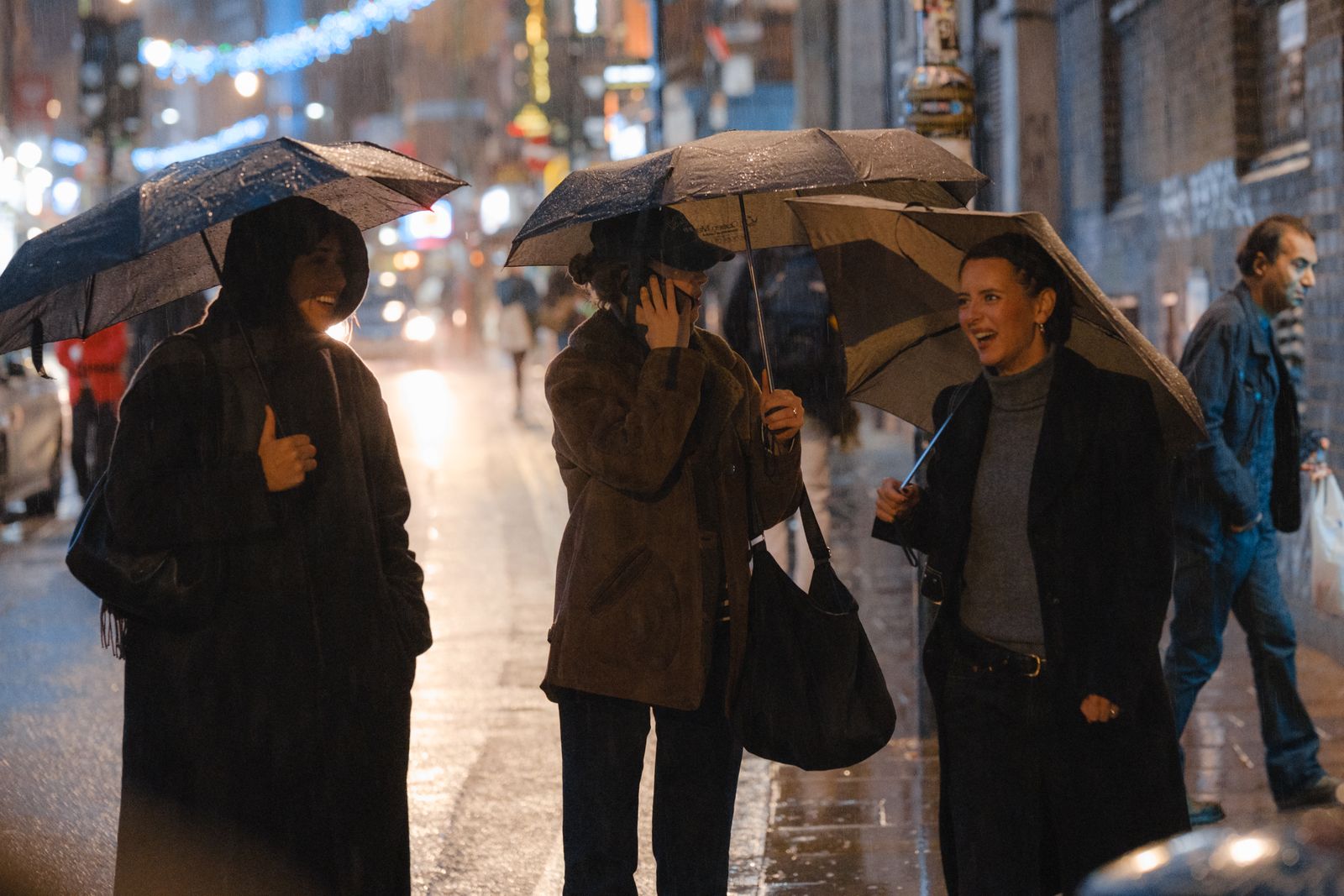
Cool, wet, and windy. The classic shoulder-season European or coastal case. Wind is what turns damp into cold, so the deciding features are closable cuffs, a front that zips fully, and a cinchable waist that stops a long hem from lifting and letting rain underneath.
Genuinely cold. The shell alone does not solve this and should not try to. Add layers underneath. What the shell contributes is wind and water protection over the top of whatever insulation you have brought.
The specification checklist
- Waterproof outer shell with sealed seams. Both halves of the claim, stated. Fabric-only claims leak at the stitch lines, and the shoulders are where a bag strap will find it first.
- A stated UPF figure. "Sun protective" with no number is not a specification. UPF 50+ is the top band in common use.
- A breathable lining. Mesh, not smooth. This is the single feature that decides whether the coat is wearable in humidity.
- An adjustable drawstring hood. It should track with your head when you turn. Fixed hoods are either too big or too small forever.
- Snap-button cuffs. Two states — sealed for wind-driven rain, open to dump heat. Elastic cuffs only give you one.
- A cinchable waist. Shape when you want it, hem control in wind when you need it.
- Two deep zippered pockets. Zippered, because an open pocket on a waterproof shell collects the water running down the front panel.
- Packs into itself. A coat that folds into its own pocket comes on the trip. One that needs a separate stuff sack stays home.
- Length past the hip. More coverage from both rain and UV, and it stops water running off the hem into your waistband.
Matching features to your itinerary
| Trip profile | Feature that matters most | Feature you can compromise on | |---|---|---| | Tropical, monsoon season | Breathable lining, openable cuffs | Wind resistance | | Desert and high-altitude sun | UPF rating, full sleeve coverage | Heavy-duty waterproofing | | Northern Europe, spring or fall | Cinchable waist, sealed seams, full zip | Maximum ventilation | | City breaks, mixed weather | Appearance plus zippered pockets | Technical-terrain durability | | Long-haul with one carry-on | Packs into itself, low weight | Anything that adds bulk | | Coastal walking and boat trips | Wind seal at cuffs and hood | Length |
Building the system around the shell
Set the shell's adjustments once at home with the layers you actually plan to wear, and note the cuff snap position and roughly how much hood cord you used. Reproducing a known setting takes seconds; figuring it out in wind does not.
Sizing for a multi-climate shell
Size to your measurements with one thin mid-layer underneath, not to the bulkiest thing you own. The temptation to size up "for layering" backfires: a shell with too much fabric through the body billows in wind, which opens the front and pushes rain up under the hem, and it moves the waist cinch away from your actual waist so the shape never settles.
The functional test is simple. Everything released, the coat should hang with a little room and no strain across the back when you reach forward. Everything cinched, the front should sit flat with no gapping. Both arms overhead, the hem should stay on your hips. If it only passes when fully cinched, it is too big.
Where a long trench cut wins and where it costs you
It wins on coverage — hips and the tops of your thighs stay dry and shaded, which is a meaningful share of your body on a long day outdoors. It wins in wind, once cinched, because a long panel anchored at the waist stops behaving like a sail. And it wins socially, which sounds trivial until you are the only person at dinner in obvious technical gear. The stylish waterproof trench coat guide for travel covers that side.
It costs you on steep, technical terrain where you are lifting your knees, and it costs a little airflow compared with a poncho or a cropped shell, which is why the lining specification matters so much. Why a breathable long coat can still fail explains what happens to air inside a full-length garment and what prevents it.
FAQ
Can one jacket really cover every climate? One shell can cover sun, rain, and wind, which is three of the four cases outright. Cold is the exception, and it is handled by what you put underneath rather than by the shell itself. That is the honest version of the claim.
Is a waterproof jacket too hot for tropical travel? Not if it has a breathable lining and openings you can use. The mistake is treating it as a sealed unit. Drop the hood, unsnap the cuffs, release the waist, and unzip partway when the rain stops, and the same coat behaves like a very different garment.
How important is packability, honestly? It is the feature that determines whether the coat is with you when the weather changes, which makes it the most consequential one on the list. A superb jacket in your hotel room protects you from nothing. A coat that folds into its own pocket ends up in the day bag by default.
Do I need a separate windbreaker? No. A waterproof shell with closable cuffs, a full zip, and a cinchable waist is a better wind layer than most dedicated windbreakers, because it seals at more points. Carrying both is redundant weight.
A practical next step
Write down the four climates above and mark the ones your next twelve months of travel will actually include. Then check candidate jackets against the specification list, treating the lining type and the sealed-seam claim as the two non-negotiables — they are the details that most often separate a coat that works across climates from one that only works in a catalog photo. For the full argument on consolidating to a single travel outer layer, why one coat is the only travel outerwear you need makes the case, and the travel logistics side covers packing it.
Cover photo by Krystian B on Pexels.