5 Key Features to Look for in an All-Weather Commuter Jacket
5 Key Features to Look for in an All-Weather Commuter Jacket
Daily transit demands versatile outerwear that adapts to rapid shifts in weather. From brisk morning trains to sudden evening downpours, here are the top 5 features every urban commuter needs in a performance coat.
1. Sealed Seams and Fully Waterproof Outer Shell
Standard water-resistant jackets quickly leak along needle holes during heavy rain. Look for a fully waterproof outer shell with sealed seams keeps you dry in downpours, rated for at least a light rain duration minutes of 120+ minutes of water resistance. Seams are the single most useful thing to check on any rain garment, and they are easy to check yourself. Turn the coat inside out and look at the shoulders, the hood, and the armholes. Sealed seams have a narrow strip of tape running along the stitching. No tape means water gets in through the needle holes, whatever the fabric is rated at.
The shoulders matter most because that is where rain lands hardest and where a bag strap presses fabric against skin, and a leak there is felt immediately.
On ratings, the useful thresholds are roughly these: under 5,000mm hydrostatic head suits light rain and short exposure, 5,000 to 10,000mm handles steady rain, and above that is heavy-weather capability. For commuting, the middle band is usually the right balance, since going higher generally costs breathability for protection you rarely need.
One distinction worth carrying: water-repellent means the outer surface sheds water and can wear off, while waterproof means the fabric itself blocks it. Almost every disappointment with rainwear comes from the first wearing out and being mistaken for the second failing.
2. Integrated UV Sun Protection
Rain protection is only half the battle. Extended walking on sunny city streets exposes your skin to harmful ultraviolet radiation. Outerwear featuring UPF 50+ sun protection blocks 98% of harmful UV rays, protecting skin without requiring heavy extra layers. For a commuting jacket this is a genuine but secondary feature, and it is worth being clear-eyed about it.
Most of its value is inherent rather than added. A fabric opaque enough to be waterproof already blocks the large majority of ultraviolet light, so a UPF rating on a rain shell is usually describing a property the coat has anyway rather than a treatment applied to it.
That matters because inherent protection does not wash out, whereas chemical treatments diminish over dozens of wash cycles. If the rating comes from the weave, it lasts as long as the fabric does.
Where it earns attention is for anyone commuting by bike or on foot for long stretches, particularly on morning and evening routes in summer when the sun is low and directly in line with the road. Shoulders and forearms take a great deal more sun in that position than people expect.
3. Lightweight Packability for Stowing on the Go
When weather improves mid-commute, you shouldn't be stuck lugging a bulky garment. Choose gear that is lightweight and packable — folds into its own pocket for travel—making it easy to drop into a briefcase or backpack weighing under 350 grams. Packability is what decides whether a coat gets carried on days when rain is only possible, and that is most days in a temperate climate. A jacket that folds into a bag is one you have with you when the shower arrives; a jacket that does not is one you left at home.
What to look for practically: whether it packs into its own pocket or a supplied bag, roughly what size the packed bundle is compared with a water bottle, and how easily it goes back in. That last point is underrated, since a coat that only fits its bag when folded precisely will stop being packed away after the first fortnight.
The trade-off is durability. Lighter fabrics abrade faster, particularly under a rucksack strap, and tear more easily on anything sharp. For a commute, that is usually an acceptable exchange. For anything rougher, weight is worth carrying.
4. Breathable Mesh Interior Lining
Navigating crowded subways produces quick body heat build-up. A breathable mesh lining prevents overheating in warm weather, supported by a breathability rating gsm of 5,000 g/m² to vent interior heat effectively. A mesh lining does something simple and effective: it holds the waterproof shell slightly away from the skin, so there is a layer of air between the two rather than damp fabric sticking to you. That is why a lined shell feels considerably more comfortable than an unlined one at the same breathability rating, even though the rating has not changed.
It also helps the coat go on and come off over other clothes without dragging, which sounds trivial until you have wrestled an unlined shell over a jacket on a station platform.
What a lining cannot do is escape the fundamental limit. All waterproof fabrics restrict moisture escape, and during real exertion you will build up moisture inside regardless. Ventilation is what actually helps in that situation: underarm zips where they exist, an open front while walking, a loose hem so warm air can escape rather than being trapped.
For a commute at ordinary walking pace, a mesh-lined shell is comfortable in almost all conditions short of a humid summer afternoon.
5. Secure Storage and Adjustable Closures
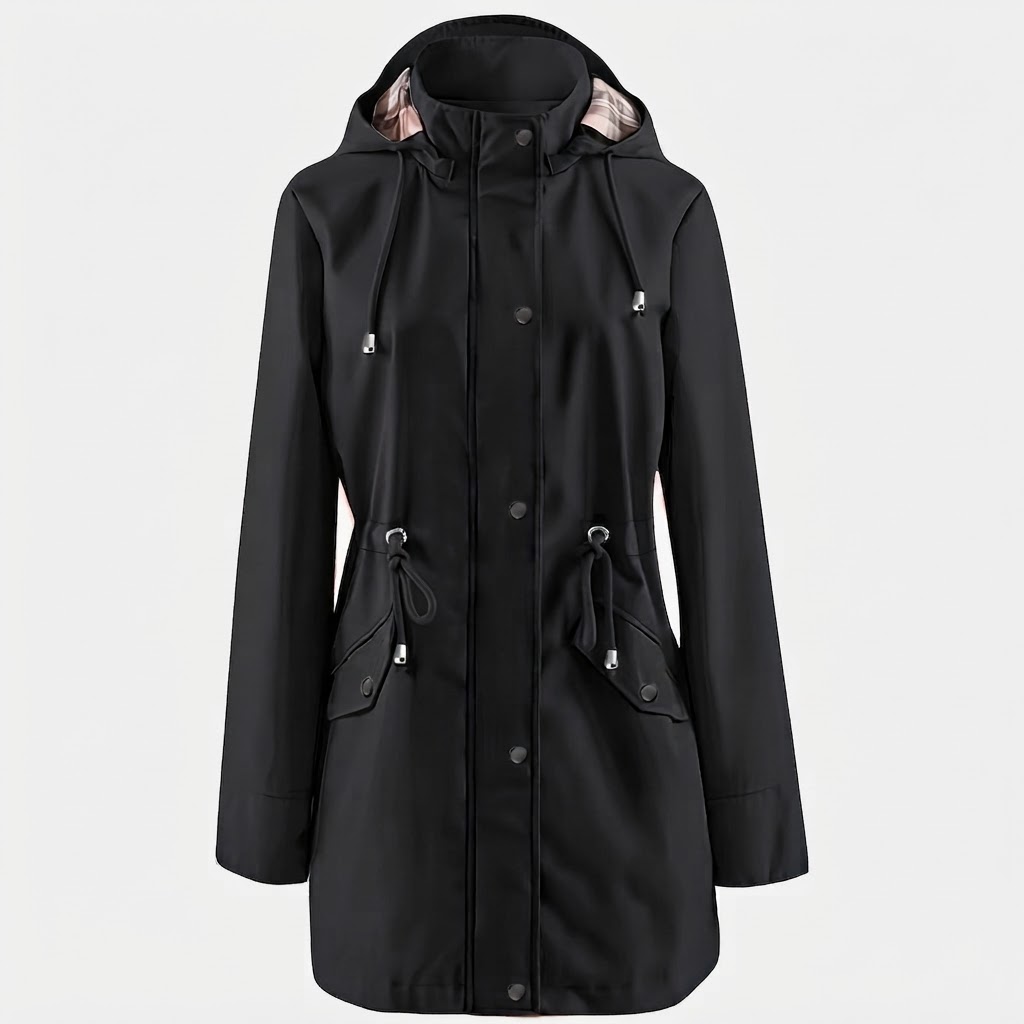
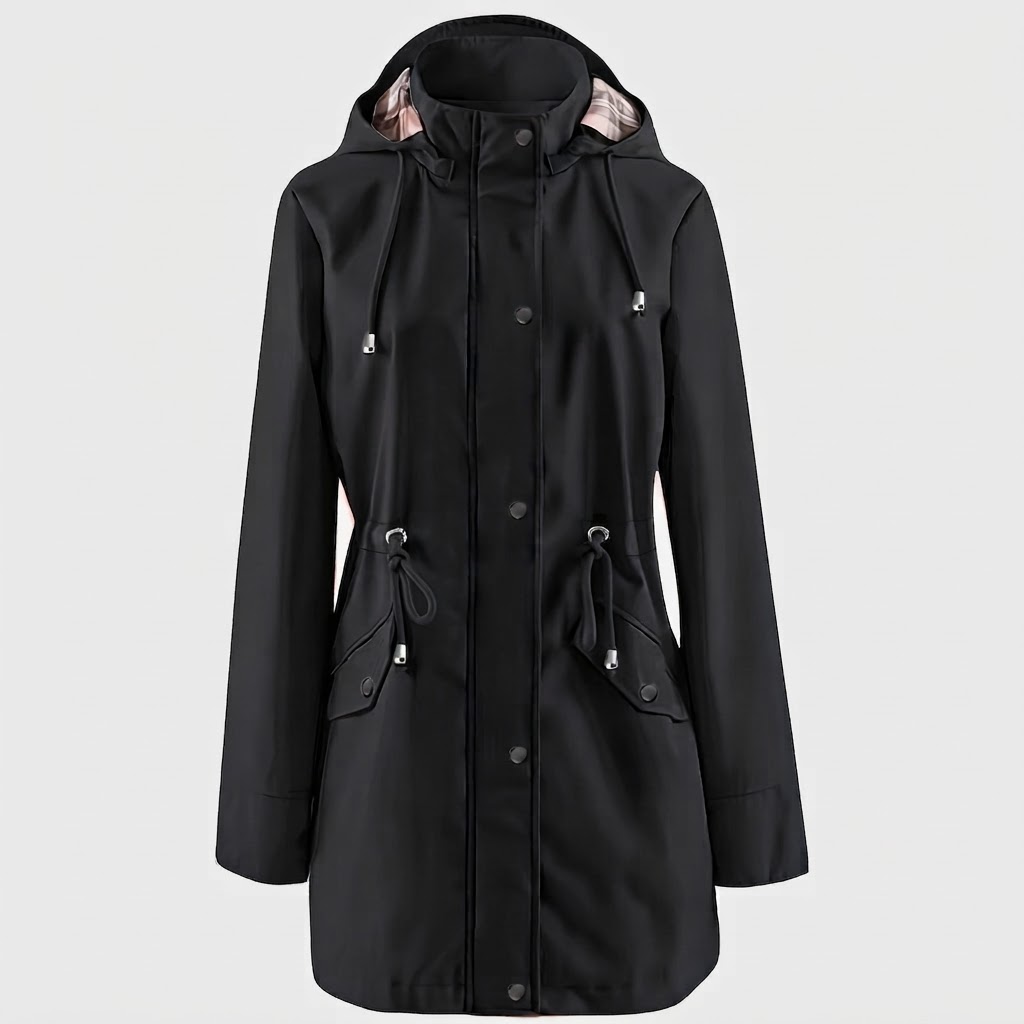
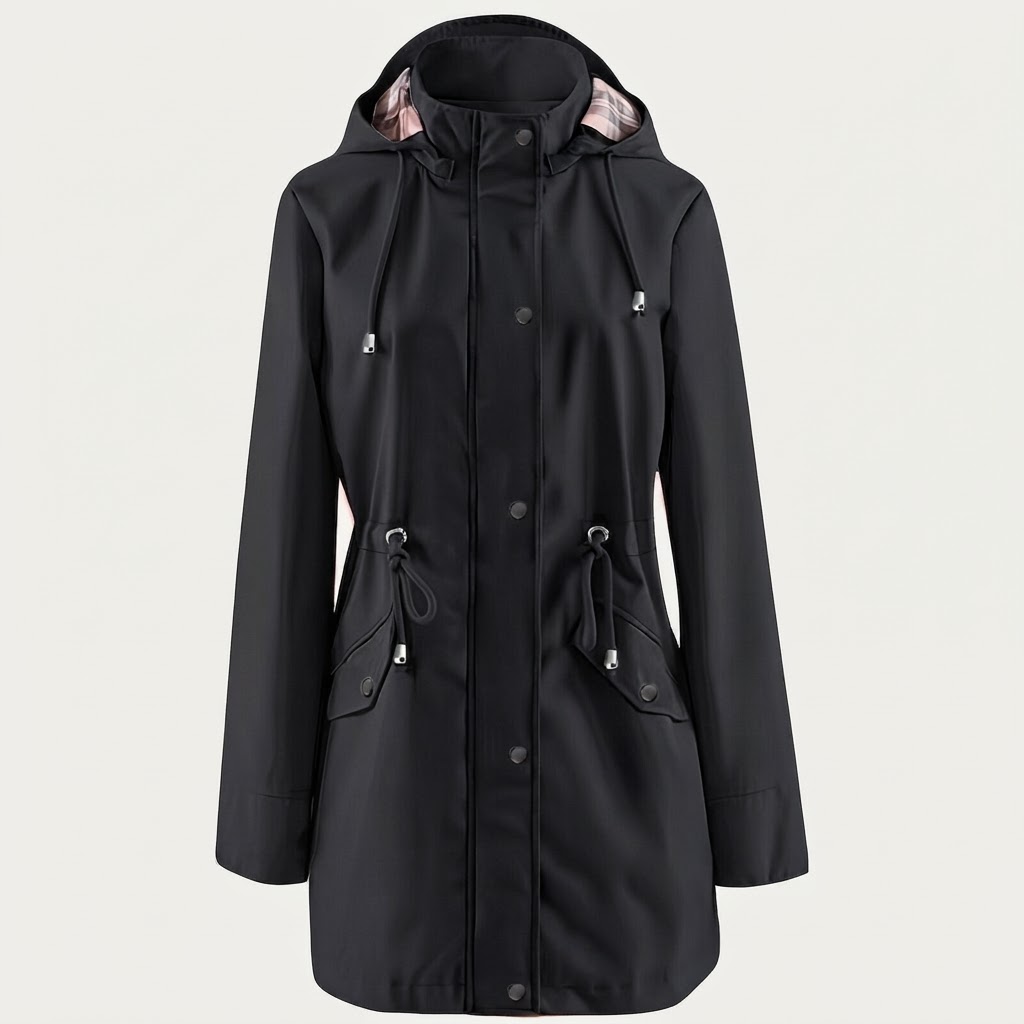
Practical commuters need functional storage and custom fits. Two deep zippered pockets keep your essentials secure from falling out, while an adjustable drawstring hood for custom coverage and snap-button cuffs seal out wind and water. To learn more about selecting versatile outerwear, visit the main guide for comprehensive style and technical tips.
Read the full guide: The Ultimate Guide to All-Weather Protection: The Waterproof Hooded Trench Coat
Pockets on a rain jacket need two things that ordinary pockets do not: a zip, and placement that works with a bag.
Zipped pockets matter because an open pocket on a waterproof shell collects rain, and because the whole point of a commuting jacket is carrying a phone and a card securely while walking. Ideally the zips have a storm flap or are themselves water-resistant, since a plain zip is a direct route for water on the front of a garment.
Placement matters because a rucksack hip belt or a cross-body strap sits exactly where hand pockets usually are. Pockets set slightly higher stay accessible with a bag on.
On closures, the useful ones are a hood adjustment that actually holds, so the hood turns with your head rather than staying put while you look sideways, cuff tabs that stop rain running down your forearms when you raise an arm, and a hem drawcord or belt to stop wind funnelling up inside the coat.
Those four adjustments are the difference between a jacket that keeps rain off in still conditions and one that works in wind, which is the condition that actually defeats most rainwear.