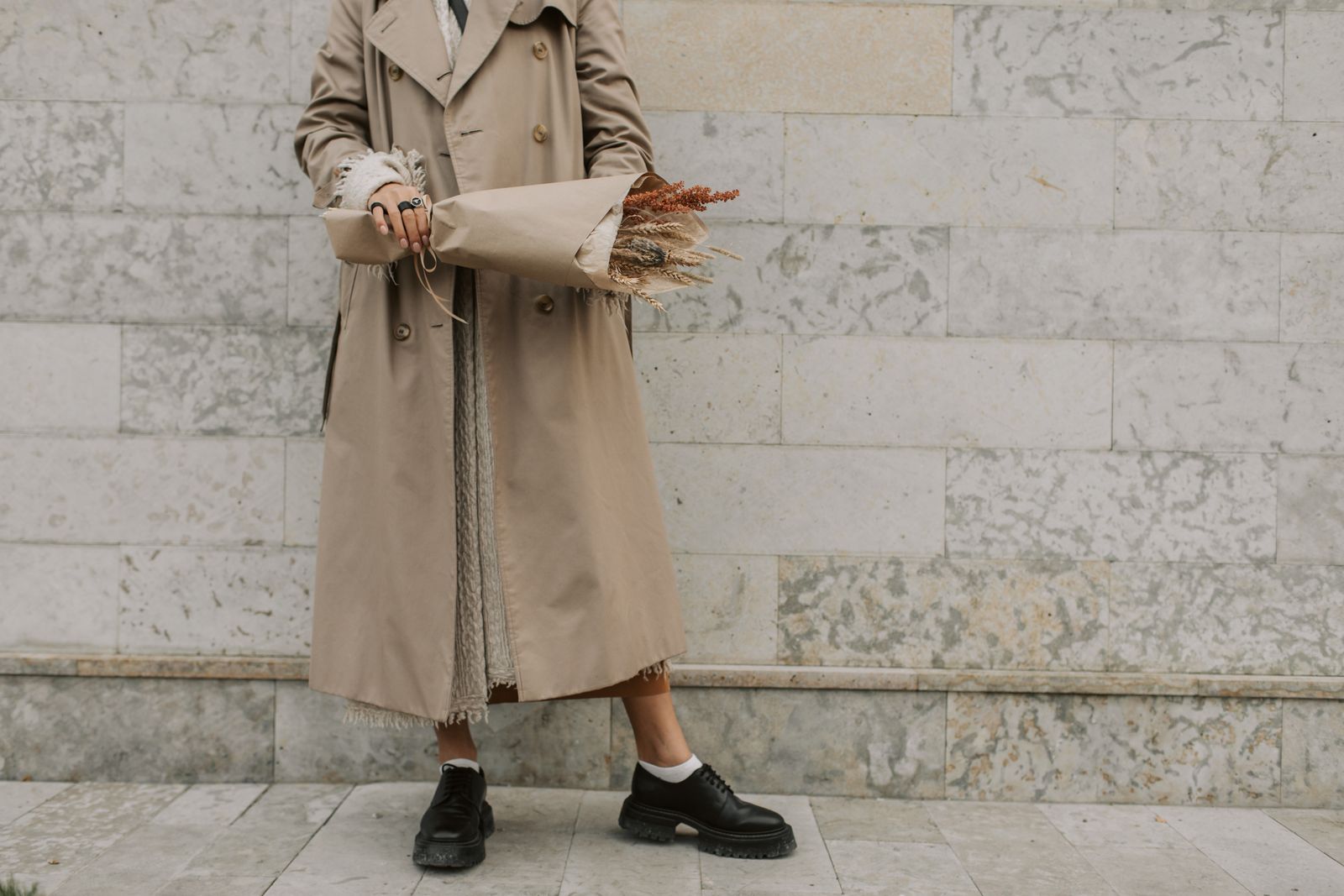
All-Weather Technical Travel Rainwear: Frequently Asked Questions & Sizing Guide
Most questions about all-weather travel rainwear come down to three things: how to size it when you plan to layer underneath, how it behaves in heat as well as rain, and how to care for it so it keeps working. This guide answers those directly, starting with sizing, because the wrong size undermines every other feature a technical coat has. A waterproof shell that fits badly leaks at the openings and overheats in the middle.
How should a waterproof hooded trench coat fit?
It should fit close enough that wind cannot open it and loose enough that air can move underneath. Those two requirements sound contradictory, and the way a well-designed coat resolves them is with adjustment points rather than a tight cut — an adjustable drawstring hood, snap-button cuffs, and a cinchable waist let one size cover a range of conditions.
Practically, that means you want a coat that hangs with a little room through the body when everything is released, and closes down cleanly when everything is set. If a coat only feels right when fully cinched, it is too big. If cinching it fully still leaves the front placket flapping in wind, it is much too big. And if you cannot raise both arms overhead without the hem lifting off your hips, it is too small.
How do I choose between two sizes?

Photo by Md Nadim Mahmud on Pexels
Measure yourself first, then decide based on what you intend to wear underneath. The measuring part takes two minutes:
Write those down and compare them against the size information provided for the specific coat rather than against your usual dress size, which varies too much between brands to be useful. Then apply the layering rule below.
| What you plan to wear underneath | How to size | |---|---| | A single light layer, warm-weather travel | Your measured size | | A long-sleeve base plus a thin mid-layer | Your measured size, with the waist released | | A sweater or fleece in cool, wet weather | Size up if you are between sizes | | Mixed — hot days and cool evenings on the same trip | Your measured size; use the adjustments for the rest |
The reason not to automatically size up is that a shell which is too large loses the wind-management benefit of a cinched waist. A long coat with excess fabric through the body billows in a headwind, and billowing is what pushes rain up under the hem.
Will a waterproof coat be too hot in warm weather?
Any waterproof shell is warmer than no shell, but the interior construction changes the picture substantially. A breathable mesh lining holds the outer fabric slightly off your skin and gives humid air a path to move, which is the difference between a shell that feels clammy after five minutes and one you can wear on a warm, wet afternoon.
The other half of the answer is behavioral. Warm-weather comfort in a waterproof coat comes from using the openings: drop the hood when it stops raining, unsnap the cuffs, release the waist, and unzip partway. A closed shell in humid heat is uncomfortable regardless of how it is built. If you want the mechanism explained properly, why a breathable long coat can still fail covers what happens to air inside a full-length coat.
Does the hood work without ruining the fit of the coat?
An adjustable drawstring hood should do two things: track with your head when you turn, and pull down flat when you do not need it. Set it with the hood already up, taking up both cords evenly in small increments until your face opening stays aligned with your eyes through a full head turn.
The mistake that ruins the fit of the whole coat is over-tightening the hood, which drags the collar forward and pulls the shoulders out of position. If the shoulders shift when you tighten the hood, you have gone too far. There is a full sequence for this in how to adjust the waist, hood, and cuffs, including the order that keeps one adjustment from undoing another.
What should I keep in the pockets?
Two deep zippered pockets are enough for a phone, a wallet, keys, and a small pack of tissues, with the zippers being the operative feature. On a waterproof shell, an unzipped pocket is a bucket: it collects the water running down the front panel and holds it against whatever is inside. Zip them before it starts raining, not after.
A phone in a zippered shell pocket stays dry in ordinary rain. In sustained heavy rain, add a small plastic sleeve — pocket linings on any coat are the least protected part of the garment because they sit against a seam and a zipper.
How does it pack for travel?
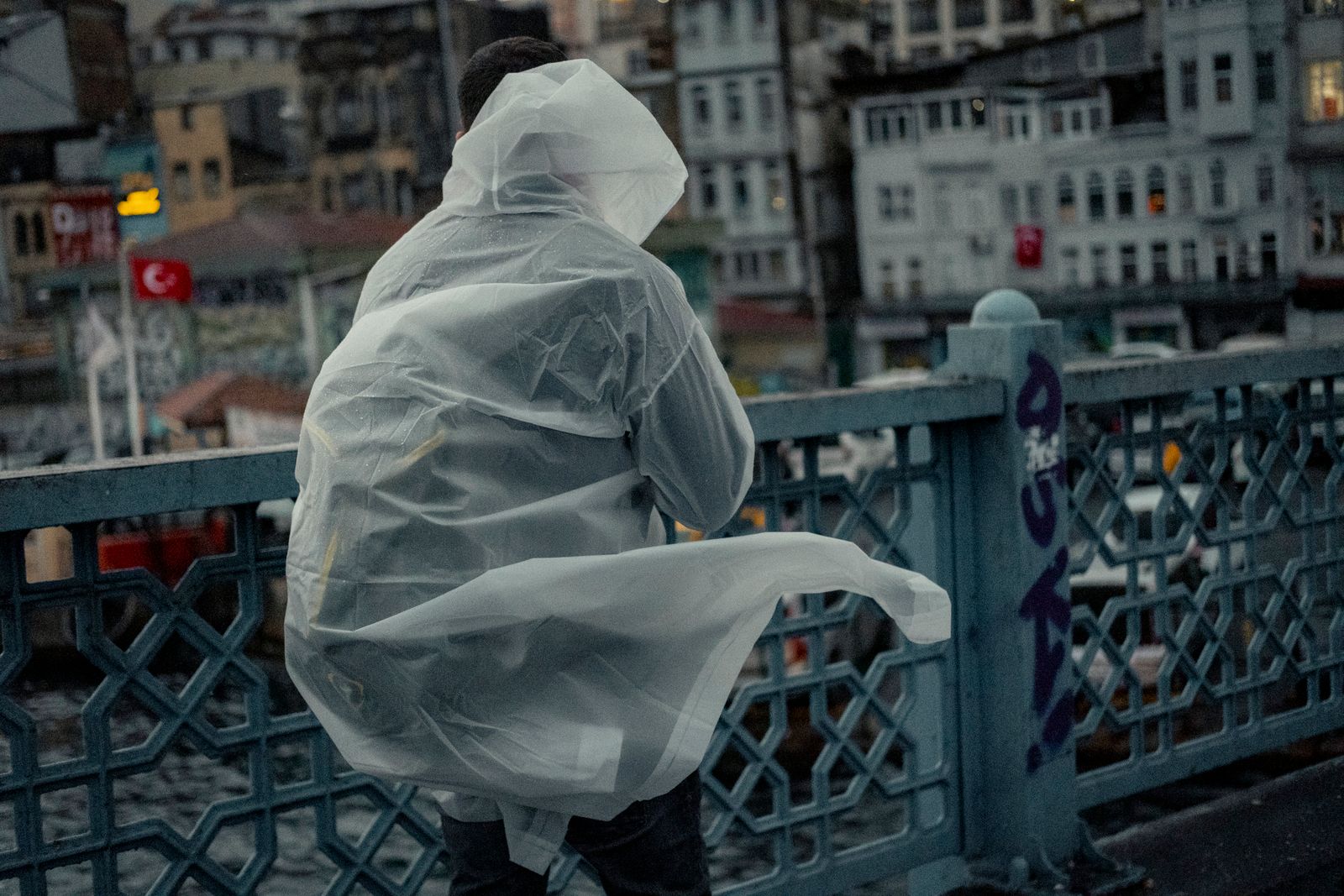
Photo by Zeynep Sude Emek on Pexels
A coat that folds into its own pocket removes the main reason people leave rainwear behind, which is bulk. The practical approach is to fold along the existing seam lines rather than crushing it into a ball, so the creases fall where the fabric is already shaped to bend. Do it with the coat dry if you possibly can; packing a wet shell into its own pocket and leaving it there for two days is how coats develop a musty smell that takes several washes to clear.
For a longer trip, the travel-friendly packing guide walks through where the coat should sit in a carry-on and how to get it out ready to wear.
How much sun protection does it actually give?
A UPF 50+ rating means the fabric blocks 98% of harmful UV rays — that is the top band of the rating scale in common use, and it applies to the skin the fabric covers. It does not extend to your face, hands, or lower legs, so a coat is a supplement to sunscreen rather than a replacement for it.
Worth knowing: UPF that comes from tight fabric construction is durable. It does not rinse out in the wash the way a topical treatment would. What reduces it over years is physical wear — thinning, abrasion, and stretched areas.
FAQ
Can I wash a waterproof coat in a regular washing machine? Usually yes, on a gentle cycle with cool water, but skip fabric softener and skip the dryer unless the care label says otherwise. Softener leaves a residue that makes water spread and cling instead of beading off, which reads as the coat "losing" its waterproofing when the shell is actually fine.
Will the sealed seams come apart over time? Seam sealing is durable, but it is the part of a shell most affected by heat and hard folding. Avoid ironing, avoid high dryer heat, and try not to store the coat crushed into the same tight crease indefinitely. Rotating how you fold it costs nothing.
Is a long coat harder to hike in than a short one? It depends on terrain more than distance. On trails and open ground a long hem is fine and gives you more coverage on your thighs. On steep scrambles or anywhere you are lifting your knees high, cinch the waist and accept that a long coat is a trade you are making for coverage.
What is the single most common sizing mistake? Sizing up "to be safe." Extra room does not add warmth or protection in a shell — it adds fabric for the wind to grab, and it moves the waist cinch away from your actual waist so the shape never settles. Measure, match, and use the adjustments.
A practical next step
Take your four measurements now and note them somewhere you will find them again, because they are what let you compare any coat against your body instead of against a dress size. Then decide what you realistically layer underneath on the trips you actually take — that single decision resolves most of the sizing questions above. If you are still weighing styles rather than sizes, the trench-style hooded raincoat overview is the better starting point.
Cover photo by Vlada Karpovich on Pexels.