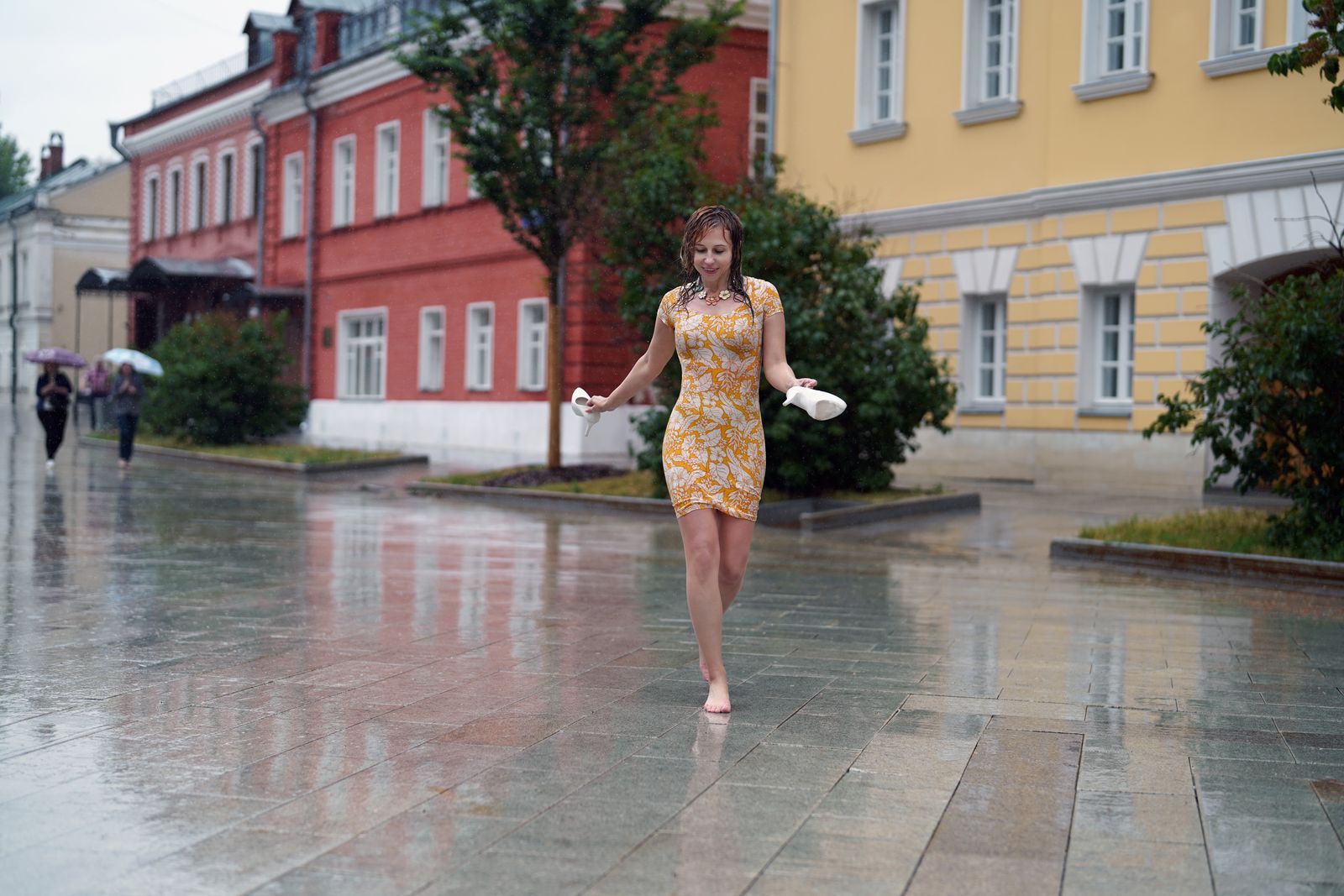
Trail-to-Town Rainwear Buying Guide: Features You Need for Outdoor & Urban Travel
A jacket that works on a trail and in a city has to do four things at once: keep out sustained rain, vent heat when you are working hard, block sun once the clouds clear, and look like outerwear rather than equipment. Most rain jackets do two of the four. This guide sets out which features are non-negotiable for dual-use rainwear, which are marketing, and how to check each one before buying.
What makes trail-to-town rainwear different from a normal rain jacket?
Single-purpose jackets can specialize. A trail shell can be boxy and loud because nobody minds on a mountain. A city raincoat can be stiff and unventilated because a commute is short. A dual-use jacket has no such luxury — it has to be comfortable during an hour of effort and presentable ten minutes later at a table.
That constraint drives every feature decision below. The jacket needs adjustment points so one garment can be two shapes, ventilation that works while you are moving, and a silhouette that reads as intentional when you stop.
The features that actually matter
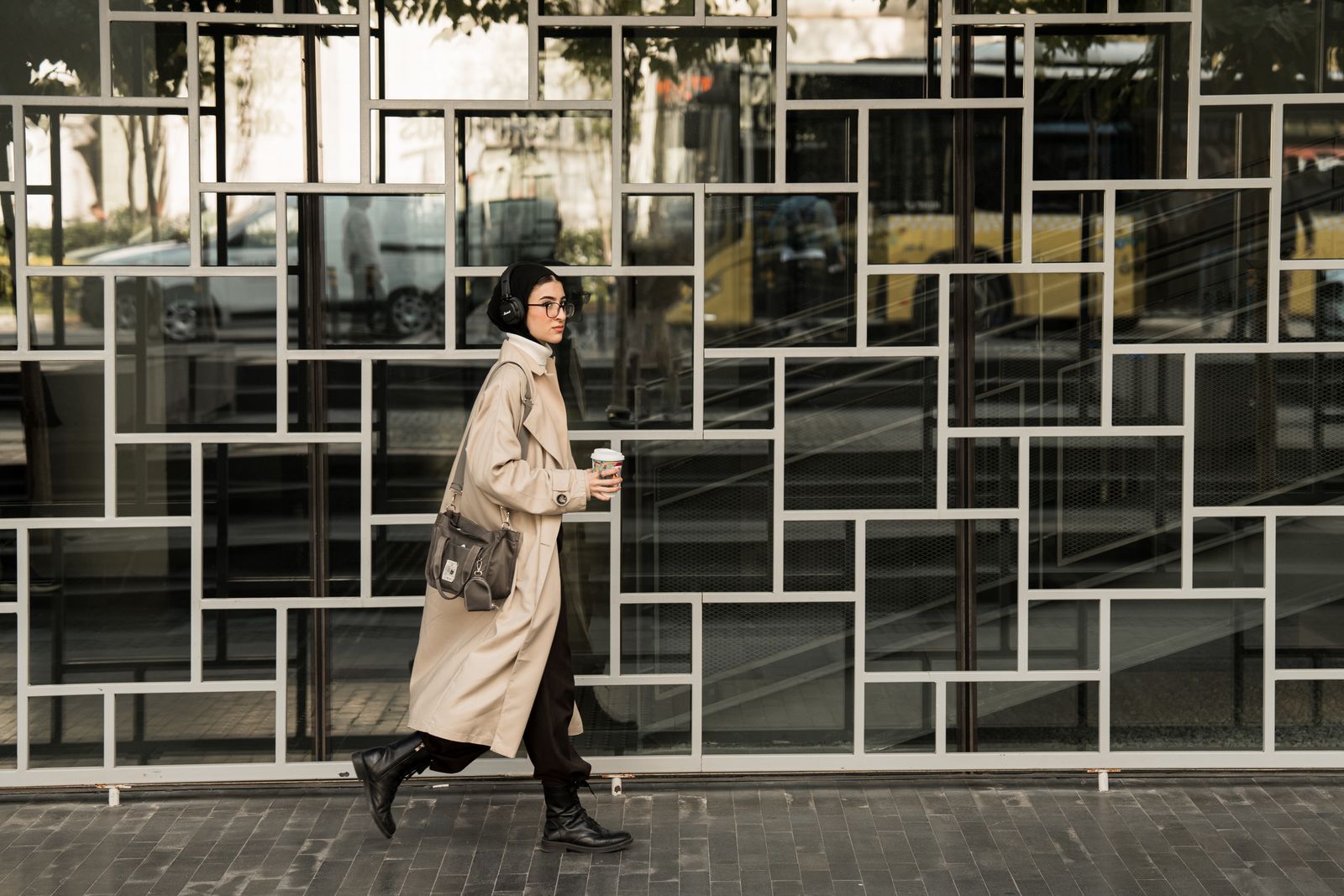
- Fully sealed seams. Every stitch is a hole. Sealed seams close the needle holes so water does not enter at the joins, and this matters more than a high waterproof rating on the panel fabric.
- A ventilating lining. A breathable mesh lining holds the shell off your skin so air can move through the gap and condensation stays on the shell instead of your arms.
- An adjustable hood. A drawstring hood you can tighten holds its position when you turn your head. A hood that cannot be adjusted either blows off or blocks your peripheral vision.
- A cinchable waist. This is the feature that lets one garment be two garments — loose for airflow on a climb, cinched for a defined silhouette in town.
- Sealing cuffs. Snap-button cuffs close down to seal out wind and water, and open up to vent heat through your forearms, which is one of the fastest ways to cool off.
- Real pockets. Two deep zippered pockets mean phone and cards stay secure while you walk, and it means you can leave a bag behind for a short outing.
- Packability. A jacket that folds into its own pocket gets carried rather than left behind, which is the whole point of a jacket for changeable weather.
- Sun protection. A UPF 50+ fabric blocks 98% of harmful UV rays, so the same garment is useful after the rain stops instead of becoming dead weight.
Why does UPF 50+ belong on a rain jacket?
Because trail-to-town days are rarely all rain. A typical travel or hiking day includes a shower, a long stretch of bright overcast, and often direct sun, and UV passes through cloud cover. A shell with no sun protection forces you to either carry a second layer or accept exposure.
UPF works differently from sunscreen. The protection comes from the fabric's structure — fiber type, weave density, and finish — so it does not need reapplying and it does not wear off over an afternoon. UPF 50+ means roughly one-fiftieth of UV gets through the fabric. The limitation is coverage: fabric protects only the skin it covers, so hood position and sleeve length determine how much benefit you actually get.
What should you check before buying?
Comparing the common options
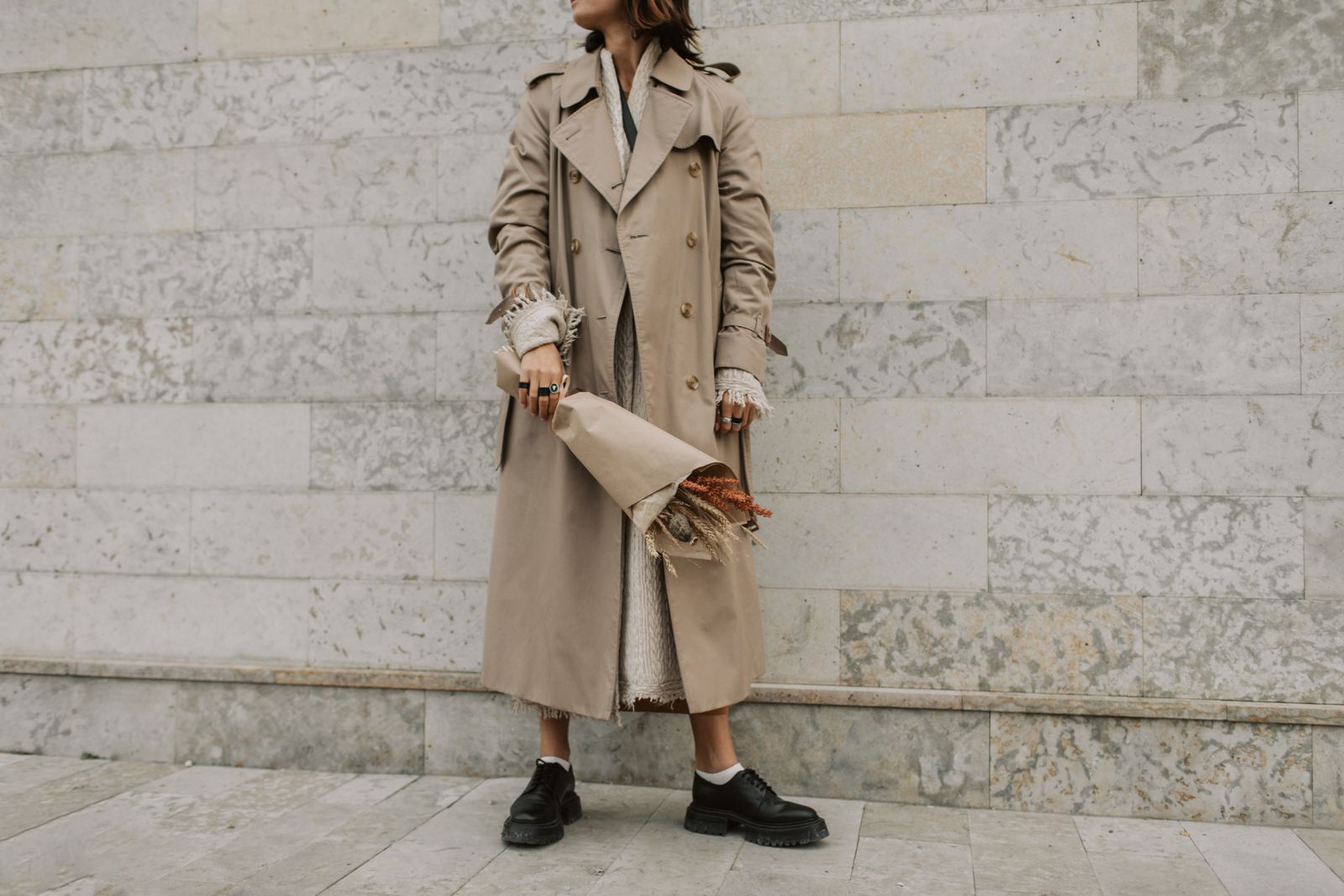
Photo by Vlada Karpovich on Pexels
| Option | Rain protection | Ventilation | Town appearance | Packs small | Sun protection | |---|---|---|---|---|---| | Technical hardshell | Excellent | Good with vents | Reads as gear | Varies | Often none | | Classic cotton trench | Poor to fair | Fair | Excellent | No | None | | Unlined packable shell | Good | Poor in humidity | Plain | Excellent | Sometimes | | Rain poncho | Fair, wind-dependent | Excellent | Poor | Excellent | Limited coverage | | Waterproof hooded trench | Excellent | Good with mesh lining | Excellent | Yes | UPF 50+ available |
The waterproof trench category exists precisely because the first four rows each fail one of the four dual-use requirements. A related breakdown of that trade-off is in this commuter trench coat buying guide.
What features can you safely ignore?
- Extreme waterproof ratings. Very high figures suit multi-day storm exposure with a heavy pack pressing on the fabric. For travel and commuting, sealed seams and adjustability affect comfort far more.
- Pocket count. Six pockets on a shell is a trail-gear convention. Two deep, zippered, well-placed pockets serve a dual-use jacket better than a scattering of small ones.
- Insulation built into the shell. A shell with insulation sewn in is warm in one narrow temperature band. A shell plus one thin layer of your choosing covers a much wider range and packs smaller.
- Aggressive color and branding. These are the cues that make a jacket read as sportswear, which is exactly what a dual-use garment is trying to avoid.
FAQ
Is a longer coat better for trail-to-town use? Length helps in rain, because it protects the tops of your legs from water running off the shell, and it reads as more formal in town. The trade-off is airflow: longer coats trap more warm air, so they need adjustable openings and a ventilating lining to stay comfortable. The performance implications are covered in five performance checks for a long waterproof trench coat.
Can one jacket really replace both a rain shell and a sun layer? If it combines a waterproof outer with UPF-rated fabric, yes for most travel scenarios. That combination is why a single garment can cover a shower, an overcast afternoon, and bright sun without a second layer in the bag.
How important is packability for city use? More than it looks. Weather changes and you end up carrying the jacket for part of the day. One that folds into its own pocket goes into a tote or a daypack without needing a stuff sack, so it comes with you instead of staying at the hotel.
Should you size up to layer underneath? Usually not by much. A shell needs enough room for one thin layer and for air to move, but a jacket sized up too far loses its silhouette and lets wind-driven rain in at the openings. Fit it over the thin layer you actually plan to wear.
A practical next step
Write down the two or three situations you genuinely need the jacket for — a specific commute, a specific trip, a specific trail — then run the seven-point check above against any candidate with those situations in mind. If a feature does not serve one of your listed situations, it is not worth paying attention to. For a longer argument on treating one coat as the core of a travel kit, see why a waterproof hooded trench coat is essential travel gear.
Cover photo by Vika Glitter on Pexels.