Why Is My Rain Coat Wetting Out? How to Reapply DWR safely
Is your rain coat damp on the inside because the internal membrane has failed, or has the outer fabric simply lost its DWR coating? If water darkens and soaks into your raincoat's outer shell instead of forming round beads, your Durable Water Repellent (DWR) has worn off. This is called 'wetting out.' Clean the jacket with a residue-free tech wash, spray the outer shell with a PFC-free DWR, and heat-activate on low.
Step-by-Step DWR Diagnostic Flowchart
- Does water form tight, round beads on the outer shell fabric during rain or a spray test? → Yes: DWR is fully functional. No reapplication or chemical restoration needed.. No: Proceed to test interior liner dampness..
- Is the interior lining wet directly beneath fabric panels, or only along stitch lines? → Yes: If wet only at stitch lines, seam tape has lifted or degraded. Apply seam sealer.. No: Proceed to test fabric saturation vs membrane failure..
- Does the outer fabric turn dark and heavy ('wet out') while the interior remains dry to the touch? → Yes: DWR factory finish is depleted or dirty. Clean with Tech Wash and reapply Spray-On DWR.. No: If moisture passes completely through flat fabric panels, internal polyurethane/PTFE membrane is permanently damaged..
Failure Mode Matrix: Diagnosing Outerwear Symptoms

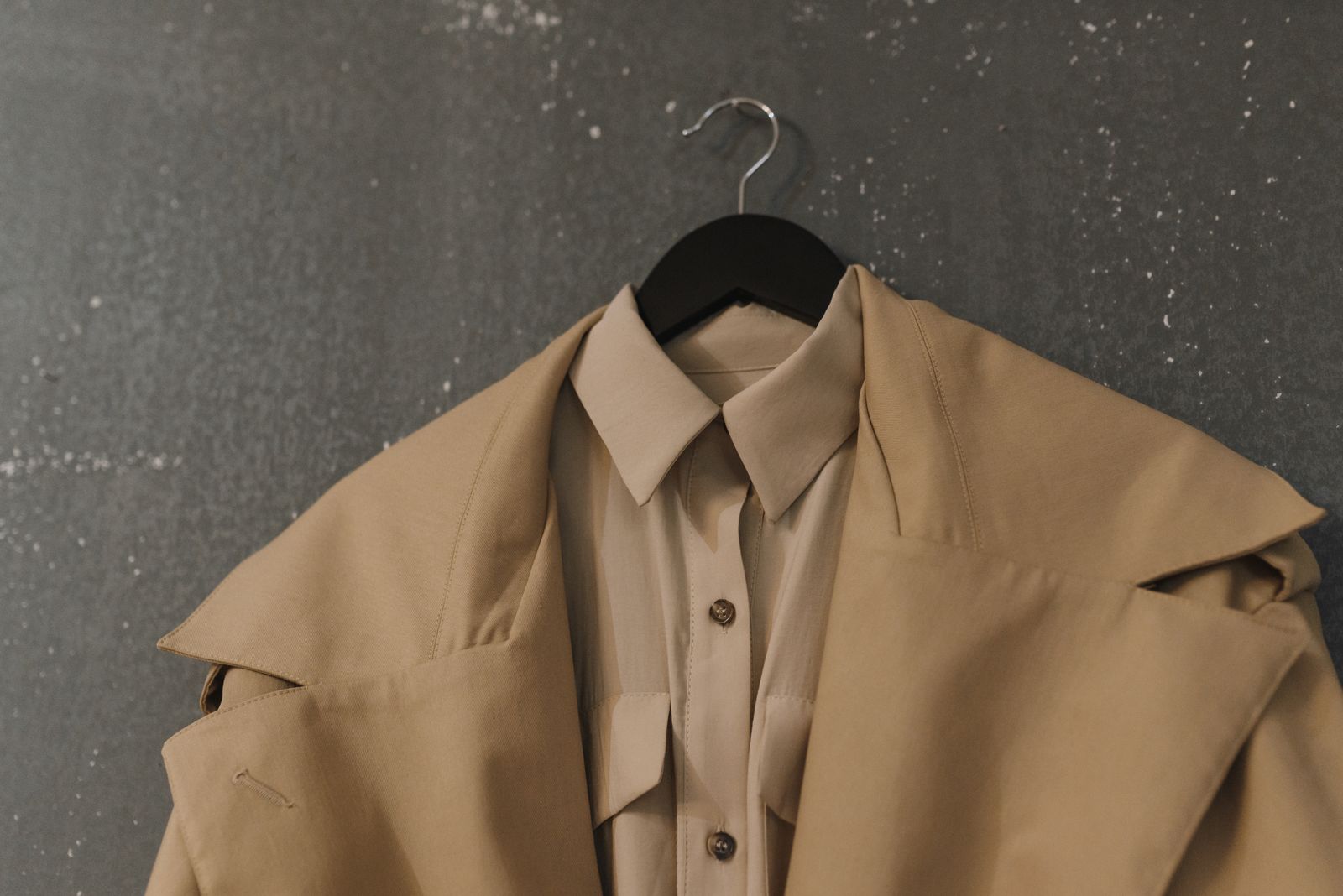
Photo by Vika Glitter on Pexels
| Failure Mode | Observed Symptom | Root Cause | Simple Diagnostic Test | Required Resolution |
| --- | --- | --- | --- | --- |
| Face Fabric Wetting Out | Outer shell turns dark, absorbs water, and feels heavy and cold, but shirt beneath remains mostly dry. | DWR polymer layer worn down by friction, dirt, or detergent residue. | Water Droplet Test: Place 3 drops of water on outer sleeve. If drops flatten within 10 seconds, fabric is wetting out. | Clean shell with tech wash; apply PFC-free spray-on DWR and heat-activate. |
| Internal Condensation Trap | Clammy moisture on inside of jacket during activity; no exterior water penetration. | Wetted-out face fabric prevents body perspiration vapor from escaping outward through membrane. | Humidity Test: Wear jacket indoors for 10 minutes while active. Heavy internal sweat indicates blocked breathability. | Restore exterior DWR so moisture vapor can escape freely again. |
| Seam Sealing Delamination | Localized water leakage exclusively along shoulder, neck, or side seams during heavy rain. | Heat-bonded seam tape has peeled, cracked, or lifted due to age or high heat exposure. | Seam Visual Inspection: Flip coat inside out and inspect clear/gray tape over needle holes for lifting edges. | Apply liquid seam sealer directly to loose edges; do not rely on DWR sprays. |
| Membrane Degraded / Ruptured | Immediate soak-through across large non-stitched fabric panels under light rainfall. | Internal polyurethane (PU) or PTFE waterproof membrane has flaked off or degraded. | Backlight / Rub Test: Hold single layer of shell against light. Flaking white dust indicates dry rot. | Garment membrane is at end-of-life; coat requires replacement. |
Identify the exact root cause behind your coat's performance issues before attempting treatments.
Pro Tip: Why Spray-On DWR Beats Wash-In for Mesh-Lined Trench Coats
Never use a wash-in DWR treatment on a jacket that features an internal mesh lining or UPF 50+ moisture-wicking layer. Wash-in products coat every surface of the garment, including the internal mesh fibers. This clogs the open weave of the mesh, coats moisture-wicking yarns with hydro-repellent wax, and traps sweat inside against your skin.
Instead, use a PFC-free spray-on DWR. Spraying allows you to target only the exterior face fabric, leaving internal cooling linings and woven UPF sun-blocking threads completely unblocked and fully breathable.
Pre-Treatment Preparation Checklist
- Clean laundry detergent drawer to clear residual softeners or standard soaps.
- Wash jacket using specialized additive-free technical garment wash (e.g., Nikwax Tech Wash or Grangers Performance Wash).
- Secure all main zippers, pocket zippers, hook-and-loop closures, and snap buttons.
- Ensure garment is freshly rinsed, thoroughly wet/damp, and free of dirt.
- Hang jacket on sturdy plastic hanger over a bathtub, shower, or outdoor area.
- Inspect internal mesh lining to ensure it is tucked away from the outer shell spraying surface.
Decision Tree: Safe Heat Activation Without Damaging Seams or UPF Ratings
- Does your garment care tag permit low-heat tumble drying? → Yes: Place damp coat in dryer on 'Gentle/Low Heat' (max 110°F–120°F) for 15–20 minutes.. No: Proceed to alternative heat activation methods.
- Do you have a handheld electric hairdryer available? → Yes: Hold hairdryer 6 inches away from outer shell on medium heat, sweeping constantly over panels for 5–10 minutes.. No: Proceed to iron method with thermal barrier.
- Do you have a steam-free iron and a clean cotton towel? → Yes: Set iron to 'Synthetic/Silk' (no steam). Place towel over outer fabric and press gently for 5–10 seconds per panel.. No: Air dry completely in warm room. Water repellency will be ~80% effective without heat activation.
Essential DWR Care Summary
- Wetting out means the outer DWR coating is dirty or worn, not that your coat's internal waterproof membrane has failed.
- Always use spray-on DWR (not wash-in) for mesh-lined coats to preserve internal breathability and sweat wicking.
- Standard household laundry detergents leave chemical residues that strip DWR—always use technical gear wash.
- Low-heat activation (max 120°F) is essential to cross-link fresh DWR polymers without melting delicate seam tape.
- PFC-free spray-on DWR does not degrade woven UPF 50+ sun protection layers.
Spray-On vs. Wash-In DWR Comparison (Side-by-Side)
| Feature | Spray-On DWR | Wash-In DWR |
| --- | --- | --- |
| Primary Target Surface | Exterior face fabric shell only | All exterior and interior surfaces equally |
| Compatibility with Mesh Linings | Safe — Keeps interior mesh open and breathable | Poor — Coats mesh, trapping sweat inside |
| Impact on UPF 50+ UV Filters | Zero impact on interior woven sun barrier | Can leave waxy residues on interior fibers |
| Precision & Coverage Control | High — Focus spray on shoulders, hood, and arms | Low — Uniform chemical soak across all parts |
| Best For | Mesh-lined trench coats, commuter rainwear, multi-layer shells | Unlined 2.5-layer minimalist rain jackets |
Understand why application method matters for multi-functional outerwear.
Engineered Outerwear built for All-Weather Performance
Looking for outerwear designed for easy maintenance, high breathability, and reliable storm protection? Explore our signature weather solution.
Choosing the Right DWR Treatment for Your Shell
For mesh-lined, UPF 50+ waterproof trench coats, always choose a Fluorine-Free (PFC-Free) Spray-On DWR after cleaning with a specialized technical wash.
Best choice for
- Spray-On DWR Treatment — Applies repellent strictly to the exterior shell, preserving inner mesh airflow and sweat absorption.
- Targeted Double Coating on Shoulders & Hood — Backpack straps and heavy downpours wear down high-exposure zones faster.
- Using standard laundry detergents or fabric softeners before application.
- Applying wash-in DWR treatments to coats with internal hanging mesh liners.
- Exceeding 140°F (60°C) during heat activation, which melts waterproof seam sealing tape.
- Low Heat Tumble Dry — Best standard activation method if dryer low setting is calibrated under 120°F.
- Hairdryer Sweeping Method — Safest alternative for delicate coats when machine dryers are unavailable or lack low heat settings.
DWR Cure Time & Temperature Matrix

| Heat Activation Method | Safe Temp Range | Duration | Distance / Barrier | Seam Sealing Risk Level |
| --- | --- | --- | --- | --- |
| Tumble Dryer (Low Heat) | 110°F – 120°F (43°C – 49°C) | 15 – 20 minutes | N/A (Free tumbling) | Low (Safe for factory TPU seam tape) |
| Handheld Hairdryer | 120°F – 130°F (49°C – 54°C) | 5 – 10 minutes | Hold 6 inches (15 cm) away | Low-Medium (Requires continuous sweeping) |
| Clothes Iron (No Steam) | 130°F – 140°F (54°C – 60°C) | 5 – 10 sec per section | Thick cotton towel barrier required | Medium (Risk if iron rests in one place) |
| Warm Room Air Drying | 70°F – 80°F (21°C – 27°C) | 24 hours | N/A | Zero Risk (Lower DWR longevity) |
Technical guidelines for safe heat activation thresholds.
Step-by-Step Guide: How to Apply Spray-On DWR and Heat Activate
Follow these six precise steps to fully restore your coat's factory water repellency.
Critical Mistakes That Ruin Waterproofing & UPF Ratings
Avoid these frequent laundry and reproofing errors that permanently damage technical gear.
Frequently Asked Questions About DWR Restoration
Get fast answers to common care and maintenance questions.
Related Outerwear Care & Maintenance Guides
- Selecting a Breathable Waterproof Hooded Trench Coat
- The Design Paradox of the Technical Trench Coat
- Frequently Asked Questions About Women's Waterproof Trench Coats
Immediate Action Plan for Water Repellency
Your decision: Determine whether your coat face fabric is dirty (needs washing) or exhausted (needs DWR reapplication).
Do this next: Clean your jacket with a specialized tech wash, apply spray-on DWR to the exterior shell while damp, and heat-activate on low.
Related resource: Download our printable Rainwear Maintenance & Storage Guide.
Maintain your jacket's sleek silhouette and breathable performance with our Waterproof Hooded Trench Coat.
Restore your jacket today or upgrade to outerwear built for all-weather confidence.
Cover photo by Arina Krasnikova on Pexels.