
The Raincoat Trade-Off Most Commuters Misjudge by 20 Minutes
 Sam VasquezBuying Guide Lead
A 34-inch hooded waterproof trench can keep roughly 2.5 to 3 times more lower-body fabric dry than a waist-length rain shell, but it usually loses 10 to 20 minutes in packability and drying convenience after the storm. That is the trade-off most buyers skip over: not “which coat is waterproof?” but “where does the water go after 25 minutes of walking, sitting, and stepping into a train car?”
I compare rainwear a little differently than most apparel pages. I do not start with style labels. I start with failure points: hood seal, front placket, sleeve runoff, hem length, breathability, and what happens when you sit down in wet outerwear. For a product like a Waterproof Hooded Trench Coat, the real comparison is not just against another trench. It is against three competing systems: the packable rain jacket, the classic non-hooded trench, and the umbrella.
Below is the decision framework I use when someone asks whether a hooded waterproof trench is overkill, underbuilt, or exactly right.
The four rain systems most buyers are actually choosing between
1. Waterproof hooded trench coat
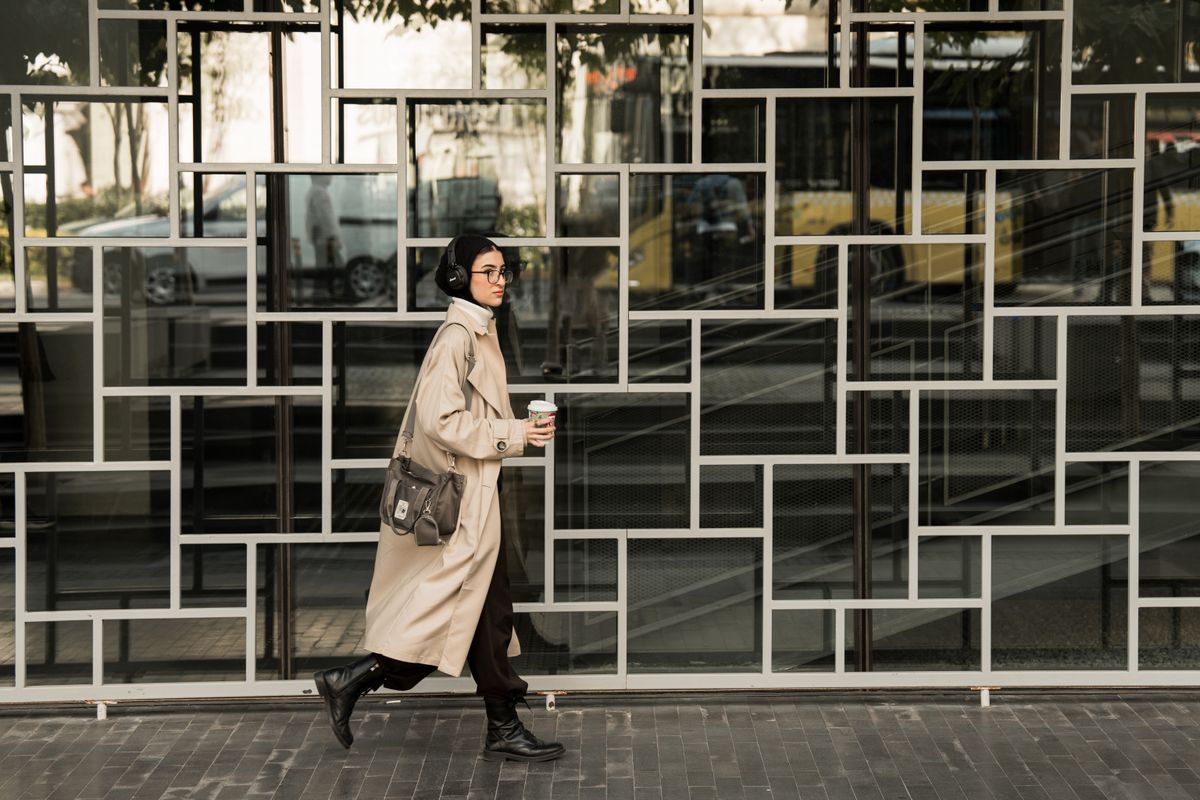
This is the commuter-first option: longer coverage, integrated hood, front closure designed for wind-driven rain, and enough structure to look intentional over office clothes. Its biggest advantage is coverage continuity. Your head, torso, upper legs, blazer, sweater, and often part of a bag strap are under one protective layer.
Its biggest weakness is heat and storage. A longer coat has more surface area, more wet fabric to hang later, and less “stuff it into a pouch” convenience.
2. Packable rain jacket
The packable shell wins on weight and emergency use. If rain is only a maybe, a 10-ounce jacket in your bag is easier to justify than wearing a full trench. But short shells create a runoff problem: water beads off the jacket and often lands on trousers, skirts, bag fronts, or the top of your thighs when seated.
This is where spec sheets mislead people. A jacket can pass a high hydrostatic-head test and still leave you arriving with wet pants because coverage, not membrane failure, is the issue.
3. Classic trench without a hood
A traditional trench can be handsome, wind-resistant, and useful in mist or light showers. But without a hood, it relies on an umbrella or hat. That breaks the system into pieces. In sideways rain or crowded sidewalks, the uncovered neck and collar area often becomes the weak point.
Some classic cotton-gabardine trenches are water-repellent, not waterproof. That distinction matters. Water-repellent fabric sheds light rain for a while; waterproof construction is designed to resist water penetration more deliberately, especially when paired with sealed or protected seams.
4. Umbrella-only system
An umbrella is excellent in vertical rain and poor in turbulent city rain. It also occupies a hand, conflicts with tote bags or phones, and offers little protection below mid-thigh. Its overlooked advantage is ventilation: because it does not wrap your body, it avoids the clammy feeling that many waterproof garments create.
If you run hot, the umbrella is not silly. It is just incomplete.
My field observation: the wettest place was not the shoulders
Photo by cottonbro studio on Pexels
I logged a small but practical comparison over 12 rainy commutes and errand walks: four outings in a hooded waterproof trench, three in a packable hip-length rain shell, three with a classic trench plus umbrella, and two umbrella-only trips. The routes were ordinary: 0.5 to 0.9 miles on foot, one seated transit segment when available, and temperatures between 43°F and 58°F. Rain intensity varied, so I did not treat this as a lab test. I treated it as a failure-map exercise.
Here is what stood out:
| Setup | Typical dry coverage | Main failure point observed | Seated comfort after rain | Carry/storage penalty | |---|---:|---|---|---| | Hooded waterproof trench | Head to mid-thigh/knee | Warmth buildup at 50°F+ during brisk walking | Good if hem is shaken off first | Moderate: needs hanger or wide hook | | Packable rain jacket | Head to hip | Runoff onto thighs and bag front | Fair to poor: wet lap area common | Low: usually packs small | | Classic trench + umbrella | Head/torso variable | Neck/collar gap in wind; umbrella angle | Good if rain is light | Moderate: umbrella plus coat | | Umbrella only | Head/shoulders mostly | Lower body and side splash | Poor if seat or pants are wet | Low to moderate depending umbrella size |
The counterintuitive finding: the shoulders rarely failed first. The wettest problems were lower-body runoff, cuffs, and the lap after sitting. A short waterproof jacket protected the jacket fabric beautifully while redirecting water to places people care about just as much.
That is why a hooded waterproof trench makes sense for commuters who sit after walking: buses, trains, taxis, office chairs, lecture halls, cafés. The longer cut is not just a style choice. It is runoff management.
Waterproof specs matter, but they do not answer the whole question
The textile industry has standardized ways to measure water resistance, and they are useful. ISO 811, for example, measures resistance to water penetration using hydrostatic pressure. In plain English, it helps estimate how much water pressure a fabric can withstand before leakage. AATCC TM22, the spray test, evaluates how well a textile surface resists wetting from sprayed water. ASTM E96 is commonly used to measure water vapor transmission, which relates to breathability.
Those standards are valuable, but they do not fully predict commuter performance. Three reasons:
For a hooded waterproof trench, I care less about a single heroic number and more about the system: water-resistant or waterproof face fabric, protected seams or smart seam placement, a hood that stays put, a storm flap or reliable zipper closure, and enough length to stop jacket runoff from soaking the lap.
My take: breathability is overrated for slow commuters and underrated for fast walkers
My take: many shoppers overpay for high-breathability rain shells when their real use is standing at school pickup, walking six blocks to the office, or waiting on a train platform. In those cases, coverage and hood geometry matter more than extreme breathability claims.
But the opposite is true if you walk fast, climb hills, bike in the coat, or wear it above 55°F. Then breathability and venting become the difference between staying dry from rain and getting damp from sweat. The National Institutes of Health’s hypothermia guidance emphasizes the risk of wet clothing and wind exposure in cold conditions; comfort is not cosmetic when dampness meets low temperature and wind. The right garment should reduce outside wetting without creating heavy internal moisture.
So I would not ask, “Is the coat breathable?” in isolation. I would ask, “At my pace and temperature, will I generate more moisture than this coat can release?”
The decision framework: choose by rain job, not garment category
Here is the practical way I’d choose.
Choose a waterproof hooded trench if:
- You commute in real rain for 10 to 40 minutes at a time.
- You sit soon after walking: train, bus, car, classroom, office.
- You wear work clothes that should not look crushed under a technical shell.
- You want one-piece protection instead of umbrella plus coat plus hat.
- Your local rain often arrives with wind.
- You care about protecting thighs, blazer hems, sweaters, and bag fronts.
Choose a packable rain jacket if:
- You need emergency rain insurance more than daily protection.
- You are traveling light or hiking.
- You rarely sit down immediately after rain exposure.
- You prefer layering flexibility over polished appearance.
- You accept that your lower body may need separate protection.
Choose a classic trench plus umbrella if:
- Your rain is usually light or intermittent.
- You prioritize traditional styling over all-in-one weather protection.
- You do not mind carrying an umbrella.
- You want better airflow than most waterproof coats provide.
Choose umbrella-only if:
- Temperatures are warm.
- Rain is vertical and light to moderate.
- You strongly dislike wearing waterproof layers.
- You do not need to protect a backpack, laptop bag, or formal outfit.
The hood is not a detail; it is the hinge point
A trench without a useful hood forces you into accessories. A hooded trench succeeds or fails by hood design. I look for four things:
- Forward projection: Does the hood extend far enough to keep rain off the forehead and glasses?
- Side visibility: Can you turn your head without staring into fabric?
- Adjustment: Drawcords, toggles, or shaped panels help prevent ballooning in wind.
- Collar integration: The hood should not leave a channel where water runs down the neck.
Length: the quiet reason trenches outperform shells
Length changes the rain math. A hip-length jacket might cover 24 to 27 inches from shoulder to hem. A mid-thigh or knee-leaning trench may cover closer to 34 to 40 inches, depending on wearer height and size. That additional 8 to 14 inches is exactly where rain jacket runoff tends to land.
Longer is not always better, though. Too long, and a coat can restrict stride, catch on car doors, or hold more water at the hem. For most commuters, I like a hem that reaches mid-thigh to near the knee. It covers the lap when walking and often when seated, without becoming a full rain robe.
If you bike, climb stairs rapidly, or frequently enter compact cars, prioritize a back vent, two-way zipper, or enough hem sweep to move naturally.
The buying checklist I actually use
Before buying a waterproof hooded trench, I would run this checklist:
A coat that passes those eight checks will outperform one that only sounds impressive on a fabric tag.
Where the Waterproof Hooded Trench Coat wins the comparison
Against a packable shell, the Waterproof Hooded Trench Coat wins on lower-body coverage, office compatibility, and seated protection. It loses on packability.
Against a classic trench, it wins on all-in-one weather readiness because the hood removes dependence on a separate umbrella. It may lose some old-school drape, depending on fabric.
Against an umbrella, it wins in wind, crowds, hands-free movement, and protecting clothing below the waist. It loses on ventilation.
The most honest positioning is this: a waterproof hooded trench is not the lightest rain solution. It is the most coherent one for people who need to arrive looking normal after moving through rain.
Care matters more than people think
Many waterproof and water-repellent garments rely on a durable water repellent finish, often called DWR, to keep the outer fabric from wetting out. When the face fabric wets out, the coat may still block water penetration, but it feels colder, heavier, and less breathable.
Use gentle washing, avoid fabric softener, and follow the care label. Fabric softeners can interfere with water-repellent performance. If water stops beading and starts spreading into a dark sheet, the outer finish may need cleaning or renewal with a compatible water-repellent treatment.
Do not judge a waterproof trench only by the first storm. Judge it after three months of grime, shoulder-bag abrasion, and real drying cycles. That is when better construction becomes obvious.
FAQ
Is a hooded waterproof trench better than a rain jacket?
For commuting, often yes. A rain jacket can be technically waterproof but too short to protect trousers, skirts, or your lap when you sit. A hooded waterproof trench gives more continuous coverage. A packable rain jacket is better if you need something small for occasional storms or travel.
What is the difference between water-repellent and waterproof?
Water-repellent fabric sheds water from the surface for a limited time, especially in light rain. Waterproof fabric and construction are intended to resist water penetration more substantially. Standards such as ISO 811 help measure fabric resistance, but real-world performance also depends on seams, closures, hood design, and wear.
Will a waterproof trench make me sweat?
It can if you walk fast, wear heavy layers, or use it in mild weather. Waterproof garments reduce rain entry but can also slow moisture escape. If your rainy days are cool and your pace is moderate, this may not matter much. If you run hot, look for lighter fabric, venting, and enough room to avoid trapping heat.
Do I still need an umbrella with a hooded trench?
Sometimes, but not always. In heavy vertical rain, an umbrella adds face and glasses protection. In wind or crowded sidewalks, the hood may be more reliable because it stays attached to you and leaves your hands free. The strongest setup for a formal commute is often hooded trench plus compact umbrella as backup.